

















Curling: GB quartet left reeling as Canada steals Olympic gold with last-stone finish, leaving Mouat and Hardie in tears

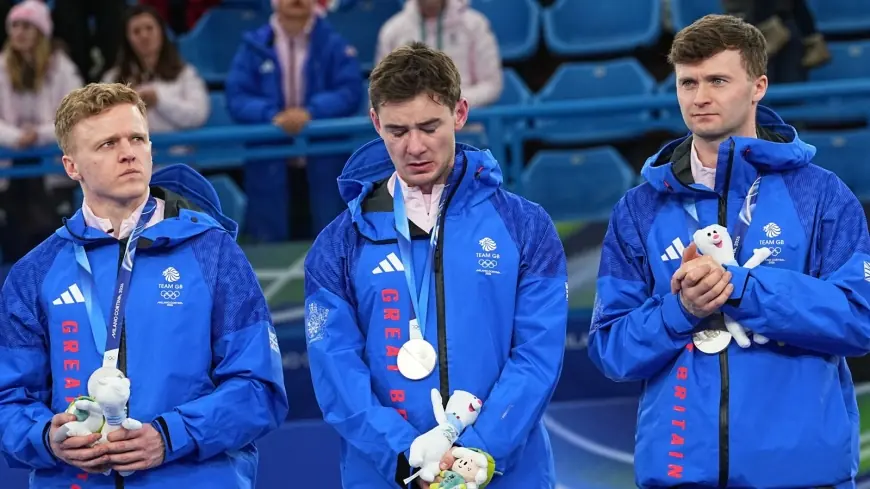
The immediate fallout lands hardest on Bruce Mouat, Grant Hardie, Hammy McMillan and Bobby Lammie — and on the fans who followed them to Italy. This matters now because Team GB arrived in Cortina as world champions and favourites in curling but will leave with silver for a second successive Olympics after Canada produced a last-stone response to win 9-6, denying Britain a men's Olympic gold that has not been won by the country for 102 years.
Impact on the team, the fans and a long-running Olympic story
Here’s the part that matters: the quartet — plus alternate Kyle Waddell — came intent on changing a painful pattern from four years ago, but instead face another gutting final. Two British players left the arena in tears after a match that turned on the ninth and 10th ends. For a nation chasing a 102-year drought in the men's Olympic event, the silver is a high achievement made bitter by how the match ended, and it also denied Britain a fourth gold medal at these Games.
What’s easy to miss is how layered the disappointment is. They had appeared to recover from a near early exit earlier in the week and had described their semi-final victory as “our gold medal. ” That belief clashed with the reality of one final game: despite being favourites and recent world champions, they could not close the deal. The curling community and spectators who flew in — including bands of Scottish supporters and bagpipe accompaniment — will feel that loss sharply.
Curling final — how the deciding ends unfolded
The scoreline closed at 9-6 in Canada’s favour after a tense 10th end. Canada, which finished the round-robin ahead of Great Britain and therefore had the hammer for the first end, were limited to a single point early while Britain took two in the second. Canada overturned the early deficit to lead 3-2 after the third end, and were 4-3 at the halfway mark despite having had the hammer three times.
- Sixth end: Bruce Mouat executed a double takeout to move GB into a 5-4 lead.
- Seventh end: Canada levelled the match at 5-5.
- Eighth end: a crucial turning point; Britain only managed a single point and momentum shifted.
- Ninth end (penultimate): Canada, with the hammer, converted a three to move 8-6 ahead.
- 10th end: Britain had the hammer. Mouat produced a strong shot that removed two opposition stones, but Canada produced the decisive response to finish 9-6.
The sequence underlines how a single penultimate end can reshape an entire final; the Canadians overturned the late lead and held on in the last exchange.
Background, records and unresolved tallies
The Scottish quartet arrived in Cortina with recent major titles and a strong head-to-head record against Canada, having beaten them in last year’s world semi-final. They were silver medallists at the previous Winter Olympics and therefore left as silver medallists for the second successive Games. There are differing tallies in the record claims from recent coverage: one account cites two World Championships, a couple of European crowns and a record 12 Grand Slam wins since the last Games; another notes two world titles, two European championships and four Grand Slam events. The exact totals are unclear in the provided context.
Also present in the narrative is the Canadian side’s own turbulence: they have faced cheating claims during this Olympics, a context that added noise to an already charged final. It was the second time Canada had beaten the British rink in five days, following an earlier round-robin meeting that the Canadians had won.
Personal aftermath and what the players have said
Emotion ran deep. Grant Hardie said, "I'm heartbroken. " Hammy McMillan reflected that it took him four years to get over the previous Olympic silver and that recovering again will likely take longer. Bruce Mouat described being in shock and said the team felt they had been the better side. Mouat also indicated he intends to continue to the next Olympics in France, saying "100%" he will carry on; it is unclear in the provided context whether his teammates have made the same decision.
Mouat’s Olympic record in medal matches — across mixed doubles and men’s events at two Games — stands as a continuing storyline here: he has played in four Olympic medal matches and lost each one.
Short Q&A on what's next
- Q: Does this end the quartet’s Olympic drive? A: The real question now is whether the four players will stay together; Mouat has said he will continue, while the team has not completed a public conversation about the group’s future in the provided context.
- Q: How close were they? A: Very — the match hinged on the ninth and 10th ends after a series of momentum swings, with the penultimate end proving decisive.
- Q: Is this unprecedented for Britain? A: Britain still leaves without a men’s Olympic gold for the first time in 102 years; the silver compounds a repeated pattern of near-misses at the Games.
Embedded timeline: the team lost the Olympic final in Beijing four years ago to Sweden, returned to dominate major events in the intervening period, survived a scare as recently as the Thursday before the final to guarantee a medal, then fell 9-6 to Canada in the Cortina gold medal match after 11 days of competition.
The bigger signal here is how thin the line is between sporting dominance and Olympic gold: even established world champions can see a fortnight of effort decided by two ends. If you’re wondering why this keeps coming up, it’s because Olympic curling often compresses long rivalries into a single, high-stakes match.