






















Duke Vs Michigan: duke vs michigan and the rise of late nonconference games

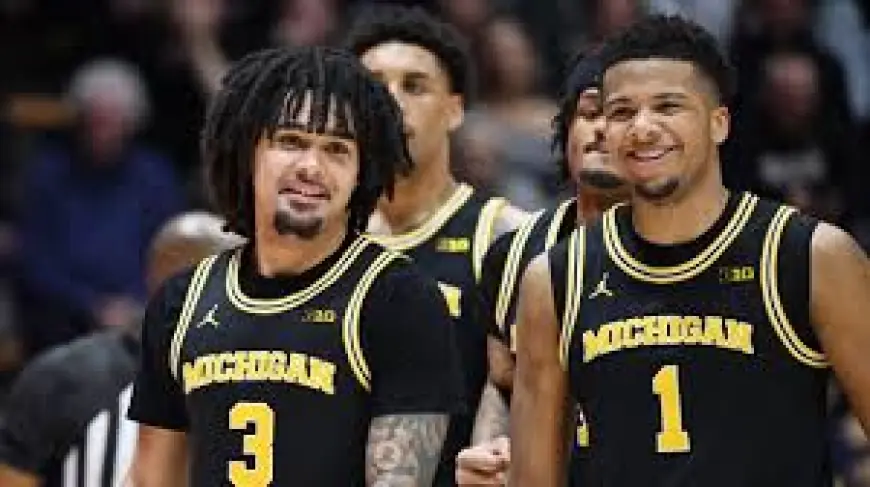
College basketball’s move toward high-profile February matchups has put the duke vs michigan conversation at the center of a broader scheduling shift. Coaches say those games simulate the NCAA Tournament environment and can reshape resumes ahead of Selection Sunday.
Duke Vs Michigan in Washington
This weekend’s meeting between No. 1 Michigan and No. 3 Duke in Washington, D. C., has been cast as a potential Final Four preview and is drawing sky-high ticket prices. The matchup is the latest example of marquee programs interrupting conference schedules to face unfamiliar opponents on neutral courts.
Underwood’s summer calls
Last summer, Illinois coach Brad Underwood’s phone was ringing off the hook. From Michigan’s Dusty May to Ohio State’s Jake Diebler, coaches across college basketball wanted to pry into the most lopsided loss the Illini suffered last season: 110-67 at the hands of Duke and Cooper Flagg. Coaches were less interested in that result than in the timing and location of the contest. The late-February date and the neutral-site location at Madison Square Garden in New York City were the points of focus.
May’s question, Underwood’s answer
May remembered asking Underwood, "Would you still play it?" and Underwood’s answer was emphatic: "100 times out of 100. " Those exchanges helped signal the trend toward scheduling prominent nonconference tests late in the season.
Recent cross-conference results
Last weekend furnished additional examples. Louisville, representing the ACC, defeated Baylor of the Big 12 in Fort Worth, Texas. Virginia, also from the ACC, outlasted Ohio State of the Big Ten in the Nashville Hoops Showdown in Tennessee. Those games, along with the Michigan-Duke pairing, illustrate why coaches are pursuing challenging neutral-site matchups in February.
Why coaches favor late tests
Coaches say these games offer preparation for the distinct scouting and stylistic challenges of the NCAA Tournament. Virginia coach Ryan Odom put it plainly: "You're prepping for a different style, a different conference. " He added that the contests provide "that NCAA Tournament feel to it. " Diebler underscored the practical benefit: "The change of pace, " he said. "You get a chance to do that in February, get a rep of that in preparation for the postseason. "
Scouting unfamiliar styles
Conference play often focuses on familiar personnel and predictable styles; the late nonconference slate forces teams to adapt. For example, Big 12 opponents expect Kelvin Sampson and Houston to blitz ball screens. ACC foes anticipate Duke and Jon Scheyer bringing tremendous positional length. And anyone in the Big Ten can point to the physicality of Michigan State's defense under Tom Izzo. Coaches view late-season neutral-site games as opportunities to prepare for those kinds of unfamiliar matchups.
Historical context and exceptions
Historically, nonconference games were played early, in November and December, before teams pivoted to league play. There have been exceptions: ’s BracketBusters was a series of February games between mid-majors, and the Big 12-SEC Challenge was played in late January from 2016 through 2022. Those precedents feed into the current willingness to stage big nonconference tests late in the season.
One contextual item in the provided materials is a short headline, "429 Too Many Requests, " tied to CBS Sports. Another credit in the provided materials is an image credit: Sarah Stier / Getty Images. A portion of the source text ends mid-sentence with "The Blue Devils, who went on t" and is unclear in the provided context.
Coaches and programs are actively weighing timing, location and the strategic benefits of these matchups as they arrange schedules that might influence Selection Sunday and postseason preparation.