






















Austin Butler link looms large as Baz Luhrmann mines 59 hours of unseen Elvis footage for EPiC

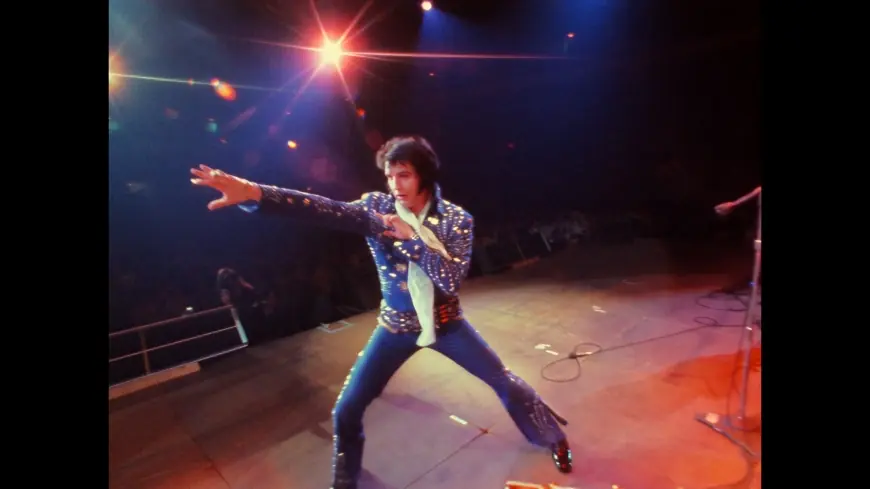
Baz Luhrmann’s new film EPiC: Elvis Presley in Concert is built from a trove of material uncovered while researchers hunted for clips for Luhrmann’s earlier biopic, which starred austin butler, and the director has shaped that archive into a concert-focused portrait that revisits the start of Elvis’ superstardom.
Archival haul: 59 hours found in a Kansas salt mine
Luhrmann’s team located 59 hours of previously unreleased performance and interview material in a Warner Bros. film vault stored in an underground salt mine in Kansas, press notes say. The footage was painstakingly restored and combined with rare Super 8 reels drawn from the Graceland archives to form EPiC, a film that mixes concert performance with intimate interstitial clips of Elvis offstage.
The assembled material begins close to the start of Elvis’ rise and includes an early interview in which he explains his onstage movement—"I can’t stand still. I’ve tried it, I can’t do it. "—and answers a filmed phone question about whether he’d apologized for scandalizing audiences: "I haven’t. Because I don’t think I’ve done anything wrong. " Those candid moments are threaded into concert segments to collapse the distance between the public performer and private man.
Austin Butler ties to Luhrmann’s archive search
Luhrmann first returned Elvis to screens with a 2022 biopic starring austin butler; it was while searching for material to use in that film that his researchers found the extensive archive now central to EPiC. Rather than a conventional documentary, EPiC is described as a spiritual conjuring that repurposes the newly recovered performance footage into a concert-driven film experience.
The new film hopscotches through the early career period that made Elvis a household name, touching on the era of his movies from 1956 to 1969 and even the chapter of his Army service from 1958 to 1960 in Germany. Those broader career markers provide context around the performance clips and the short-form moments drawn from the archive.
Performance first: what the restored footage shows
EPiC emphasizes onstage energy and private asides. Concert material is paired with brief, revealing camera moments—an early filmed phone exchange, offstage interviews and Super 8 home-movie textures—that aim to show both the showman and the person. The restoration work on the 59 hours of film and the Graceland Super 8 elements creates a fabric of images that Luhrmann uses to make the performances feel immediate and intimate.
The project revives fragments that had been stored away for years and refashions them into a film that leans into performance rather than biography. That choice echoes Greil Marcus’s idea that Elvis’s cultural afterlife has been many things; here, Luhrmann shapes one of those forms into a concert portrait.
EPiC grew directly out of the archival research undertaken for Luhrmann’s earlier Elvis film, and the restored material forms the backbone of this follow-up project, giving audiences a concentrated presentation of Elvis onstage and off in newly seen footage.
What comes next for EPiC in public distribution or screening was not detailed in the materials describing the film, but the project itself is a clear continuation of Luhrmann’s work begun with his 2022 biopic starring austin butler, repurposing discovered archives into a concert-centered film experience.