




















Colbert–Talarico Interview Furor: Why a Late-Night Booking Turned Into a Texas Senate Flashpoint

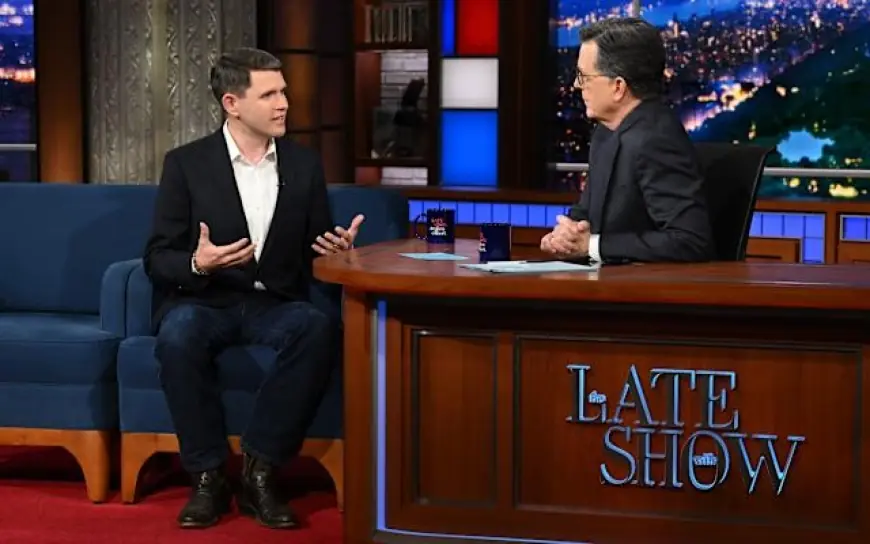
A taped late-night interview between Stephen Colbert and Texas state representative James Talarico has exploded into a national debate over broadcast politics, election-season risk, and who gets access to mass audiences. More than three weeks before many voters begin locking in their preferences for the Texas Democratic Senate primary, the dispute has become a campaign accelerant for Talarico and a fresh headache for rival Democrats who argue the moment created an uneven playing field.
The immediate trigger was a decision by Colbert’s corporate broadcaster to keep the segment off over-the-air television, citing legal concerns tied to federal “equal time” obligations for candidates. The interview was instead released on an online video platform, where it rapidly drew millions of views and helped drive a wave of fundraising and attention for Talarico.
All dates and times referenced below are in Eastern Time.
What happened with the Colbert Talarico interview
Colbert told his audience that the interview was recorded for a scheduled broadcast but was pulled before airing. He framed the move as an overly cautious response to a newly aggressive posture around election rules, particularly the equal time requirement that can compel broadcasters to provide comparable opportunities to other legally qualified candidates for the same office if they ask.
The network disputed parts of Colbert’s characterization, but the underlying fact pattern remained: the segment did not air on broadcast television, and the full interview surfaced online instead. Colbert then addressed the dispute on-air, turning a compliance decision into a live controversy about speech, editorial independence, and how media companies behave when regulators appear more willing to flex power.
Why “equal time” suddenly matters for late-night TV
Equal time is the kind of rule that often sits in the background until a close election turns it into a tripwire. The legal risk is not only about a fine. It is about process: once a broadcaster is seen as giving airtime to one candidate, other candidates can request comparable access. For a nightly entertainment show, that can create an administrative mess, reshape booking priorities, and open a new lane for complaints.
This case also highlights a crucial distinction between broadcast television and online distribution. Broadcast stations operate under federal licenses and face direct regulatory leverage. Online distribution generally does not carry the same licensing vulnerability. That difference helps explain why a segment might be considered too risky for broadcast but acceptable online.
Where Jasmine Crockett fits into the story
The controversy took on a sharper political edge because Talarico is competing in a Democratic primary environment that includes high-profile figures such as U.S. Representative Jasmine Crockett. Crockett’s public comments have underlined the core grievance from rival-candidate circles: if one contender receives a high-impact national spotlight, the exposure can translate into fundraising, name recognition, and momentum that are difficult to replicate with normal retail campaigning.
At the same time, Crockett has pushed back on the idea that federal censorship is the clean explanation here, describing the situation more as a corporate and legal judgment call than a government edict. That nuance matters because it reframes the conflict from “speech suppressed” to “risk avoided,” and those are very different accusations with very different consequences.
Emily Compagno and the backlash narrative
The dispute also fed a counter-narrative amplified by conservative commentary, including Emily Compagno, who argued that claims of being censored can function as a political and fundraising strategy. That argument resonates for a simple reason: the incentives are real. Outrage travels fast, and outrage often converts into small-dollar donations faster than policy detail.
The complication is that both things can be true at once. A campaign can benefit from a censorship storyline even if it did not engineer it. And a corporate broadcaster can overcorrect out of legal fear even if no regulator explicitly demanded a specific outcome.
Behind the headline: incentives, stakeholders, and second-order effects
Context: This is happening in an election season where broadcasters are more skittish about regulatory fights, and candidates are more dependent than ever on attention that breaks through algorithmic noise.
Incentives:
-
Colbert has an incentive to defend editorial control and portray the show as unwilling to be chilled by legal intimidation.
-
Corporate legal teams have an incentive to reduce exposure to rule-triggering scenarios, even if the risk is uncertain.
-
Talarico has an incentive to turn a media moment into durable campaign assets: donations, volunteers, and legitimacy.
-
Rival candidates have an incentive to argue that the playing field must be level or the process loses credibility.
Second-order effects: The easiest “solution” for entertainment programming may be to book fewer candidates altogether. If that happens, the remaining paths to mass exposure concentrate around a small number of formats and gatekeepers, which can favor better-funded campaigns and recognizable names.
What we still don’t know
Several key questions remain unresolved in public view:
-
Whether any rival candidate formally requested equal time and what the response was
-
Whether regulators will issue clearer guidance that reduces uncertainty for entertainment shows
-
How many future candidate bookings will be shifted away from broadcast and toward online-only releases
-
Whether this moment changes the trajectory of the Texas Democratic Senate primary in measurable ways beyond fundraising spikes
What happens next: realistic scenarios and triggers
-
More online-only political interviews
Trigger: legal teams decide the broadcast risk is not worth the compliance burden. -
A rival candidate demands comparable access
Trigger: polling or fundraising shifts enough to make the imbalance politically untenable. -
Entertainment shows avoid candidates entirely
Trigger: fear of becoming the next test case as election season intensifies. -
Regulators clarify enforcement posture
Trigger: repeated controversies create pressure for consistency. -
The story becomes campaign shorthand
Trigger: candidates use the incident as proof of either media favoritism or corporate timidity, depending on the audience.
The Colbert–Talarico episode is less about one interview than about how modern campaigns collide with modern distribution. In a primary where attention can be worth millions, a single booking decision can become a defining political weapon, especially when the rules are old, the incentives are new, and the consequences are immediate.