

















America’s Next Top Model Documentary Rekindles ANTM Reckoning as Tyra Banks, Nigel Barker, Janice Dickinson, and Eva Marcille Reenter the Conversation

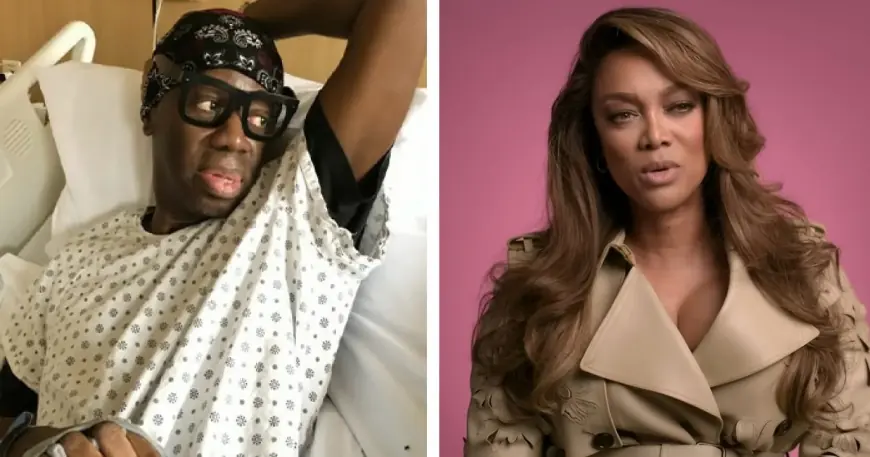
A new three-part documentary series released on February 16, 2026 has thrown America’s Next Top Model back into the cultural hot seat, triggering renewed scrutiny of the franchise’s most criticized moments and the power dynamics that shaped them. The series revisits long-debated themes including body image pressure, racially charged creative concepts, and the show’s reliance on humiliation-as-entertainment, while also surfacing fresh details about how the project came together and who was involved when.
The result is a familiar modern cycle: a nostalgia-driven rewatch colliding with today’s standards, followed by a wave of public reassessment that quickly centers the most recognizable names from the ANTM era.
What happened in the ANTM documentary and why it’s dominating the moment
The documentary frames ANTM as a defining force in reality competition TV, but one that frequently crossed lines in pursuit of ratings, shock, and viral moments before “viral” was an industry strategy. Former contestants and insiders describe how critiques on camera could translate into lasting harm off camera, particularly around eating, weight, and self-image. The series also revisits episodes and photo shoots that many viewers now regard as racially insensitive or exploitative, arguing that the format normalized behavior that would be far harder to justify today.
A key new wrinkle is the documentary’s portrayal of internal tensions among major on-camera figures. Nigel Barker, one of the show’s best-known judges, has publicly characterized Tyra Banks as not being part of the earliest stages of the documentary’s development, even though she ultimately appears in it. That detail has become a central talking point because it reframes the question of control: whether Banks helped shape the narrative from the start or entered later as the project gained momentum.
Tyra Banks and the accountability question that won’t go away
Banks remains the gravitational center of any ANTM reckoning because she was more than the host. She was the franchise’s face, its authority figure, and the person audiences associated with the show’s values, tone, and consequences. The documentary positions her as acknowledging regrets while also emphasizing the era’s context, a posture that some viewers interpret as accountability and others read as partial deflection.
Behind the headline is a tight incentive knot. If Banks concedes too much, she risks validating the harshest critiques of a brand that still defines her career. If she concedes too little, she risks appearing out of step with current expectations about harm, care, and responsibility. The documentary doesn’t end that debate so much as formalize it: it puts the questions on record, then sends them back to the public for judgment.
Nigel Barker, production reality, and who actually had power on ANTM
Barker’s role in the documentary discussion matters because it highlights a structural truth about unscripted television: the people audiences see as decision-makers are not always the ones building the machine. The series points viewers toward the ecosystem behind the judging table, where editorial choices, story beats, and “character arcs” can be shaped long before anyone walks onto a set.
That shift is important because it widens the accountability lens beyond a single star. At the same time, it doesn’t absolve on-camera leadership. In reality TV, authority is performed, and performance still carries responsibility when it is used to intensify pressure on vulnerable participants.
Janice Dickinson’s absence becomes its own storyline
Janice Dickinson, one of the franchise’s most polarizing early judges, is not featured in the documentary, and that omission is now part of the conversation. Public explanations have pointed to scheduling conflicts and other commitments. Still, the absence creates a narrative vacuum: Dickinson’s era is remembered for bluntness that often crossed into cruelty, and leaving her out invites two reactions at once, relief from some viewers and frustration from others who wanted direct confrontation.
The second-order effect is predictable. Without Dickinson on screen, the debate shifts toward what she might say elsewhere, and whether she will attempt to define her own version of events. In a media ecosystem that rewards competing tell-alls, a major voice sitting out one project can quickly become the hook for the next.
Eva Marcille and what a winner’s perspective reveals about ANTM’s double-edged impact
Eva Marcille’s name is resurfacing because winners sit at the crossroads of gratitude and critique. A winner can credibly argue that the platform changed their life while also acknowledging that the process could be emotionally damaging. That dual truth is uncomfortable for audiences who want a clean verdict, but it may be the most accurate framing: opportunity and harm can coexist inside the same production model.
For Marcille and other alumni, the stakes are personal. A broad condemnation of the franchise can flatten their achievements into a footnote of exploitation. A broader reassessment that distinguishes between participants’ success and the system’s flaws can preserve both the accomplishments and the accountability.
What we still don’t know
Several missing pieces will determine whether this documentary becomes a lasting turning point or a short-lived spike in outrage:
-
Whether more former contestants come forward with consistent, detailed accounts tied to specific production practices
-
Whether behind-the-camera decision-makers are identified clearly enough to match responsibility with authority
-
Whether any future revival plans include enforceable participant protections, aftercare, and mental health safeguards
-
Whether Dickinson’s perspective emerges quickly in a form that materially adds facts rather than heat
What happens next: realistic scenarios and the triggers
-
A second wave of alumni statements expands the story
Trigger: participants see public attention as a rare window to be heard. -
Industry standards talk turns into concrete policy changes
Trigger: advertisers, insurers, and production partners push for clearer duty-of-care rules. -
A reboot discussion accelerates in parallel with criticism
Trigger: strong viewership proves demand, even as reputational risk remains high. -
The narrative splits into rival versions of events
Trigger: key figures choose separate projects to control their portrayal. -
The conversation shifts from “who’s to blame” to “what changes now”
Trigger: specific reforms are proposed, measurable, and publicly tracked.
The documentary’s real significance is not that it reminds people ANTM was controversial. It is that it forces a more detailed argument about how entertainment incentives shaped behavior, who benefited, who paid the costs, and whether reality TV can evolve without repeating the same harm under a new coat of paint.