








Alyssa Liu’s DIY ‘Smiley’ Piercing and Hair Rings: The Style Choices Framing Her Olympic Comeback

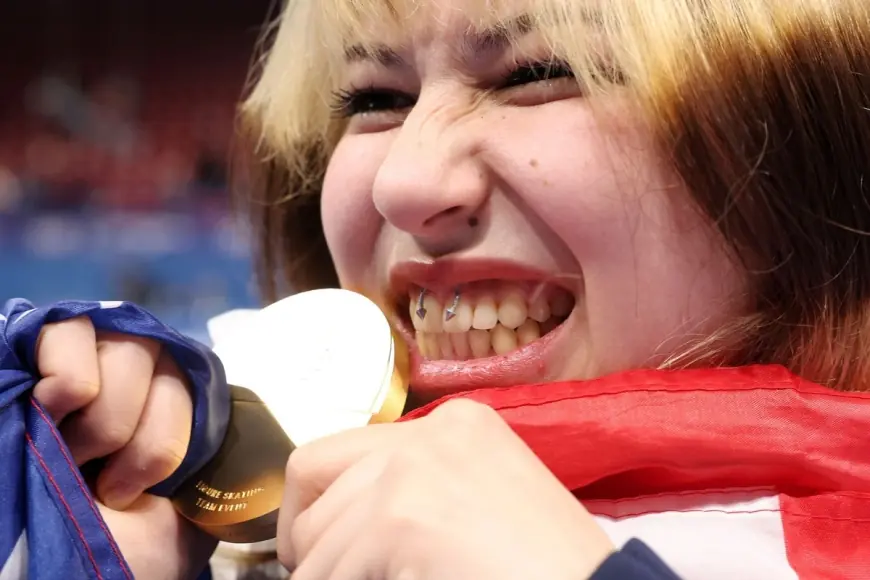
Team USA figure skater alyssa liu has confirmed that the silvery flash visible when she smiles is a frenulum mouth piercing she says she pierced herself, and that her distinctive hair rings are a deliberate yearly marker of personal growth — style decisions she brings onto the Olympic ice as she heads into the women’s free skate.
What happened and what’s new
Several recent interviews and public comments establish these facts: the metal seen over Liu’s front teeth is a frenulum piercing commonly called a “smiley. ” Liu says she pierced it herself a little over two years ago, using a piercing needle while her sister held her lip and watching the placement in a mirror. She has characterized piercing as a hobby she picked up, saying she buys proper supplies, does not use improvised tools, and avoids piercing guns.
Liu has also described a hair styling practice in which she adds a horizontal platinum stripe — which she calls a ring or halo — to her hair each year, a visual tally of personal and professional growth. She has tied that pattern to recent years of her career and says she intends to continue the practice.
On the competitive front, Liu is competing at the Winter Olympics: she earned a team gold earlier in the Games and finished the women’s short program in a podium position, sitting third as she prepares for the free skate later in the week. Her return to international competition followed an earlier retirement and a decision to come back to the sport under conditions intended to preserve personal autonomy.
Behind the headline: Alyssa Liu, her choreographer and the choice to self‑style
Liu has framed these styling decisions as part of a broader intent to control how she presents herself in the second phase of her career. She has said that after stepping away from skating at a younger age and then returning, she set clear conditions for her comeback — including the freedom to choose wardrobe, music and breaks — so the sport would not subsume her identity. Her longtime choreographer has been described as encouraging that self‑expression and using choreography to project who she is on ice; that working relationship is presented as central to how Liu turns personal style into performance language.
What we still don’t know
- Exact timeline and count for Liu’s hair rings: public comments contain differing indications about how many years the pattern covers.
- Any formal guidance or federation response about visible oral jewelry in competition settings is not specified in recent public remarks.
- Medical or safety details related to a self‑performed frenulum piercing are not addressed beyond Liu’s statements about her supplies and technique.
- How judges will treat visible oral jewelry in artistic scoring, if at all, is not clarified in the available commentary.
- Whether Liu plans to change or remove any of these style elements after the Olympics has not been stated.
What happens next
- Medal outcome scenario: If Liu finishes on the podium in the free skate, the combination of athletic result and distinctive personal style could intensify public attention on her comeback and boost the narrative of autonomy that she has emphasized. Trigger: final placement in the free skate.
- Performance‑first scenario: A strong technical and artistic free skate that leaves style discussion secondary would reinforce the idea that Liu’s personal choices coexist with competitive excellence. Trigger: high technical and program component scores.
- Style controversy scenario: Questions or debate emerge about the appropriateness or safety of visible oral jewelry in competition, prompting clarifications from officials or medical advisors. Trigger: public or official inquiries about equipment or safety rules.
- Continuation of personal branding scenario: Regardless of the immediate Olympic result, Liu continues to use hair rings and jewelry as part of an ongoing personal brand tied to autonomy and self‑expression. Trigger: future public appearances or competition seasons where the look is maintained.
Why it matters
Near term, these details matter because they shape how audiences, judges and the skating community perceive Liu’s return. Her emphasis on personal choice — from hairstyles to piercings to conditions for returning to competition — reframes her achievements as not only athletic comebacks but also assertions of control over identity in a judged sport. For fellow athletes and fans, her approach highlights tensions between tradition and personal expression. For the sport, the spotlight on visible jewelry and DIY styling choices could prompt practical conversations about safety, equipment rules and the boundaries of permissible self‑presentation.
Whatever the free skate outcome, the combination of performance and personal styling leaves a clear imprint on Liu’s current Olympic narrative: an athlete staging a comeback on her own terms and using visible markers of identity to tell that story on the ice.