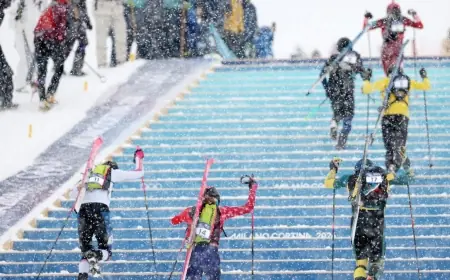

























Olympic Debut: ski mountaineering Arrives in Bormio, Testing Athletes in Sprints and Relays


What began as a necessity for people living in high mountains has become the newest Olympic winter sport. On Thursday in Bormio, Italy, ski mountaineering staged its debut at the Winter Games with sprint races that condensed the punishing mix of uphill climbs, on-foot sections and rapid descents into dramatic, television-friendly showpieces. The first global Olympic exposure for the discipline offered a compact demonstration of why devotees call it skimo: it is equal parts endurance, technique and fast transitions.
How the races unfold
Sprint events last roughly three minutes and pack several distinct skills into a short, intense loop. Competitors climb on skis with adhesive skins for grip, remove skis to continue uphill on foot, then put skis back on to finish the ascent and launch into a high-speed descent. The final climb in sprints reaches about 230 feet in elevation gain before the downhill, and races are often decided in the brief moments athletes change equipment or ties unfold on downhill turns.
The mixed relay expands the test: pairs alternate laps, with the female leg typically covering two ascents of 400 to 500 feet and two descents before the male partner takes over, and then each repeats the sequence. Those relay races run about 30 minutes, demanding both sustained aerobic power and repeated explosive efforts.
Competitors, quick transitions and the American presence
The sport’s Olympic introduction included a North American presence: two U. S. athletes took part in the field after securing their spot with a standout World Cup mixed-relay performance earlier in the season. Their qualification hinged on an unexpectedly dominant showing that clinched first place at a key event in December and earned a berth for these Games.
A leading figure from the U. S. described skimo as a discipline that requires being “powerful, explosive, fast” while also having the endurance to repeat climbs repeatedly. Another American competitor, who transitioned from collegiate middle-distance running and a background in alpine skiing, said the sport offers both the solitude of long climbs and the breathless thrill of fast descents — qualities that help explain its grassroots growth in North America.
For new viewers, one piece of advice stood out: watch the transitions. Teams often gain or lose seconds when athletes strip skins, reattach skis and sprint away, and those split-second differences can determine finishing order in the short sprints.
Tradition, growth and Olympic prospects
Ski mountaineering draws on centuries-old mountain practice. Before mechanical lifts and winter tourism took hold, people in snowy regions used skis to travel, trade and fight — pragmatic origins that evolved over time into recreational and competitive disciplines. The sport has deep roots and broad popularity across the Alps in Italy, France and Switzerland, where local cultures long nurtured uphill skiing traditions.
Skimo is the first new Olympic winter sport since snowboarding’s introduction in 1998, and organizers have not confirmed whether it will appear at the 2030 Games. Governing bodies for the sport are actively campaigning to secure spots at future Winter Games, including hopeful bids for subsequent host cities. In the meantime, its Olympic debut in Bormio has put the discipline on a global stage, giving viewers a compact, visceral showcase that emphasizes athleticism, mountain skills and the fine margins of quick equipment changes.
For athletes and fans, the arrival of ski mountaineering at the Winter Games feels like a natural reunion between the hard-earned craft of moving on snow and the spectacle of elite competition. Whether the sport will become a staple of Olympic programs remains to be seen, but its first outing delivered a vivid reminder that some of the most compelling competitions are those that combine tradition with raw physical challenge.