

























nasa asteroid danger: Planet vulnerable to 'city-killer' rocks, planetary defence chief warns

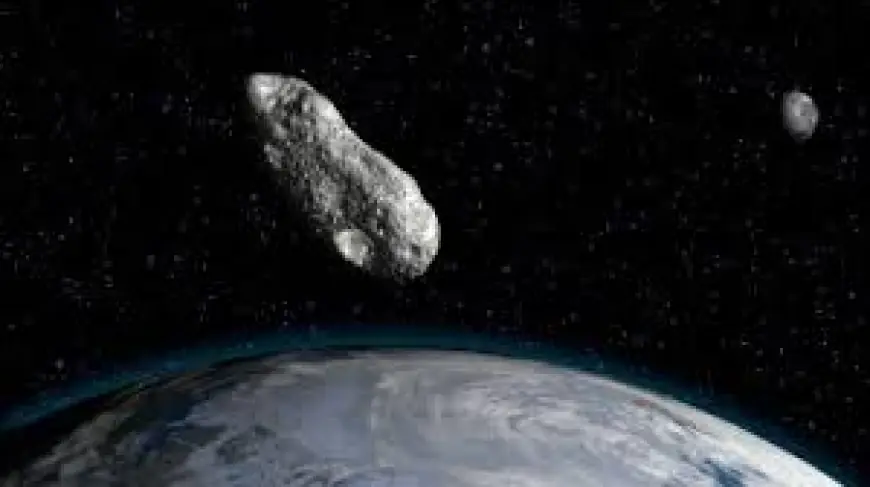
NASA’s lead planetary defense official said what keeps her awake at night are the asteroids humanity has not yet discovered — medium-sized rocks large enough to cause regional devastation but small enough to slip past current surveys. Scientists say the detection gap leaves Earth exposed to impacts that could devastate cities and infrastructure.
Why medium-sized asteroids pose the biggest threat
Small space rocks strike Earth frequently and rarely cause widespread harm, while the largest known asteroids have been cataloged for decades. The real worry is the middle set: bodies roughly 140 meters (about 459 feet) and larger. These objects are too big to ignore — a strike could level a metropolitan area or trigger severe regional effects — yet many remain uncharted.
At a recent science conference in Arizona, the agency’s planetary defense officer said, "What keeps me up at night is the asteroids we don't know about. " That blunt assessment reflects a strategic problem: the combination of size, scarcity and detection difficulty makes these asteroids uniquely dangerous.
The detection shortfall: how many remain and what we know
Estimates suggest there are around 25, 000 near-Earth asteroids in the 140-meter-plus class, and current surveys have identified only a portion of them. The planetary defense office notes progress has been made, but completion of the inventory is far from guaranteed — roughly 40 percent of that population has been located, leaving thousands that could be on trajectories placing them near Earth.
Monitoring teams use orbital calculations to assess risk. In one notable case a recently discovered object briefly registered an elevated impact probability for 2032. Follow-up observations and orbit refinements removed the immediate threat and showed no significant impact risk for 2032 or the near future. That episode illustrates both the strength and limits of current systems: detection and rapid follow-up can rule out false alarms, but finding the objects in the first place remains the bottleneck.
A subset of near-Earth objects are classified as potentially hazardous asteroids (PHAs) because their orbits periodically bring them within a few million miles of Earth's path around the Sun and they are large enough to do harm. The designation signals that, over centuries and millennia, orbital evolution might one day put such an object on a collision course. Long-term possibilities are typically not treated as immediate threats, but they underscore why a fuller catalog is needed.
What can be done — and where limits remain
Detection is the first and most critical line of defense. Better telescopes, wider surveys and dedicated search programs will shrink the blind spots, but they take time and resources. Even with the best instruments, locating every mid-size hazard will require continued investment and international coordination.
On the response side, technology to deflect or disrupt an incoming object has advanced and demonstration missions have shown such concepts can work in principle against known targets. However, these measures demand lead time. A discovered object years or decades out allows for planning and action; one found only months before a potential impact would leave few practical options for preventing damage.
Experts emphasize resilience as well as prevention. Improved impact modeling, emergency planning and infrastructure hardening can reduce casualties and damage if a regional impact occurs. But the simplest and most effective prevention remains early detection: finding the objects while they are far enough away to act.
In short, the planetary defense community is not powerless, but it is not yet complete. The headline risk today is not the blockbuster scenario of a planet-ending rock — those bodies are largely known — but the quieter, harder-to-find class that could strike cities and regions without ample warning. Closing that gap is now a priority for scientists and planners working to protect the globe.