

























Ski Mountaineering Makes Its Olympic Debut in Bormio at the 2026 Winter Games

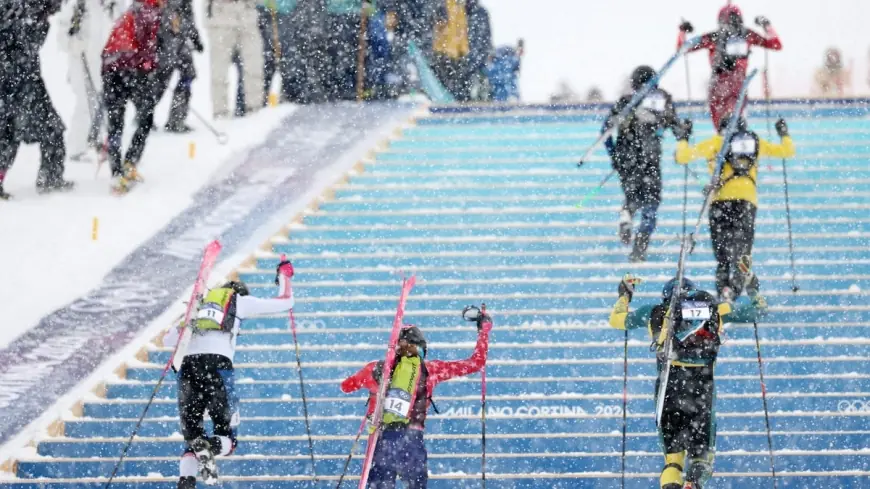
On Thursday, February 19, 2026 (ET), ski mountaineering — often called skimo — appeared on the Olympic program for the first time, bringing a high-intensity, backcountry-rooted discipline to the Winter Games. Athletes climbed on skis and on foot, shed skins, shouldered equipment and launched into steep descents across the historic slopes of Northern Italy.
What viewers saw: short, brutal sprints and fast transitions
The inaugural program featured men’s and women’s sprints and a mixed relay. Sprint heats are compact and explosive: competitors make an ascent on skis, peel skins and remove skis to continue on foot, then reattach skis for a final climb of roughly 230 feet before charging downhill. Each sprint lasts about three minutes, a compact test of power, technique and transition efficiency.
The mixed relay amplifies the endurance element. Each teammate completes two ascents and two descents, with the female athlete starting and the male athlete following. Total vertical gain per leg reaches about 400 to 500 feet, and the race typically runs around 30 minutes. At this scale, races are often decided by transitions — how quickly a racer removes skins, stashes skis and straps them back on without losing momentum.
A sport born of necessity that rewards modern athleticism
Ski mountaineering traces its roots to the practical ways mountain communities once traveled and worked in snowbound regions. What began as necessity has evolved into a disciplined, technical sport that rewards a rare combination of aerobic endurance, explosive strength and precise ski-handling skills on varied terrain.
Competitors attach skins to ski bases to ascend without sliding backward, then strip them away for the descent. Equipment is lightweight and specialized, and wax choices still matter when traction on snow is at a premium. Races require pacing and tactics: competitors must decide when to push hard on the climb, when to conserve for a technical downhill and how to negotiate busy transition zones under pressure.
The field is dominated by nations with deep Alpine traditions, with France, Switzerland and Italy among the strongest. Thursday’s podiums also featured surprising strength from Spain, which captured medals on both the men’s and women’s sides, underscoring the sport’s expanding competitive footprint.
U. S. presence and the sport’s Olympic future
The United States sent two athletes to the debut event. One of them is among the most decorated Americans in the discipline, and both reached the Olympic stage after standout performances in World Cup competition earlier in the season. Both Americans advanced from heats into the finals as "lucky losers, " a time-based advancement system that rewards fast performances even if an athlete does not finish in a top automatic qualifying spot in a given heat.
Skimo’s inclusion marks the first new Olympic winter sport since 1998 and will be closely watched by federations and host cities considering future programs. Organizers have not yet decided the event’s long-term Olympic status, but strong regional followings in the Alps and an organized international federation are arguments in its favor. The federation is also working toward keeping the discipline in future Games, including bids tied to mountain-rich host regions.
For newcomers tuning in, one quick tip: watch the transitions. The moments when athletes strip skins, shoulder skis or reattach gear are where seconds are won or lost — and they provide an accessible window into what makes ski mountaineering uniquely dramatic among winter sports.