
























Walmart earnings show wealthier shoppers driving demand as walmart stock whipsaws

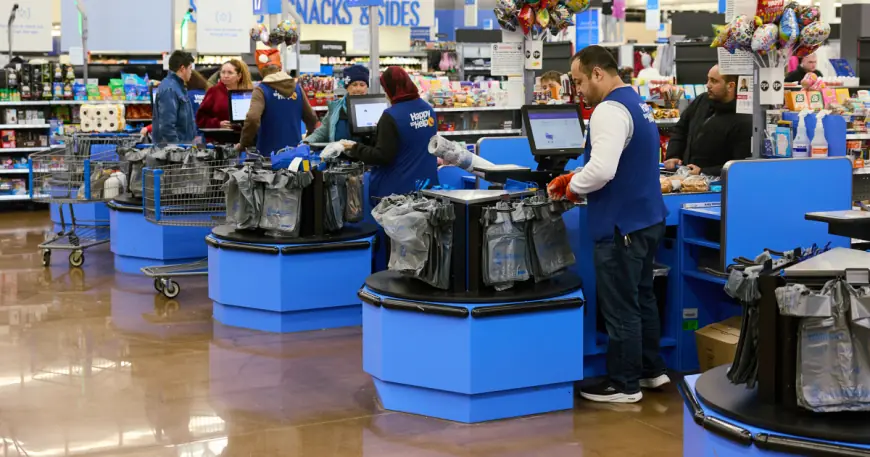
Walmart on Thursday reported that an outsized share of its recent sales growth is coming from households earning more than $100, 000, even as lower-income shoppers continue to struggle. Executives flagged a mixed outlook: same-store sales topped expectations for the period that ended Jan. 31, but a cautious profit forecast sent the stock into a volatile session.
Higher-income shoppers are powering gains
Newly installed CEO John Furner said Thursday morning ET that the bulk of the company's share gains this quarter came from households with annual incomes above $100, 000, while households earning below $50, 000 are feeling stretched. "For households earning below $50, 000, we continue to see that wallets are stretched. And in some cases, people are managing spending paycheck to paycheck, " Furner said on a call with analysts.
Executives framed this trend as part of a broader K-shaped recovery in consumer spending: wealthier Americans, buoyed by stock market returns and stronger wage gains in some sectors, are spending more, while lower-income households face persistent pressure from higher costs for food, housing, utilities and child care. Labor-market signals have been uneven; data released earlier this month showed almost no job gains for 2025 overall, and January's inflation reading was 2. 4% year over year, above the Federal Reserve's 2% target but moderating from prior months.
Retail competitors that traditionally drew lower-income shoppers are seeing similar shifts. Discount grocers and dollar retailers are reporting a rising share of customers from higher-income brackets, a sign that value propositions are pulling in a broader cross-section of consumers who want to stretch dollars without sacrificing convenience or quality.
Earnings, outlook and market reaction
For the quarter ended Jan. 31, same-store sales at the company's U. S. stores rose 4. 6%, a beat that underscored continued demand at its core business. Yet the company’s profit forecast for the fiscal year fell short of market expectations, prompting a sharp but short-lived selloff before shares regained some ground later in the trading session.
The company also used the quarterly update to highlight strategic shifts that go beyond brick-and-mortar retailing: it has invested more heavily in technology and artificial intelligence, moved its listing to a tech-focused exchange late last year, and outlined a major buyback program to return capital to investors. Earlier this month the company crossed a $1 trillion market valuation milestone, though it was surpassed as the top global firm by revenue by a large online rival.
Risks flagged by management and what to watch next
Executives emphasized several cautionary factors that could blunt momentum. Management pointed to a slowdown in hiring momentum, softer consumer sentiment measures and elevated student loan delinquencies as headwinds that could restrain spending among vulnerable households. Chief Financial Officer John David Rainey said in an interview that tariff-driven inflation appears to have peaked or is close to peaking — a note of optimism on costs — but he urged prudence given lingering uncertainty in the macro backdrop.
Investors and analysts will be watching several indicators in coming weeks: hiring and wage trends, consumer confidence readings, the trajectory of food and energy prices, and whether the company’s investments in online channels and technology translate into sustained market-share gains across income cohorts. For a retailer long seen as a barometer of U. S. consumer health, the split between higher- and lower-income shoppers will be a central storyline for the rest of the year.