



















Macron-Modi Talks in bombay Put Spotlight on Higher 'Make in India' Share in Rafale Deal

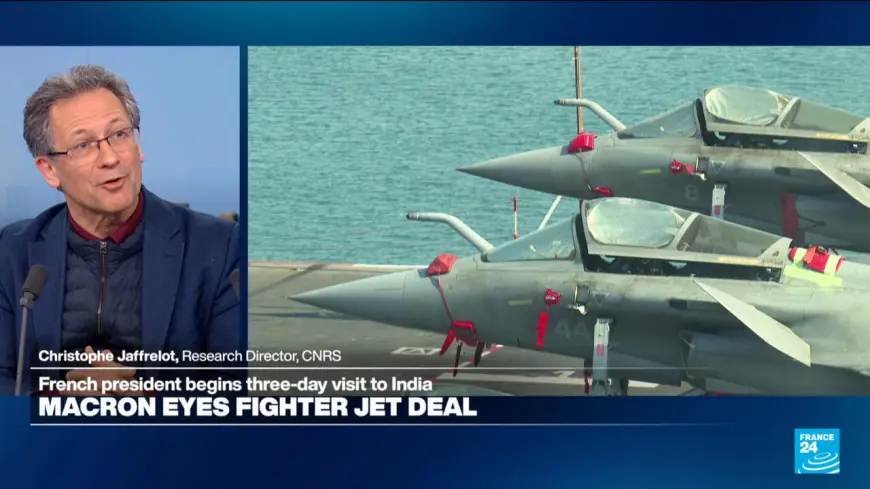
French President Emmanuel Macron's visit to Mumbai on Tuesday, Feb. 17, 2026 (ET), brought defense industrialisation and deeper strategic ties to the fore. Indian ministers pressed for a bigger domestic content share in any expansion of the Rafale fighter-jet programme, signalling New Delhi's intent to turn arms procurement into an industrialisation engine.
Push for higher India-made content in Rafale discussions
India's defence leadership raised the demand that a larger portion of components and systems for future Rafale jets be manufactured locally. The point was made directly during high-level talks aimed at expanding bilateral cooperation in defence production. New Delhi framed the request as part of a broader industrial policy that prioritises local suppliers, technology transfer and job creation.
Officials outlined a roadmap that would see transfer of more advanced subsystems, expanded final assembly work and increased participation by private-sector manufacturers. The proposal aligns with recent steps to establish domestic assembly lines for military helicopters and other platforms, and it targets both sovereign capability and the creation of export-competitive defence firms.
At the same time, discussions acknowledged the technical and certification hurdles of relocating sensitive manufacturing processes. French counterparts were urged to move beyond component-level partnerships and allow Indian industry access to higher-value segments of the supply chain, a move that would require long-term commitments on training, quality assurance and intellectual-property arrangements.
Deal scale and strategic timing
Talks on the sidelines of the state visit included the possibility of a substantial follow-on Rafale contract. Indian decision-makers weighed defence modernisation needs alongside the economic promise of deeper industrial collaboration. New Delhi is evaluating options that would pair additional aircraft procurement with binding local-content targets and offset-style commitments designed to seed domestic aerospace capability.
Observers characterise the moment as a pivot: India wants to diversify suppliers while ensuring defence purchases contribute to industrial growth. For France, the offer of larger manufacturing roles for Indian industry is a pathway to more competitive bids in a region where partnerships and local production increasingly drive procurement decisions. Negotiations over scale, timelines and the granularity of transfers are likely to shape any final accord.
Broader economic and security implications
The discussions in Mumbai also highlighted cooperation beyond fighter jets. Leaders inaugurated a private-sector final assembly line for a light helicopter model built in India, a first of its kind locally for that category. That project exemplifies the dual goal of enhancing domestic manufacturing while embedding foreign investment and technology in Indian supply chains.
Strategically, the deeper defence-industrial partnership forms part of a larger alignment that spans trade, technology and energy cooperation. For New Delhi, leveraging procurement to catalyse domestic industry supports economic priorities and reduces reliance on a narrow set of foreign suppliers. For partners, offering meaningful industrial access determines long-term market share and influence in the Indo-Pacific arena.
Negotiations ahead will test how far both sides are willing to go on transfer of technology, joint development programs and guaranteed workshare for Indian firms. If New Delhi secures a substantially higher share of India-made components in a Rafale follow-on, it would mark a notable shift in the way major defence contracts are structured in the region—blending strategic sourcing with explicit industrial policy goals.
The coming months will determine whether those ambitions translate into contractual commitments, phased manufacturing schedules and a measurable boost to India's aerospace ecosystem.