

![Florida Panthers Face Off Against [Team Name] on April 4, 2026](https://www.filmogaz.com/uploads/images/202604/image_430x256_69d2395a47e1f.webp)




















yoon suk yeol sentenced to life with labour for leading insurrection

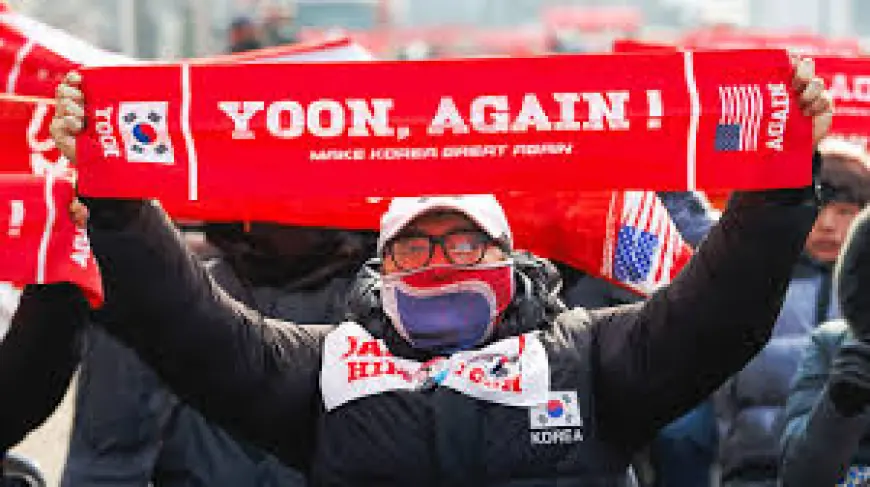
Thursday, February 19, 2026 (ET) — A South Korean court has handed former president yoon suk yeol the maximum custodial sentence, ruling that his attempted declaration of martial law in December 2024 amounted to leading an insurrection. The life-with-labour sentence marks the most severe penalty imposed on an elected head of state in the country’s democratic era.
Court ruling hands life with labour
The court convicted the former president of orchestrating a plan to deploy military forces to surround the legislature, arrest political rivals and seize control of election administration during a six-hour crisis on the night of December 3, 2024 (ET). Under the statute for leading an insurrection, courts may impose the death penalty, life imprisonment with labour, or life imprisonment without labour; the court chose the middle option.
Prosecutors had sought the death penalty, arguing the actions constituted a grave destruction of the constitutional order. The judgement follows a string of related convictions that established the night’s events as an insurrection and created a legal context in which the most severe penalties were deemed appropriate.
The former president has consistently denied criminal intent, calling the investigation a political conspiracy and maintaining that martial law was intended as a warning about what he described as an unconstitutional parliamentary domination. He also alleged election fraud at the time without presenting corroborating evidence and said deployed troops were largely unarmed and not meant to suppress parliamentary functions. His legal team maintained there was no intent to disrupt constitutional order and no riot occurred.
What happened on December 3, 2024
Events began late on December 3, 2024, when the declaration of martial law triggered an immediate and chaotic response. Military and police units were deployed around the legislature; prosecutors said the plan included attempts to arrest opposition lawmakers and assert control over the national election commission. Within hours, 190 lawmakers breached security cordons to pass an emergency resolution lifting martial law, and the legislature moved swiftly to impeach the president.
Impeachment followed within 11 days, and the constitutional court removed him from office four months later. The night was later described by one judgment as the most serious threat to the nation’s democratic system in decades, setting the stage for criminal prosecutions of senior officials involved in the attempt.
Political fallout and wider legal aftermath
The sentencing of the former president comes after related rulings that sent several top figures to prison. A former prime minister received a long multi-decade sentence for participating in what a court described as a self-coup, and a former interior minister was jailed for relaying orders tied to the attempt to cut power and water to certain media outlets. Legal analysts said those prior decisions increased the likelihood of a severe outcome in the former president’s trial.
The verdict revives memories of earlier high-profile legal actions against national leaders, including corruption cases and past punishments for military rulers in the late 20th century. Those earlier sentences were sometimes reduced on appeal or later commuted, a dynamic that observers say could influence how this case develops if it is appealed to higher courts.
Political parties and civic groups are expected to react strongly to the ruling, and the sentence is likely to deepen divisions between supporters who view the former president as defending national integrity and critics who regard the attempt as a direct assault on democratic institutions. The immediate legal path forward may include challenges and appeals that could stretch the case into months or years of further litigation.
The court’s verdict closes one of the most consequential chapters in recent political history while opening a new period of legal and political reckoning over the boundaries of executive power and the resilience of democratic checks and balances.