























ramadan mubarak: Ramadan 2026 begins as communities prepare for variable fasting hours

Ramadan, the Islamic month of fasting, prayer and reflection, is expected to begin on the evening of Tuesday, February 17, 2026 (ET) or Wednesday, February 18, 2026 (ET), depending on the sighting of the crescent moon. The holy month will last 29 or 30 days and will see Muslims around the world observing a dawn-to-dusk fast, breaking each day with the evening meal known as iftar.
Start date and what determines it
The exact first day of fasting hinges on local moon sightings and regional announcements. Following a crescent sighting on Tuesday evening, a number of communities set the first day of fasting as Wednesday, February 18, 2026 (ET). Where the crescent is not observed on that evening, communities may instead begin on the evening of Tuesday, February 17, 2026 (ET). This variability is a regular feature of the lunar-based calendar and is part of why Ramadan shifts about 10 to 12 days earlier each year on the solar calendar.
Muslims traditionally greet one another with phrases such as "Ramadan Mubarak" or "Ramadan Kareem" during the month, conveying wishes for a blessed or generous Ramadan. The month is widely regarded as a period for spiritual renewal, self-discipline and increased charity.
Fasting hours and regional differences
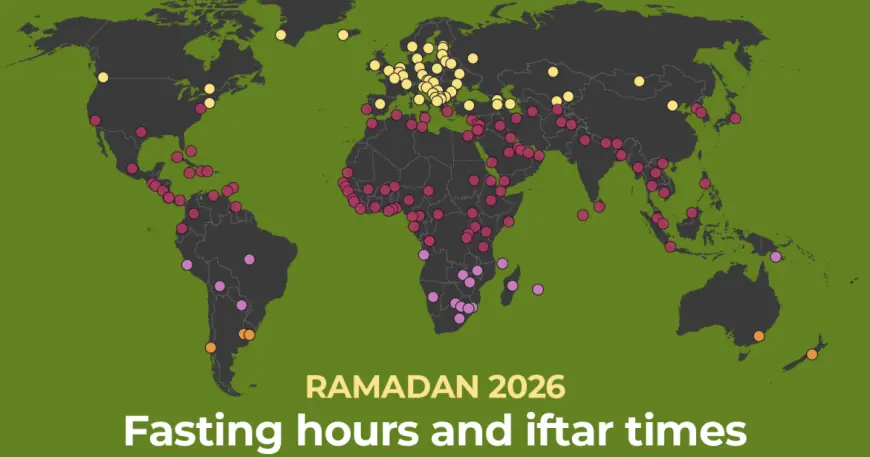
Daylight fasting durations in 2026 will range roughly between 11. 5 and 15. 5 hours depending on geography. For much of the Northern Hemisphere, the first day will bring relatively short fasts—about 12 to 13 hours—because Ramadan falls during winter months there. By contrast, communities south of the equator can expect longer fasts, often around 14 to 15 hours on the opening day.
These daily fasting windows will shift across the month as sunrise and sunset times change in each location. Observers refrain from eating, drinking, smoking and intimate relations from dawn until dusk to cultivate greater spiritual awareness.
Looking ahead, the lunar calendar means Ramadan will continue to migrate through the seasons: it will coincide with the winter solstice in the Northern Hemisphere by 2031, and the year 2030 will uniquely host Ramadan twice—first starting on January 5 and later on December 26, on the Gregorian calendar.
Community and institutional support
As many students, staff and community members prepare to observe Ramadan while maintaining professional and academic commitments, institutions are being encouraged to show flexibility. Messages circulated to campus communities highlight that colleagues observing the fast may need schedule adjustments, prayer breaks and consideration for late-evening or early-morning routines tied to suhoor and iftar.
A staff message extended warm greetings for the month and asked for understanding and kindness across campuses, noting that the spirit of Ramadan emphasizes compassion and community responsibility. One lecturer described the month as a month-long "spiritual retreat" lived between campus, home and local places of worship, underscoring how practitioners combine routine responsibilities with deeper reflection during these weeks.
Practical steps organizations can take include accommodating prayer times where feasible, considering flexible scheduling around assessment deadlines or shift work when possible, and being mindful of communal spaces during iftar periods. Simple gestures of recognition and support can reduce stress for observing members and strengthen community cohesion during the holy month.
Whether offering a greeting of "Ramadan Mubarak" or providing practical adjustments, community awareness will shape how smoothly Ramadan is observed across workplaces and campuses in 2026.