























nick suzuki's Olympic fate looms as Canada weighs lineup tweaks

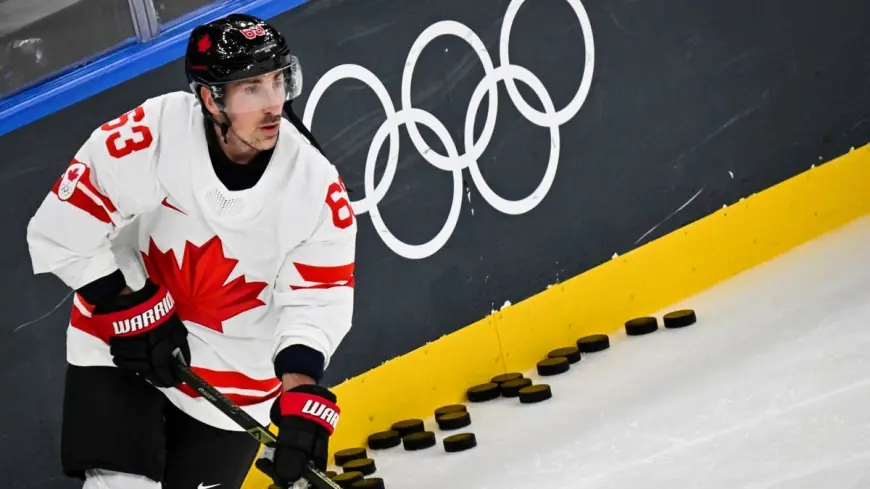
Nick Suzuki has been a quietly effective presence for Team Canada in the opening Olympic games, but roster geometry and a returning veteran threaten his spot as the tournament shifts into elimination mode. Coaches now face a classic trade-off: preserve depth and balance or reinsert a proven scorer to sharpen top-line production.
Performance, versatility and the case for keeping him
Through three preliminary games Suzuki has provided steady, two-way play while producing a goal and setting up chances in limited minutes. Deployed in different roles — often shifted from center to wing — he has drawn mixed reviews from observers, but a closer look at his usage suggests he has largely delivered what the coaching staff asks: defensive responsibility, playmaking runs and the ability to slide into multiple positions without creating a mismatch against opponents.
That adaptability is central to his value. When a roster is constructed with multiple elite forwards, the ability to pivot between center and wing, kill penalties, and contribute in the defensive zone becomes a strategic asset. Suzuki’s contributions aren’t always flashy on the scoresheet, but they have helped Canada control possession in key moments and maintain structure when opponents push tempo.
Marchand's return, MacKinnon chemistry and tough choices ahead
The pressing issue is fit. With Brad Marchand set to return to the lineup for the quarterfinal, someone will likely be scratched. One school of thought favors reinstating Marchand to give a top-line winger more offensive punch alongside elite talent, which could displace a player currently in the forward rotation. In practical terms, that could place Suzuki’s ice time and role in jeopardy — not because his play has been poor, but because the coach must juggle combinations to maximize 5-on-5 impact.
Another wrinkle is the pairing with Nathan MacKinnon. MacKinnon has tremendous upside when paired with the right wings, and the staff has signaled a preference for spreading star power across lines rather than stacking two or three elite players together for extended shifts. Where Suzuki has often slotted in as a flexible piece, chemistry with MacKinnon and the need to find complementary speed or finishing ability on that line could prompt a lineup change. If the coaching staff opts to keep MacKinnon in a more offensive posture, Suzuki’s defensive and transitional strengths might become less critical in the minutes that matter most.
There are alternatives to benching Suzuki outright: he can be shifted back to center if a top-line winger is moved, or he could be preserved for matchups where shutdown ability is prioritized. Coach Jon Cooper has praised Suzuki’s utility as a multi-purpose player, calling him a Swiss-army tool capable of playing nearly anywhere — an endorsement that underscores the dilemma: a player whose versatility is his greatest asset can still be the odd man out when roles are carved very narrowly for elimination hockey.
What this means for Suzuki and Canada's short-term outlook
With the Olympic tournament now moving into single-elimination play, every lineup decision is magnified. Canada will likely favor combinations that maximize top-line 5-on-5 production while retaining enough depth to absorb physical pressure and turnover. For Suzuki, the best path to staying in the lineup is to offer a clearly defined role that complements the team's top scorers — either by anchoring a checking line, stepping in as an effective middle-man for MacKinnon, or providing matchup-specific minutes where his defensive polish can neutralize an opponent’s top threat.
In short, Suzuki’s fate at the Olympics is less a question of talent and more a question of fit. The next game will reveal whether the staff prioritizes lineup continuity and versatility or tweaks its top-six to extract more offense from its star wings. Either way, the decision will come down to how the coaching staff balances chemistry, production and defensive coverage in the high-stakes window ahead.