













Fashion Reckoning: 'Love Story' and What Carolyn Bessette Kennedy Might Have Thought of the New Calvin Klein

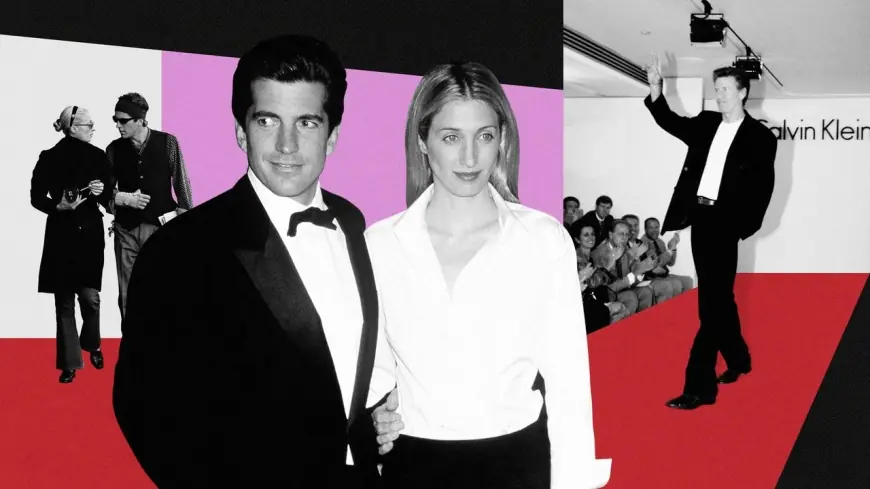
Ryan Murphy’s limited series Love Story premiered on Feb. 12 (ET) and reopened a cultural conversation about Carolyn Bessette Kennedy’s quietly influential ’90s aesthetic. The timing — the show arriving as a major fashion house staged its own collection in New York — made the contrasts sharper: a television recreation that embraced small, exacting details of the era, and a runway that chose a different lineage for the brand name.
A Revival of 1990s Minimalism on Screen
The series leans into the pared-back, severe glamour that Ms. Bessette Kennedy helped define. Costume and production work focused on a tightly controlled palette, clean lines, and the specific objects of a pre-smartphone life: no visible phones, glass brick partitions, and furniture choices that echo ’90s corporate minimalism. The recreation of a famous fashion office anchored much of that visual logic, with set designers mining period-era pieces and industrial flourishes to evoke the quiet, high-tech-inflected interiors the brand occupied then.
On screen, these touches matter because they aren’t merely wardrobe; they are behavioral shorthand. The way characters carry themselves with empty hands, the confidence of a white slip dress or a restrained pencil skirt, and the almost military restraint of certain suiting cues are all presented as part of a style system that Ms. Bessette Kennedy inhabited and amplified. After early public unease about some wardrobe teasers, the finished episodes largely convinced viewers that the production found the right balance of authenticity and dramatization.
Calvin Klein’s Runway Looks Back — but Not at the ’90s
When the fashion house presented its collection in New York the night after the show’s debut, creative direction offered an unexpected detour. Rather than leaning on the late-’90s minimalism that the series resurrected, the collection referenced an earlier, less resolved Calvin era — late ’70s and early ’80s influences that felt more exploratory than canonical. Pieces ranged from tailored suits with sleeves purposefully removed to backless suiting that revealed slip-like layers, and there were moments of decorative detail that ran counter to the trademark restraint: beaded trims, racer-back dresses with ornate finishes, and experiments in gendered tailoring that foregrounded musculature.
The result was a collection that some observers described as tentative: a house known for its rigorous simplicity seemingly searching for a fresh identity by mining a pre-minimal past. That choice also leaves a stylistic vacuum. If the visual vocabulary associated with the late ’90s is reanimated on screen, other labels and capsule projects can more easily take up those cues in commerce and culture, blurring ownership of what once felt like a signature look.
Myth, Stewardship and the Limits of Cultural Reproduction
The return of this aesthetic on television has raised broader questions about who gets to tell a family’s story and how. Critical public reactions have included sharp objections from relatives who see dramatization as opportunistic; conversely, defenders argue that dramatized reconstructions can illuminate why certain figures loom large in public memory. The conversation touches on ethics as well as aesthetics: reviving an icon’s look can revive the market for it, and commercial interests are already moving to package and sell the romance of ’90s New York.
What’s clear is that Ms. Bessette Kennedy’s influence endures precisely because it was so unobtrusive. Her elegance was less about spectacle and more about exactitude — the proportion of a skirt, the cut of a shirt, the restraint of an accessory. Television’s meticulousness in reconstructing those habits may reshape how designers think about the same archive, but whether that leads to clearer stewardship of a legacy or to a crowded field of imitations remains an open question.
For now, the interplay between screen and runway offers a reminder that style is an ongoing conversation: a visual language that can be revived, revised or repurposed — often at once.