

















Emerald Fennell's wuthering heights movie divides critics and audiences

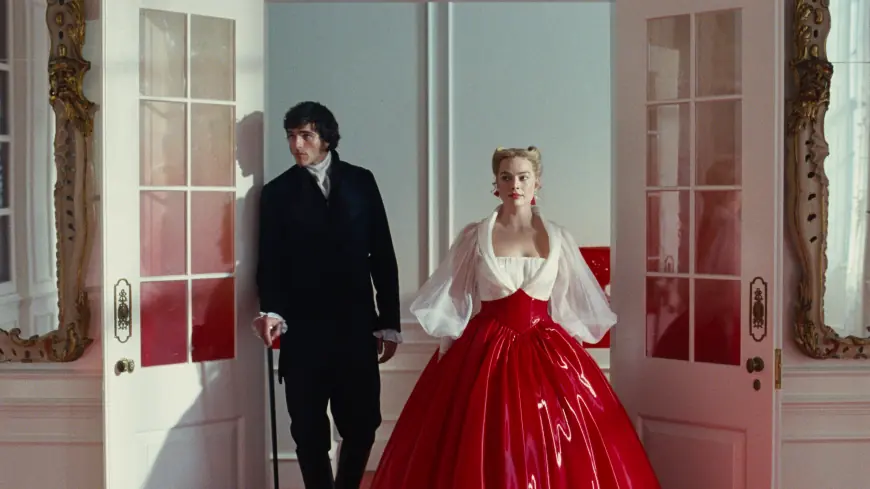
Emerald Fennell’s highly anticipated reimagining of Wuthering Heights opened the weekend of Feb. 14, 2026 (ET), and responses have been sharply divided. Some viewers cheered the movie’s explicit visual style and charismatic leads; others say the film strips Emily Brontë’s novel of the cruelty and strangeness that give it lasting power.
Split critical response: style over the novel’s darkness
Critics have been blunt: the film is lush, sexualized and meticulously designed, but many contend it fails to capture the novel’s essential tension. Fennell has described her work as a fantasia that homes in on a small piece of the 1847 novel, and that framing is evident onscreen. The production leans into fetishistic production design—flesh-toned leather walls, lurid costumes, and closeups meant to unsettle—paired with a pulsing contemporary soundtrack that aims to make the story feel urgent and modern.
Where some reviewers praise the movie’s bravura choices, others say the director’s emphasis on sensual spectacle comes at the expense of the book’s moral complexity. The original novel is famous for presenting Heathcliff and Catherine as both magnetic and monstrous—figures whose cruelty is inseparable from their love. In Fennell’s version, critics argue, those monsters have been softened into conventionally desirable romantic leads, which blunts the unsettling contradictions that drive Brontë’s narrative.
Key changes: casting, tone and what’s been left out
Casting and characterization have been flashpoints. The leads were cast for immediate screen chemistry, and their performances have prompted strong reactions. Some audience members have responded with rapturous enthusiasm to the chemistry and swagger of the leads; others note that the film omits or downplays elements of abuse, neglect and generational trauma that are central to the novel’s structure and moral gravity.
Observers have also objected to a change in the depiction of Heathcliff that removes the racial ambiguity and outsider status present in the book. For many readers, that ambiguity is integral to Heathcliff’s identity and to the novel’s dynamics of power and humiliation. By recasting the character as an idealized romantic lead, the film risks erasing an important source of conflict and social critique from the source material.
Audience reaction and the cultural conversation
Audience response has been loud and mixed. Early screenings—one social viewing took place on Feb. 13 (ET) where a group of viewers celebrated the film’s sexiness and star turns—illustrate how the movie can play as an exuberant, stylish romance for some. Fans have praised the actors’ magnetism, the bold aesthetics and the film’s willingness to flirt with eroticism.
But for many longtime readers, the film’s tonal shifts feel like a retreat from Brontë’s novel, which remains unnerving decades later precisely because it refuses simple sympathy for its protagonists. Critics argue that by trimming the darker, more destructive impulses from Heathcliff and Catherine, the adaptation loses the very contradictions that make the novel enduringly strange and powerful.
As the conversation continues this week, the film stands as a provocative example of how modern adaptations negotiate fidelity and reinvention. Some will celebrate a version that foregrounds style and contemporary sexiness; others will see it as a sanitizing gloss that tames one of English literature’s most uncompromising love stories. Either way, the debate underscores how difficult it is to translate a novel that depends on both repulsion and desire into a single cinematic gesture.