



















Why did anthony kim's win resonate so deeply? Tiger Woods has the answer

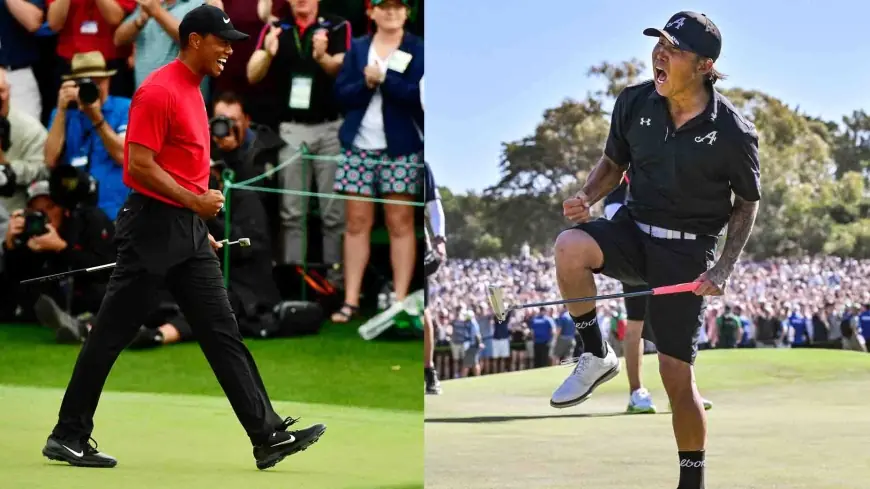
On Sunday (ET) at LIV Golf Adelaide, Anthony Kim completed a comeback that many had written off as impossible. Pouring in putt after putt to overtake Jon Rahm and Bryson DeChambeau, Kim secured his first professional title in 16 years. The victory carried an emotional weight that extended well beyond the leaderboard — a fact that resonated deeply with Tiger Woods, who watched the round unfold with a mixture of recognition and empathy.
A comeback carved from darkness
Kim’s path back to the winner’s circle reads more like a survival story than a sports comeback. Once a superstar in his 20s, Kim won three times before turning 25, rose to No. 6 in the world and delivered memorable Ryder Cup performances. An Achilles injury in 2012 derailed his career and ushered in a long absence from professional competition. During that time he battled injuries and personal demons, including addiction, and rarely entertained the idea of returning to elite golf.
His re-emergence began slowly. It was his wife’s interest in learning the game that nudged him back onto the range and into a routine. Kim returned to competitive golf in 2024 by signing with LIV and worked his way back after initial struggles. He earned a spot through a Promotions Event by making a crucial birdie on the 36th hole, then built momentum that culminated in Sunday’s breakthrough at The Grange in Southern Australia.
When he stood over each putt in the final round, Kim said he felt more than pressure — he felt the weight of years of pain and recovery. “That was all the lows that I went through in my life that I got to dig out of, ” he said, adding that every successful putt felt like a step past the struggle and toward healing. The win was, for him, therapeutic.
Why Woods — and so many fans — felt it
Tiger Woods knows the anatomy of a comeback better than most. He has navigated public recovery and private battles and has come back to win on the highest stages. When he watched Kim on Sunday, Woods saw two versions of the same player: the brash, electrifying young talent who once lit up leaderboards, and the more tempered man shaped by time and hardship.
That duality is what made Kim’s victory especially meaningful. It wasn’t simply the return of a swing or the resurfacing of shotmaking; it was proof that someone who had fallen so far could find his way back to joy and success in the sport. For other players, fans and casual observers, the moment represented resilience on display — a reminder that sporting excellence can coexist with personal recovery.
Beyond the narrative, the win also stands on its own merit. Kim outplayed high-caliber opponents down the stretch and showed the kind of putting stroke and nerve often missing from long layoffs. That mixture of technical competence and emotional catharsis is rare, and it’s what made the final round feel historic rather than merely sentimental.
What's next for Kim and the larger picture
At 40, Kim has said he considers it a small miracle to be alive and credits his wife and daughter for helping him rebuild. This victory is likely to change expectations for what he can achieve in the months ahead. It secures a tangible reward for years of difficult work and offers a renewed platform for a player who once seemed to vanish from golf’s conversation.
For the sport, the moment is a reminder that narratives of redemption carry real weight. When an athlete with a storied past returns and triumphs, it reframes how fans and fellow competitors view not just the individual but the game itself. Tiger Woods’s perspective captured that sentiment: he recognized the old spark in Kim, but he also saw the man who had been remade by life’s challenges. The convergence of those two truths is what made the win land so profoundly.
Whether this marks the start of a sustained second act or a powerful singular moment, Kim’s victory in Adelaide will be remembered as one that transcended the leaderboard and reminded the sport of its capacity for second chances.