















Emerald Fennell’s wuthering heights movie divides viewers over tone, casting and faithfulness

The new film adaptation by Emerald Fennell opened this weekend and has produced a sharp public split: some viewers embraced its glossy, erotic spectacle and big-name leads, while many readers and critics say it softens or misreads Emily Brontë’s corrosive, strange novel. The debate touches on casting choices, the film’s visual excesses, and whether a condensed fantasia can carry the book’s moral and emotional weight.
Why some viewers celebrate its sex, style and star power
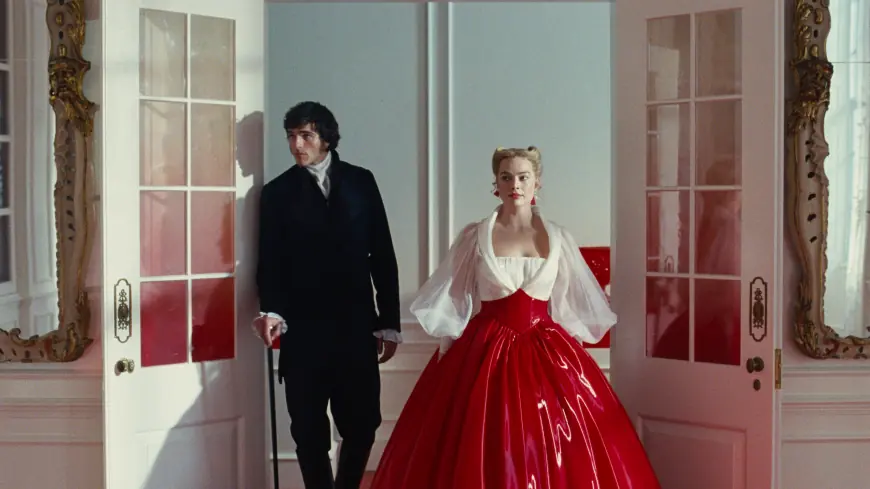
For many audience members, the film delivers a combustible cinematic night out. Casting Margot Robbie as Catherine Earnshaw opposite Jacob Elordi’s Heathcliff has been a major driver of attention; screenings this week drew enthusiastic, even raucous crowds who responded loudly to the chemistry on screen. The director’s choice to swing for heightened sensuality and fetishized production design—rooms draped in flesh-toned leather, latex-clad wardrobe choices, and an audacious soundscape that leans into contemporary pop—was intended as a fantasia, an interpretive slice rather than a faithful retelling.
Those in the film’s corner argue that distilling the novel into an intense audiovisual experience makes it accessible to a new generation. Moments that trade on shock and eroticism register strongly in a packed theater, and the movie’s opening sequence—which conflates sex, violence and dying in a way that sets an uneasy tone—signals that the director is deliberately courting discomfort. For viewers looking for visceral immediacy rather than a page-by-page recreation, the result feels daring and modern.
Why many readers say the adaptation neuters Brontë’s strangeness
Criticism has clustered around two main complaints: the softening of the central characters and the erasure of the novel’s harsher social and racial dimensions. In the book, Heathcliff’s origin and the pair’s feral childhoods feed a corrosive violence that makes their later passion both combustible and morally poisonous. Several commentators note that the film strips much of that moral ambiguity away, turning Heathcliff and Catherine into alluring, handsome protagonists suffering tragic circumstances rather than the monstrous, destructive figures Brontë fashioned.
That tonal shift has practical consequences. When the lovers are rendered sympathetic and blameless, the novel’s core tension—how love can be simultaneously annihilating and redemptive—loses its force. Critics have flagged the trimming of domestic abuse, coercive dynamics, and the intergenerational cycles of trauma that give the novel its bleak architecture. In short, the adaptation’s sexiness and gloss can feel like a surface treatment that leaves the book’s interior cold.
Casting, context and what’s at stake for the novel’s legacy
Casting choices have become a flashpoint in the conversation. Readers who know the original text emphasize Heathcliff’s deliberately ambiguous racialization in Brontë’s prose; for them, that aspect is integral to his otherness and the social cruelty he endures. Recasting him as a conventionally handsome, white-presenting film star has prompted accusations that a crucial layer of the novel’s critique has been flattened. Defenders of the casting and the production argue that adaptation implies reimagining; detractors see it as erasure.
Beyond casting, the debate raises a recurring question about what adaptations owe their source: fidelity to themes and moral complexity, or the freedom to reinterpret tone and aesthetics for contemporary viewers. This version of Wuthering Heights has chosen a pointed answer—an eroticized, stylized fantasia that highlights spectacle over sustained moral ambiguity. Whether that choice is judged creative reinvention or a betrayal of Brontë’s strangeness will likely remain contested for some time.
For now, the film has succeeded in reigniting interest in the novel and in sparking a broader conversation about adaptation, representation and the limits of translating a famously strange book into modern cinema. Audiences will continue to weigh whether this is an invigorating new take or a glossy dilution of one of literature’s most unsettling love stories.