























What time is the annular solar eclipse on Feb. 17? Timing and tips for solar eclipses

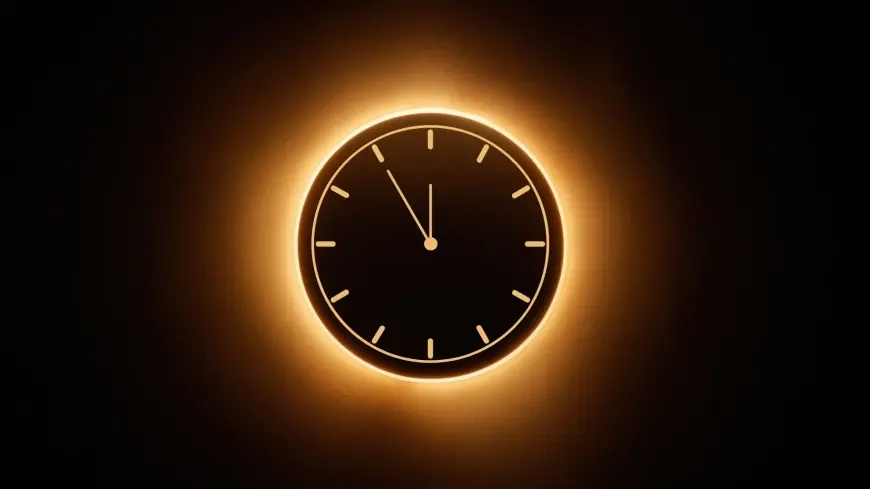
On Feb. 17, 2026 (ET) an annular solar eclipse will transform the sun into a dramatic "ring of fire" for observers in a very small part of Antarctica. The phenomenon — in which the moon passes between Earth and the sun but appears too small to cover the solar disk completely — produces a bright outer ring at maximum annularity. The narrow corridor of full annularity, where that ring will be visible, is limited; most viewers in Antarctica and across southern Africa and the southern tip of South America will see only a partial eclipse.
Where and when the ring will appear
The annular path on Feb. 17 stretches roughly 2, 661 miles long and about 383 miles wide (approximately 4, 282 by 616 kilometers). Only a small region along that corridor in Antarctica will experience the full annular phase. At the point of greatest eclipse, the annular phase can last up to about 2 minutes and 20 seconds.
Exact start, peak and end times of the eclipse depend on your precise location along that corridor. For viewers positioned inside the narrow band of annularity, the ring of fire will appear briefly during local daylight on Feb. 17, 2026 (ET). Outside the annular path, observers across wider areas of Antarctica, southern Africa and the southernmost portions of South America will see varying degrees of a partial solar eclipse — the moon will take a bite out of the sun but will not produce the full ring.
Timing details and what to expect
An annular eclipse differs from a total eclipse in one key way: the moon is too distant in its orbit to completely cover the sun, so a bright ring remains at maximum. For this event the moon will cover about 96% of the sun’s disk along the path of annularity, leaving a narrow, luminous rim at greatest eclipse.
The timeline of an eclipse is commonly described in stages: first contact (when the moon starts to encroach on the sun), maximum eclipse (when coverage is greatest and the ring is visible for annular events), and final contact (when the moon moves away and the sun returns to its full disk). Those stages will play out at different clock times for locations across Antarctica and the surrounding regions; if you plan to chase the annularity, use precise local timings for your chosen observation site and plan for the short window of peak ring visibility.
How to watch safely
Never look directly at the sun without proper protection. Whether you expect to see an annular or a partial eclipse, the same safety rules apply. Observers must use certified solar eclipse glasses that meet international safety standards; ordinary sunglasses are not safe. Cameras, binoculars and telescopes require purpose-built solar filters placed over the front of the optics—never use improvised filters or look through optics without a certified filter in place.
Projection methods are a safe alternative for viewers without certified filters: pinhole projectors and telescope or binocular projections can show the event indirectly. Inspect eclipse glasses and filters for damage before use; discard any that are scratched or torn. Keep children supervised and avoid pointing unfiltered cameras or phones at the sun.
For those not in the narrow path of annularity, the spectacle will still be noteworthy as a partial eclipse, but the ring of fire will be confined to the small Antarctic corridor. Mark your calendar if you want another major solar event sooner: a total solar eclipse follows on Aug. 12, 2026 (ET), with visibility across parts of Greenland, Iceland and northern Spain. A total lunar eclipse is also on the calendar for Mar. 3, 2026 (ET), offering a different nighttime sky show across broad regions.