























Ami Nakai upstages rivals as alysa liu keeps U.S. medal bid alive

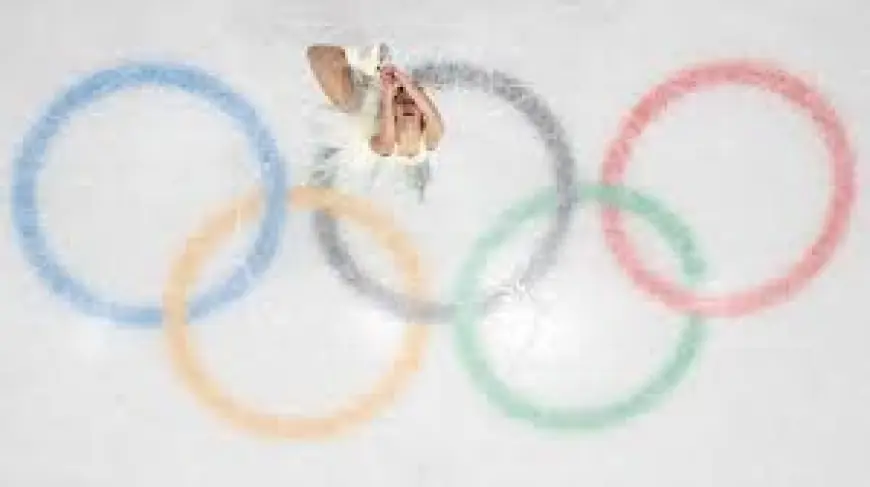
Japan’s young cohort dominated the Olympic women’s short program on Tuesday (ET), with 17-year-old Ami Nakai delivering a surprise personal best to top the leaderboard while Alysa Liu produced a near-flawless skate to keep the United States in contention for a first Olympic women’s medal since 2006.
Nakai’s commanding opening
Nakai, the youngest competitor in the field, laid down a composed, technically ambitious program to La Strada that included a soaring triple axel and a triple lutz–triple toe loop combination. Her clean execution earned a personal-best 78. 71, placing her narrowly ahead of three-time world champion Kaori Sakamoto, who posted 77. 23 after an elegant but slightly under-rotated outing.
The Japanese skaters filled the top ranks on the night, with Mone Chiba also near the leading group on 74. 00. Nakai said she felt like she was dreaming and focused on enjoying her time on the ice, drawing positive energy from the presence of the other competitors and the crowd.
aly sa liu keeps U. S. hopes alive
Alysa Liu, 20, landed a season-best 76. 59 with a polished program set to Promise by Laufey and Dan Wilson. Liu, last year’s world champion who returned from a two-year retirement prompted by burnout, delivered the difficult jumps with poise and remains firmly in the podium conversation heading into the free skate on Thursday (ET).
Liu framed her performance as part of her broader comeback story, saying her focus is on executing her programs and sharing that journey rather than on direct rivalry. Were she to convert a short-program placing into a medal in the free skate, she would become the first American woman on the Olympic podium in this event since 2006.
American team faces mixed outcomes
Beyond Liu, the Americans had a tougher night. Isabeau Levito was penalized a level on her step sequence and finished eighth with 70. 84, a result that fell short of the high hopes placed on the U. S. contingent. Amber Glenn drew frantic cheers when she became one of only two skaters to attempt the triple axel, and the moment sparked roars from the crowd, although her final placement was still to be determined in the closing stages of the session.
The overall picture left the U. S. chasing a breakthrough; a long-standing medal drought in the Olympic women’s event stretches back two decades, and Thursday’s free skate (ET) will decide whether one of the Americans can end that run. Japan, buoyed by Nakai’s breakout short program and Sakamoto’s steady showing, looks well positioned to challenge for multiple podium spots.
With the free skate set to determine the medals, attention now turns to how the leaders will manage pressure and execute under heightened stakes. The competition’s next phase on Thursday (ET) will test stamina, consistency and nerves as skaters attempt to translate short-program positions into Olympic hardware.