











Mixed Reactions as Emerald Fennell’s wuthering heights movie Opens to Praise and Pushback

Emerald Fennell’s bold reimagining of Wuthering Heights opened this weekend and has already split viewers and critics. The film’s glossy, fetish-forward visuals and star-driven casting have drawn enthusiastic audiences to packed screenings, even as many readers of the 1847 novel say the adaptation softens the book’s ferocity and alters its central tensions.
Stylized, sexual, and unabashedly modern
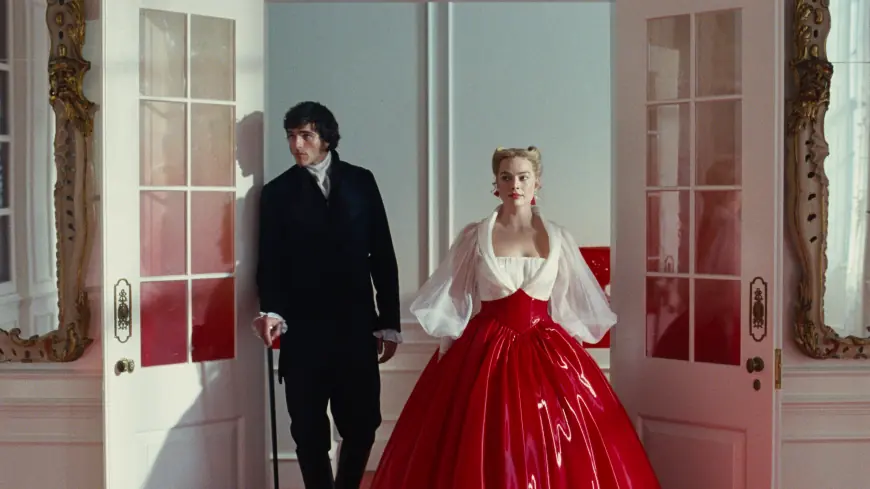
The film leans hard into a contemporary aesthetic: moody production design, provocative costuming and a pop-forward soundtrack that reframes the novel’s bleak moors as a hyper-stylized playground. The director has called the project a fantasia and described it as an attempt to mine a small, resonant piece of the original work rather than deliver a straight retelling. That creative choice is visible throughout — the movie opens with a scene that initially feels erotic before revealing death throes, and later sequences favor lingering close-ups and tactile imagery over the novel’s gritty realism.
For many audience members, that approach delivers. Private screenings have been revelatory for fans drawn to the lead actors and the film’s sexy intensity. One afternoon showing on Feb. 13, 2026 at 3: 30 p. m. ET was described as raucous and elating, with viewers cheering certain moments and embracing the chemistry between the leads. The soundtrack and visual choices have helped position the film as a fashionable, contemporary take on the love story at the heart of the source material.
Critics and readers push back on tone, casting and moral distance
Pushback centers on three main complaints. First, many argue the movie strips away the novel’s essential strangeness and brutality. Emily Brontë’s story is famously both monstrous and redemptive — love that is obsessive and destructive, then passed down through generations. Critics say the film has softened that contradiction, turning violent, complicated characters into glamorous, sympathetic figures and losing the moral friction that powers the original book.
Second, the adaptation’s aesthetic choices have prompted debate about whether spectacle substitutes for psychological depth. Where the novel mercilessly punishes its protagonists and exposes how cruelty begets cruelty, this version favors mood and fetishized imagery. Several commentators note that when the protagonists are presented primarily as desirable and blameless, the narrative risk of the novel — how love can destroy as much as it redeems — diminishes.
Third, casting choices have generated controversy. The portrayal of the lead male as an attractive, charismatic figure has been read by some as a form of whitewashing that undercuts the novel’s historical and racial complexity. Observers who value fidelity to the book’s description of Heathcliff as an outsider find this reimagining troubling, arguing it removes a layer of the character’s social otherness and the social forces that shape his cruelty.
What’s next for the debate
The film’s release has prompted a larger conversation about what adaptation should do: translate a text faithfully, or reinvent it for a new moment. Fennell’s fantasia clearly chooses reinvention, and reactions show that choice will continue to polarize. For some, the movie is an intoxicating, modern riff that foregrounds sensation and star power; for others, it is an insufficient treatment of a novel whose power lies in its strangeness and moral ambiguity.
As the film plays in wider release this week, expect continuing debates in cinemas and online screenings, and more audience reaction pieces. Whether the film ultimately broadens the novel’s reach or spurs renewed readings of the original depends on whether viewers find the reimagining a worthy complement to Brontë’s uncompromising tale — or a gloss that leaves the book’s most unsettling virtues behind.