













tony blair: intimate new documentary reveals the man — but skips hard scrutiny

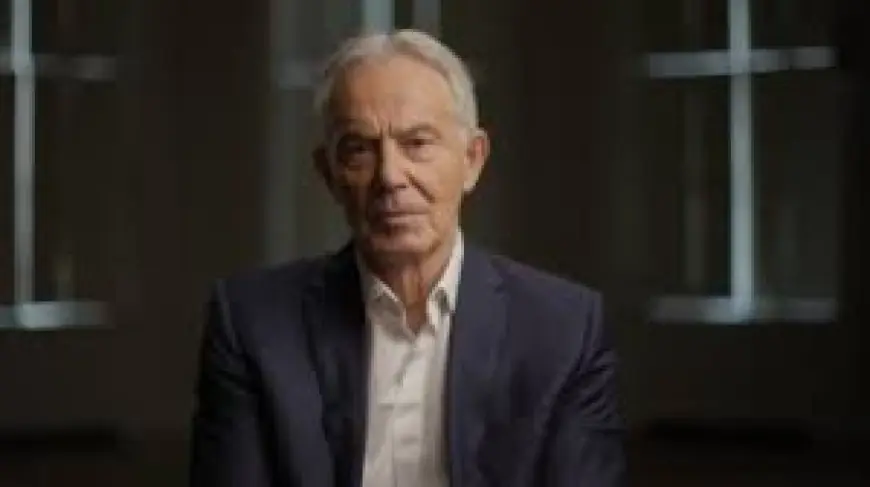
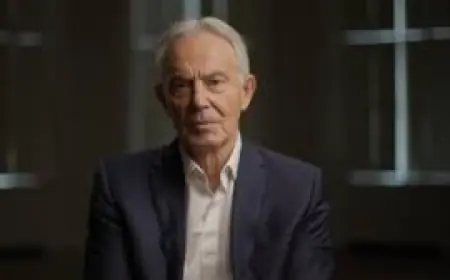
Michael Waldman’s three-part film sets out to answer a simple question about tony blair: who is he? The series secures lengthy interviews with Blair, his wife and several family members, and assembles a rich archive of footage. What it does not do — and what many viewers will expect from a major political biography — is mount relentless, granular scrutiny of the decisions and power structures that defined his time in office.
Close access, psychological framing
The documentary leans heavily on character study. It traces Blair’s childhood and formative years, highlighting moments that the filmmakers present as explanatory for his ambition: a private-school emphasis on toughness, family illness, college losses and a shift from countercultural long hair to a shorter, more determined guise. Interviews with friends, aides and family members are deployed to sketch a portrait of a driven, media-savvy politician with a taste for performance and an appetite for victory.
That approach yields moments of genuine human interest. Extended interview time with Blair allows the camera to capture micro-expressions and shifts in posture — the softening of a smile, a flash of impatience, an uneasy glance when the subject drifts toward his legacy. Close-range scenes with his wife and children reveal the private tensions that accompanied his public life, and the series mines those tensions for narrative momentum rather than for institutional explanation.
Not enough interrogation of power, policy and money
Where the film notably retreats is on concrete, systemic questions. Major decisions, most strikingly the choice to commit British forces to war, get the narrative treatment but not the forensic one. Viewers are shown Blair’s conviction and the voices that supported him, yet the series spends less time examining the intelligence, legal frameworks, dissenting advisers and parliamentary mechanisms that underpinned those decisions. The consequence is a portrait that risks reducing political outcomes to personality alone.
Similarly, Blair’s post-premiership activity — running an institute, consultancy work and fundraising from a range of figures — is treated with a degree of conversational acceptance rather than tough interrogation. There are moments in which Blair is asked about the ethics of taking money from controversial donors; his reply, candid in its simplicity, is that finance enables activity. The filmmakers let that answer stand without following through on source tracing or exploring conflicts of interest in depth. For a viewer seeking to understand how former heads of government translate reputation into revenue, the series raises questions but declines to pursue many of them.
Strengths and missed opportunities
The film’s chief strength is at the human scale. It compiles effective archival slices and presents contemporaries who knew Blair at various stages — campaign strategists, political rivals and allies. Those voices illuminate his skill with messaging and the personal competitiveness that drove him to leapfrog established figures in his own party. Moments of candid friction — between ambition and decency, public triumph and private unease — land with real dramatic force.
But the choice to foreground psychology over institutional anatomy leaves gaps. The series alludes to the networks and modernising faction that helped propel Blair, and to rivalries with other senior figures, yet it rarely traces the mechanisms by which those networks operated. It largely avoids a full accounting of how political capital was converted into policy outcomes, or how financial and advisory relationships shaped the post-government world Blair now inhabits.
For viewers who want a character-driven study of a prime minister wrestling with legacy, the film offers enough intimate material to satisfy. For those seeking a rigorous examination of the decisions and systems that defined his premiership, the documentary will feel incomplete. It is an elegantly human portrait that stops short of being a forensic one.