




















how to get to heaven from belfast review — Lisa McGee turns familiar DNA into a cracking, funny murder caper

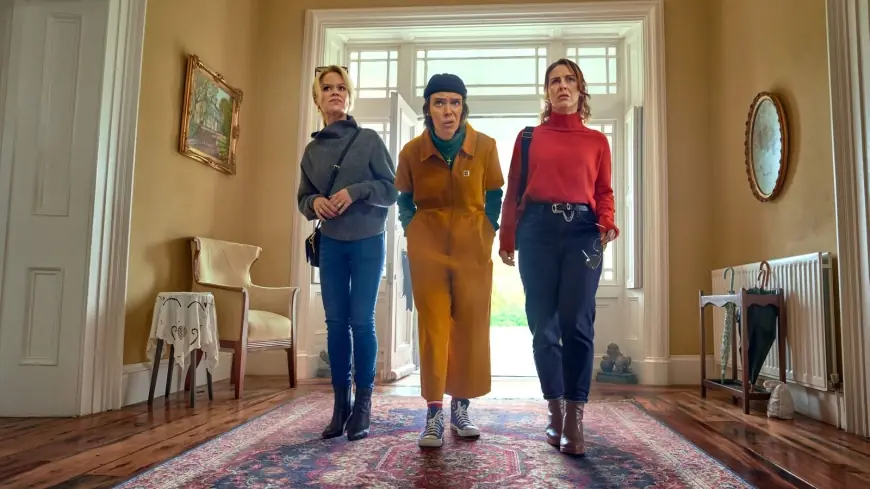
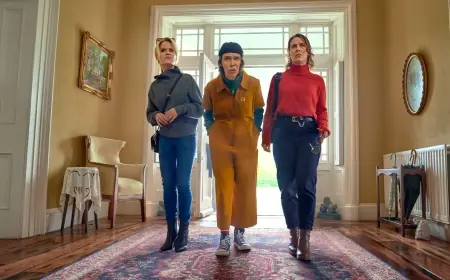
Lisa McGee’s new series reunites the energy of her earlier work with a darker, stranger mystery. The show follows three women who reunite at the funeral of a childhood friend and quickly suspect that the official story doesn’t add up. What unfolds is a fast-moving, witty caper that balances genuine menace with broad, human comedy.
Familiar voice, sharper stakes
Viewers who loved McGee’s previous creation will find much that is recognisably hers: a lively ear for conversational comedy, a fondness for chaotic female friendship and the collision of small-town rhythms with outsized emotional life. That DNA is present throughout, but the stakes here are different. The central conceit — a decades-old secret tied to a night in a woods — gives the series an edge of menace that keeps the humour from becoming merely cosy.
The plot is propelled by Saoirse, a crime-writer who cannot resist a mystery; Dara, who is quietly stoic; and Robyn, who arrives already carrying domestic pressures and a simmering dread. When they examine inconsistencies around the funeral — most notably the absence of a matching tattoo that links them all to the past — the reunion becomes an investigation. The pacing rarely lets up, and McGee’s plotting is impressively tidy while still allowing for comic improvisation.
Performance and tone: funny, frantic, and, sometimes, frightening
Performances lift the material. One lead gives a sensational turn that captures both the buoyant fury and wounded loyalty at the story’s core, anchoring the trio even as the plot hurtles. Supporting players amplify the tension: a local police chief whose presence is quietly terrifying and a mother whose strangeness feels almost mythic. These parts provide contrast to the central friendship and deepen the sense that something much larger is playing out beneath the village surface.
McGee threads her comedy through the mystery with care. Jokes land without defanging danger; scenes that could otherwise become grotesque are tempered by human warmth. There are moments when the pace wants to pause for breath and the script sometimes races past those opportunities, but the momentum is also part of the show’s charm: it feels like being swept along by friends who drag you into one more madcap scheme.
Why it matters now
This series matters because it reframes a familiar authorial voice into a different genre and makes the fusion feel natural rather than forced. McGee has said she grew up loving murder mysteries and wanted to do the form her way — female-led, messy and not afraid of tonal swings. That intention shows on screen: the series is both a satirical portrait of small-town social life and a credible whodunit with personal stakes.
Beyond the central puzzle, the show is invested in how adulthood reshapes friendships, how secrets calcify into myths and how loyalty can compel people to extraordinary acts. It’s a comedy that can be raw, a mystery that can be funny, and a reminder that three women with a secret can be the most compelling engine for both drama and laughs.
For viewers seeking something that marries bite with heart, this is a strong contender for one of the year’s most entertaining new series. It doesn’t always slow down for reflection, but when it hits its marks — in performance, in plotting and in comic timing — it feels like a small miracle.