




















wuthering heights movie Opens to Sharp Divisions Over Tone, Casting and Violence

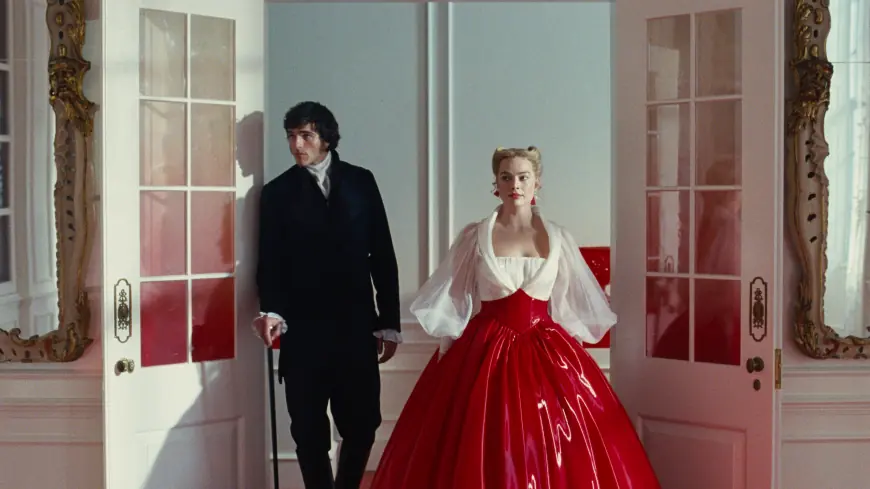
Emerald Fennell’s polarizing reimagining of Wuthering Heights opened the weekend of Feb. 14–16, 2026 (ET) and has provoked intense debate from critics, book lovers and moviegoers alike. The film’s glossy, fetishized visuals, contemporary soundtrack and high-profile leads have pushed questions about fidelity, race and the nature of love back into the spotlight.
How Fennell reimagined the source
Fennell has framed her adaptation as a fantasia rather than a straightforward retelling, extracting a compact, stylized version of Emily Brontë’s sprawling, violent novel. The film foregrounds sex, sensory design and a pop-inflected soundtrack, turning moments of agony into heightened, often eroticized tableaux. Production design leans into visceral textures—flesh-toned wallpapers, latex garments and close-ups that emphasize bodily detail—while the pacing trims many of the multigenerational consequences that anchor the original book.
That choice elicits two simultaneous effects. For viewers coming solely for a sweeping romantic spectacle, the movie delivers potent star chemistry and striking mise-en-scène. For readers who prize the novel’s moral ambiguity, structural complexity and its inheritance of cruelty across generations, the pared-down approach feels incomplete. The adaptation intentionally privileges immediacy and sensation over the novel’s nesting narratives and intergenerational ruin.
Critical pushback: tone, casting and cruelty
One central line of criticism centers on tone. The novel’s most unsettling power rests in its capacity to present lovers who are also villains—characters who harm others through obsession and contempt. In this film, the pair are often rendered as hot, sympathetic protagonists, which softens the antiheroic edge that makes the original so unnerving. That shift transforms a story that once punished readers for feeling sympathy into a more straightforward romantic tragedy.
Casting choices have sharpened the controversy. Longstanding debates about Heathcliff’s racialization in the novel—central to many readers’ understanding of his outsider status—re-emerge when the role is given to a conventionally handsome, white-presenting actor. Critics argue this choice undermines the social and racial tensions that inform Heathcliff’s rage and the book’s darker themes. Supporters counter that the director sought to evoke desire and myth more than literal fidelity, but that defense does little to quiet those who see the erasure as meaningful.
Many reviewers and commentators also note that scenes of abuse and coercive control in the source material are either softened or reframed. Where Brontë used brutality to complicate attraction and legacy, the film’s emphasis on eroticism risks romanticizing dynamics that the novel interrogates. That trade-off is the film’s most persistent sticking point: is a seductive revision enough, or does it betray the story’s radical strangeness?
Audience reaction and what comes next
Audience response has been mixed and, at times, ecstatic. Packed screenings—some arranged as themed events—have produced rapturous reactions to the leads’ chemistry and the film’s erotically charged set pieces. Other viewers have walked out unsettled by what they perceive as a sanitization of the novel’s brutality. Box-office momentum in the first weekend will be a key indicator of whether the movie’s sensational style translates into sustained commercial success.
Beyond ticket receipts, the larger consequence may be on future adaptations of canonical works. This version crystallizes an industry tension: how much liberty can a filmmaker take when a text’s power depends on discomfort as much as attraction? For now, the film has reopened conversations about what audiences want from literary adaptations—faithful excavation of moral complexity, or bold stylistic reinvention that privileges affect and immediacy.
Either way, the debate proves one thing: Wuthering Heights still provokes strong feeling nearly 180 years after publication, and every reinvention will be measured against the book’s enduring capacity to disturb.