

























‘Ring of fire’ solar eclipse 2026: path, visibility and what skywatchers should know

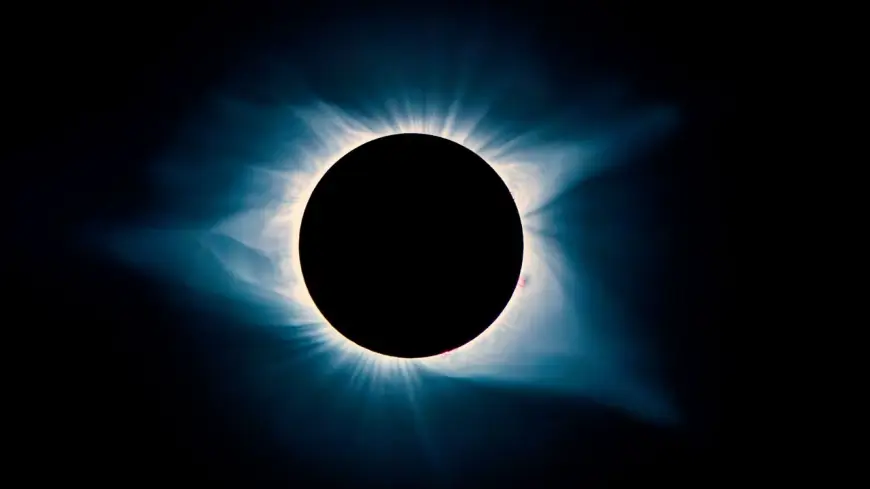
The next major solar event arrives on Feb. 17, 2026 (ET): an annular solar eclipse that will turn the sun into a brief "ring of fire" along a narrow corridor in Antarctica and produce a partial eclipse across parts of southern Africa and South America, including South Africa. Skywatchers and travelers are already weighing viewing options and safety precautions for the rare spectacle.
Path and geographic visibility
The eclipse on Feb. 17, 2026 (ET) is annular, meaning the moon will pass between Earth and the sun but appear too small to cover the sun’s disk completely. The result at maximum is a bright ring of sunlight surrounding the lunar silhouette — the hallmark "ring of fire. " The corridor of annularity is relatively narrow, stretching roughly 2, 661 miles long and about 383 miles wide (roughly 4, 282 by 616 kilometers), and it crosses only a small region of Antarctica where the full annular phase will be visible.
Outside that narrow track, observers across much of Antarctica and in parts of southern Africa and the southern tip of South America will experience a partial eclipse, with the moon covering varying portions of the sun. Observers in South Africa will see a partial event, not the full annular ring. The maximum annularity at the center of the path will last just over two minutes — up to about 2 minutes and 20 seconds — at the point of greatest eclipse.
Timing, safety and what to expect
The event takes place on Feb. 17, 2026 (ET). Exact local contact times for the start, maximum and end of the eclipse will vary by location; those planning to travel to the path of annularity or to catch a partial view should check local eclipse timings before they go. Observers should be prepared for brief but dramatic changes in daylight and temperature in the immediate vicinity of maximum eclipse.
Never look directly at the sun without proper protection. Whether viewing an annular or partial eclipse, observers must use certified solar filters or eclipse glasses at all times during partial phases. Cameras, binoculars and telescopes require appropriate solar filters placed over the front of the optics; improvised or unfiltered viewing can cause permanent eye damage. The annular phase still leaves a ring of bright sunlight and is unsafe to view without protection.
For those anticipating more sky events in 2026, a total solar eclipse follows later in the year on Aug. 12, 2026, with totality crossing parts of Greenland, Iceland and northern Spain and a broader partial view across parts of Europe and Africa. A total lunar eclipse will also occur on March 3, 2026, visible from a wide swath of the globe.
Astrological notes and potential cultural significance
The Feb. 17 event coincides with the second new moon of 2026 and falls on the same day as the lunar new-year changeover, a date that has drawn additional attention from astrological observers. Many astrologers describe this eclipse as significant: it is the first eclipse in the sign of Aquarius since July 2018 and is framed as the opening of an eclipse season that may herald notable shifts over the coming 18 months.
Astrological commentary highlights planetary relationships during the eclipse, including a Venus–north node alignment that some interpret as intensifying matters of desire, relationships and destiny, and a Saturn–Neptune conjunction that completes shortly after the eclipse on Feb. 20, 2026 (ET), which some suggest could blur boundaries between reality and illusion in the days that follow. For those who follow these traditions, the eclipse is being read as a potential catalyst for endings, beginnings and transformations in personal and collective life.
Whether approached as a scientific spectacle or a moment charged with symbolic meaning, the Feb. 17, 2026 (ET) eclipse is a reminder that celestial mechanics continue to produce rare and dramatic events. Observers planning to view it should prioritize safety and local timing information and be mindful that only a small slice of Earth will experience the full "ring of fire. "