
























Colbert Challenges Network After James Talarico Booking Is Blocked

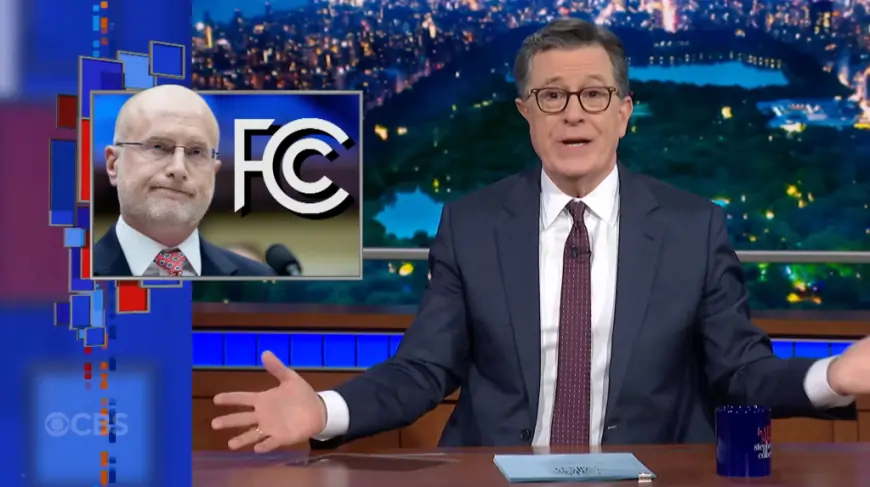
Stephen Colbert used his late-night monologue on Monday, Feb. 16, 2026 (ET), to call out a decision by his network’s legal team that prevented Texas state representative James Talarico from appearing on his broadcast. Colbert said he was told not only that the representative could not be booked, but that he could not mention the cancellation — a directive the host openly defied on air.
What unfolded Monday night (ET)
The host began the segment by noting that Talarico had been scheduled to appear but was removed after a call from network lawyers. He said the lawyers forbade the interview and also instructed him not to discuss the ban on air. Colbert framed that gag order as part of a broader, posturing debate over federal guidance on the so-called equal-time rule.
In his monologue the host walked viewers through the rule’s basic contours: it applies to broadcast radio and television and obliges stations that air a qualified political candidate’s appearance to offer comparable time to opponents if requested. Historically, news interviews and bona fide news programs have been treated as exempt — a carve-out that has allowed late-night hosts and talk shows to host candidates without triggering time-swap demands. That exemption, Colbert said, is under new scrutiny.
Colbert quoted language from a January letter by the chairman of the Federal Communications Commission that raised the prospect of narrowing the exemption if a program’s booking choices appeared to be motivated by partisan aims. The host used his platform to accuse the agency chair of partisan bias, then pivoted to the larger practical question: what happens to political conversation on terrestrial broadcast television if the exemption is curtailed?
Equal-time guidance and the stakes for late night
The change in guidance, which was circulated by the FCC chairman on Jan. 21 (ET), signals that broadcasters may now reassess whether daytime and late-night interviews remain safely sheltered under the news exemption. If talk and entertainment programs lose that protection, stations that operate on broadcast airwaves could be required to provide time to rival candidates — a logistical and editorial complication that could deter hosts from booking political figures altogether.
Colbert argued that such a shift would chill candid conversations between politicians and entertainers, limiting a forum that many viewers rely on to see candidates in less formal settings. He pointed out that the FCC’s standard for exemption could hinge on whether a booking appears to have a partisan motive, a determination Colbert suggested is vulnerable to subjective judgment.
Critics of the guidance have warned that the policy invites a politicized test for what counts as bona fide news, while supporters say it aims to ensure fairness on publicly licensed airwaves. For late-night programming that remains on broadcast channels, the practical effect would be a tougher editorial calculus around who is invited into the green room.
Next steps and political fallout
Colbert said he would make his conversation with Talarico available through his digital channels, describing the network’s directive as an attempt to limit public access to a political voice. The state representative, identified as a Democrat, did not appear on the broadcast as scheduled; the host used the episode’s opening to bring the decision into the open rather than let it pass unremarked.
The clash spotlights a widening tension at the intersection of media, law and politics: broadcasters that rely on public airwaves must weigh regulatory obligations, while entertainers who host political figures must navigate shifting policy that could redefine where political discourse can happen. For viewers, the immediate consequence is a deferred conversation — one that has moved off the network air and into the broader digital ecosystem, where different rules and expectations apply.
Whatever the legal outcome, the episode underscored how late-night television has become a flashpoint in debates over access, fairness and the role of entertainment platforms in political life. Colbert’s on-air protest made clear that, for now, those debates will play out not only in federal filings but in monologues delivered to millions of viewers.