























Baelor Targaryen’s Shock Entrance Recasts the Trial of Seven in A Knight of the Seven Kingdoms

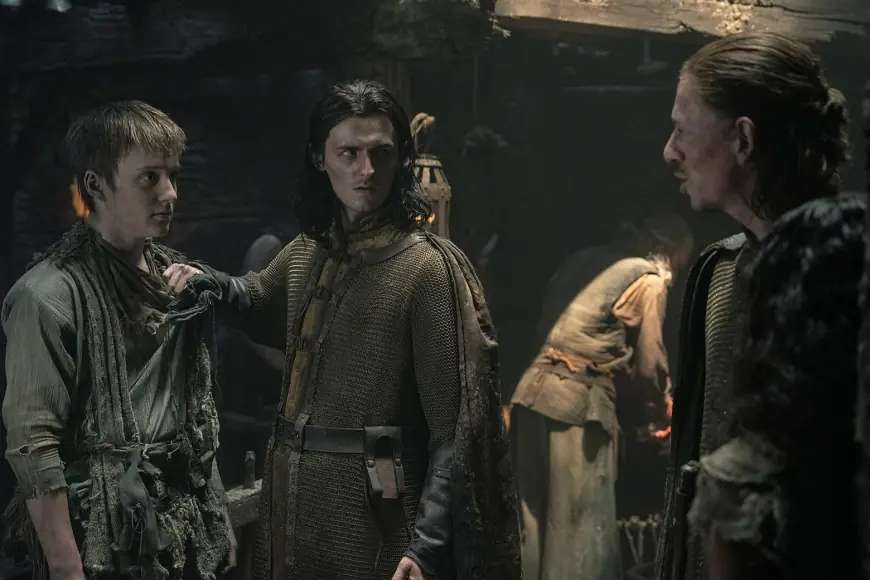
The arrival of Baelor Targaryen (baelor targaryen) as the seventh combatant in the season’s Trial of Seven on Sunday night (ET) promised a classical, high-stakes melee — and then the episode quietly unraveled expectations. What began with the swelling of familiar theme music quickly became a messy, disorienting sequence that leans hard into both physical comedy and abrupt tragedy, using a flashback detour to reframe the clash around Dunk’s battered past.
A startlingly unglorious battle
The sequence that viewers were primed to receive as an epic set piece instead unfolds with a blunt, often grotesque immediacy. Dunk and a fellow fledgling vomit on the muddy ground before a single blow lands. Dunk enters last, panicked, and is impaled by a lance almost immediately; the impact knocks him senseless. That early injury forces the episode to pivot away from the ring and into Dunk’s memories, making the Trial of Seven feel less like a heroic proving ground and more like a chaotic, consequential set of blows that leave consequences rather than glory.
Baelor Targaryen’s arrival — heralded with musical fanfare — plays like a deliberate bait-and-switch. The character’s presence raises the spectacle level only to undercut it: the ritual of sanctioned combat in the arena becomes a platform for cruelty, improvisation and error. The fight choreography does not aim for elegant heroics; instead it emphasizes the slapdash brutality that can characterize life-and-death contests in Westeros when pride and theater rule the day.
Flashback reframes what’s at stake for Dunk
Struck cold early in the clash, Dunk’s unconsciousness buys the writers time to chase down his origins. A sizable portion of the episode rewinds to Flea Bottom, where a young Dunk witnesses the harsh realities of poverty and loss. The childhood thread shows how Dunk came to follow Ser Arlan — an event played out with more mess and improvisation than the novella’s version — and it foregrounds a formative trauma: the brutal killing of his friend, Rafe.
That flashback does more than fill runtime. It contextualizes Dunk’s fear, his clumsy bravery and the odd, loyal relationship that defines his life as a hedge knight. The episode uses the blackout in the ring as a device to turn an expected bout into an origin story, with the present-day violence acting as punctuation for a life shaped by raw, unsentimental events. The tonal swing — from arena spectacle to cramped childhood memory — is jarring by design, asking viewers to reassess why Dunk fights and what victory would even mean for him.
What Baelor’s role signals for the finale and the season
Baelor Targaryen’s cameo in the Trial of Seven accomplishes more than theatrical showboating. His participation underscores that highborn conflicts are leaking into contests that were supposed to be contained and ritualized. The trial’s needless casualties and the way the match is leveraged to serve noble grudges highlight the cruelty baked into institutions of honor when they’re manipulated by status and spite.
At the same time, the episode’s willingness to undercut spectacle suggests the series is staking out its own tonal territory. There’s still room for big, bloody moments, but they arrive with an almost satirical edge — heroic music playing over undignified bodily reactions, a star turn that deflates rather than elevates, and a narrative choice to make a penultimate episode do the emotional heavy lifting through backstory rather than an extended battlefield sequence. The result is an uneasy mix of dark humor and pathos that leaves the Trial of Seven feeling less like a triumph and more like a reckoning.
With the finale looming, the appearance of Baelor and the episode’s structural gamble both sharpen questions about where loyalties lie and what kind of hero Dunk will be when the dust settles. The story has traded a straight shot at spectacle for a crooked, character-driven tumble — and it’s an approach that ensures the next chapter will be watched with particular scrutiny.