






















Baelor Targaryen’s Arrival Rewrites the Rules of the Trial of Seven

The penultimate episode of the season, airing Sunday night (ET), delivered a combat sequence that undercut viewers’ expectations the moment Baelor Targaryen strode into the ring. Far from the sweeping, heroic clash many anticipated, the Trial of Seven unfolds as a raw, chaotic brawl that redirects attention away from spectacle and toward the battered past that made Dunk who he is.
A showy entrance, then a collision with reality
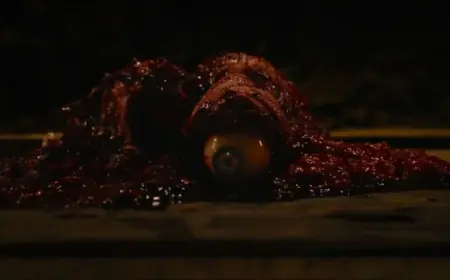
The arrival of Baelor Targaryen — announced with the familiar swelling of the series’ signature theme — set up what appeared to be a classic, arena-style battle. But the sequence quickly subverts that promise. Before a single blow lands, Dunk and a fellow combatant are violently sick on the spot, an early sign that this fight will be ugly rather than grand. Dunk, already overwhelmed, is the last to enter and is nearly finished off by an opening lance to the head within minutes. That abrupt brutality ejects the episode from straightforward action into something harsher and more disorienting.
Rather than staging a long, choreographed melee, the episode uses interruption and tonal whiplash — including comic cutaways and flashes to earlier moments — to reshape viewers’ expectations. The result is a battle that feels improvised, personal and messy, not forged for legend. The choice places Baelor Targaryen’s role less as a single defining showpiece and more as a catalyst that exposes the gore and human cost behind the ceremonial violence of Westeros.
When the ring becomes a doorway to Dunk’s past
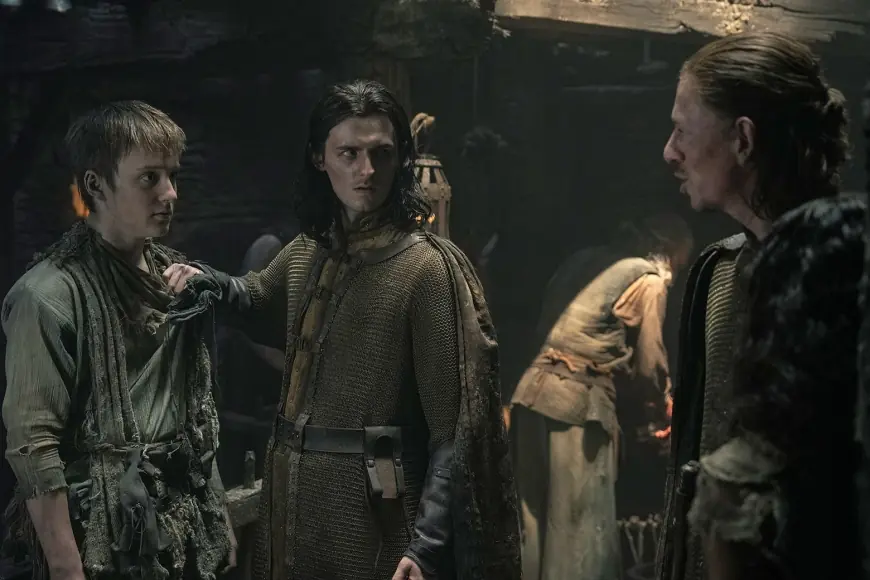
When Dunk blacks out early in the fight, the episode makes a bold storytelling choice: it spends most of its remaining runtime in his childhood. The extended flashback fills in how a wounded, hungry boy from Flea Bottom came to follow Ser Arlan and eventually become the hedge knight standing in the ring. Viewers see the death of Dunk’s friend Rafe, the violence of the city watchman who precipitated it, and Arlan’s drunken intervention. Those scenes reframe the present-day combat as less a test of arms than a reckoning with a life built on survival and loyalty.
That shift also foregrounds a crucial difference from the novella: the series uses visual and tonal tools to compress and dramatize Dunk’s origins in a way that ties directly back to the Trial of Seven. By the time the narrative returns to the arena with roughly ten minutes left, the fight has already been drained of mythic grandeur; what remains is a brawl whose emotional stakes are intimately connected to Dunk’s past trauma.
What the sequence means for the series’ direction
This episode underscores the series’ conscious move away from towering political epic and toward smaller, grittier human stories. By making Baelor Targaryen’s entrance a narrative pivot rather than a triumphant crescendo, the show signals that its battles will be measured less by spectacle and more by how they reveal character. That approach lets moments of black humor and sudden tenderness coexist with blunt physicality, producing an uneven but distinctively personal rhythm.
For viewers expecting an arena spectacle, the Trial of Seven offers a different kind of payoff: a closer look at why Dunk fights, and what his history costs him in blood and memory. Baelor Targaryen’s presence amplifies the episode’s contradiction — the trappings of high drama used to stage a profoundly low, human struggle — and positions the finale to resolve not just a contest of blades but the question of who Dunk is when the cheering stops.