














Inside JFK Jr. and Daryl Hannah’s Tumultuous Chapter, As Seen in New TV Series

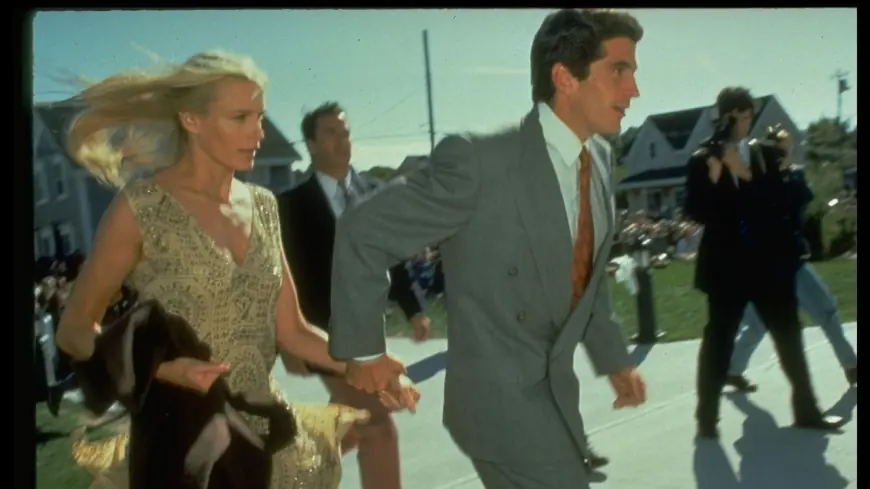
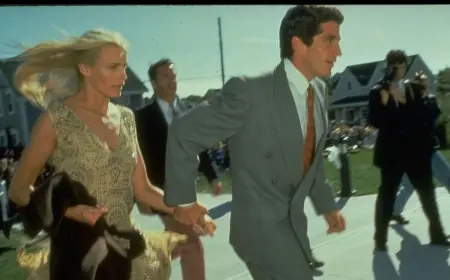
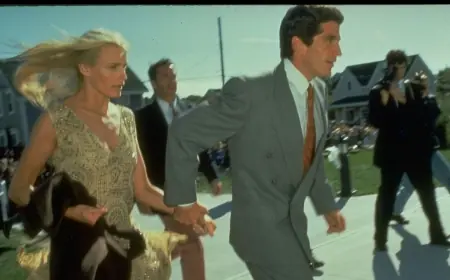
The dramatized retelling of John F. Kennedy Jr. ’s love life has thrust Daryl Hannah back into the spotlight, portraying a romance that was often stop-and-start and that drew clear disapproval from the Kennedy matriarch. As the series unfolds, viewers are getting a condensed, sometimes fictionalized look at the tensions that shaped one of the era’s most talked-about relationships.
On-again, off-again romance condensed for television
The show’s early episodes compress years of headlines and private moments into a tighter narrative, spotlighting a courtship that went through repeated pauses. In the dramatization, a single tabloid snapshot — a public reminder that John had recently seen his famous ex — fuels a major emotional beat between him and Carolyn, his later partner. The series skips many of the small stop-start moments that marked the real-life relationship, opting instead to accelerate the arc so viewers can move quickly into the deeper, more consequential chapters of the story.
Producers have acknowledged that the couple’s real-life pattern was more intermittent than what appears on screen. The result is a version of events that emphasizes passion and consequence over chronology: a compressed, heightened portrayal meant to capture the essence of the drama rather than replicate every private stumble and reconciliation.
Jackie’s unease and a family shaken by illness
One recurring theme in the series is Jackie Kennedy’s discomfort with her son’s involvement with a Hollywood actress. The dramatization stages an early moment in which Hannah leaves a family dinner prematurely, convinced she’s felt the chill of the matriarch’s judgment. That reaction aligns with recollections from people close to Jackie, who voiced concerns about an actress becoming part of the family — and whether such a match was suitable for the Kennedy name.
The show also threads a darker real-life subplot into the family narrative. In November 1993, Jackie suffered a fall while fox hunting in Virginia; the incident and its aftermath are dramatized as family members rush to her side. Not long after, she collapsed at home and was diagnosed with non-Hodgkin’s lymphoma. The series closes that chapter with a stark reminder of reality: she died on May 19, 1994, at age 64. These events are presented not only as historical facts but as catalysts that altered family dynamics and the public scrutiny surrounding John Jr. ’s private life.
The actor’s outreach: a personal note to Daryl Hannah
The performer cast as Daryl Hannah took an unusual step before filming: she sent a personal letter to the real-life actress. In it she expressed admiration and gratitude, calling the opportunity to portray Hannah an honor. The outreach reflects a broader creative dilemma that often confronts filmmakers and actors who depict living figures: whether to seek input or maintain distance to preserve an independent artistic vision.
Producers generally favor research over personal interviews with public figures, reasoning that direct engagement can complicate efforts to render a character with nuance. In this instance, the actor’s note was framed as a heartfelt gesture rather than a request for guidance, and the production leaned on archival research and creative interpretation to shape the portrayal. The result is a performance that aims to humanize Hannah while acknowledging the limits of what can be known about private feelings and conversations decades later.
As the serialized retelling continues to roll out weekly on Thursdays at 9 p. m. ET, viewers can expect more dramatized reconstructions of famous encounters, family tensions, and the media storms that made the Kennedys — and those who courted them — tabloid fixtures. The series balances known events with imagined private moments, inviting audiences to weigh how memory, myth, and dramatization intersect in the telling of a very public love story.