























Saudi High Court Sets Moon‑sighting Night as Ramadan 2026 Watch; Algerian Astronomers Predict Delay

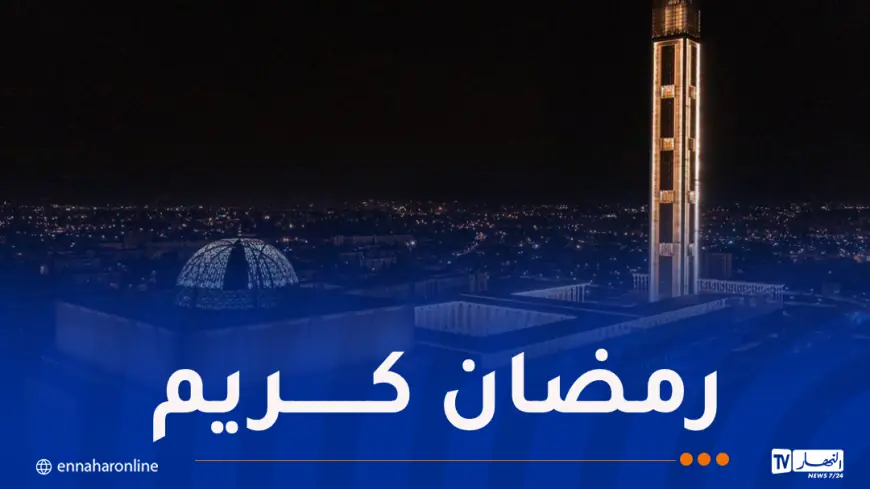
Saudi Arabia's highest court has called on Muslims across the kingdom to look for the new moon on the evening of Tuesday, February 17, 2026, setting that night as the official opportunity to determine the start of رمضان 2026. At the same time, an Algerian astronomical association has released calculations indicating the crescent will be effectively unobservable from North Africa that night, making a Thursday, February 19, 2026 start the likely outcome there if sighting rules are followed.
What the Saudi announcement requires
The judiciary statement requests that anyone who sees the crescent with the naked eye or through telescopes report the sighting to the nearest court or designated center, and that qualified volunteers join local committees to assist in observation efforts. The call frames participation as both a communal duty and a spiritually meritorious act, encouraging cooperation to reach courts where testimonies can be recorded.
The sighting opportunity is scheduled for the evening of Tuesday, February 17, 2026. Observers in the kingdom will gather at sunset that night to seek the slim crescent that marks the end of Sha'ban and the start of Ramadan. If the moon is confirmed by the authorized panels, the first day of fasting would then be Wednesday, February 18, 2026 (ET). If no confirmed sighting is recorded, the calendar continues another day and Ramadan would begin on Thursday, February 19, 2026 (ET).
Algerian astronomers cite scientific limits on visibility
An astronomy association in Algeria published detailed calculations of the moon's conjunction and visibility conditions for the same date. Their analysis shows the astronomical conjunction (new moon) occurring at 8: 01 a. m. ET on Tuesday, February 17, 2026. The group finds that at local sunset on that evening the lunar age and altitude will be insufficient to permit reliable naked‑eye observation across the country.
In practical terms, the crescent would remain above the horizon for only about six minutes after sunset in the capital, a window too brief to allow a visible, easily verifiable sighting under typical atmospheric conditions. The association notes that even with telescopes the crescent would not be usefully visible across the region, and that the only areas where a theoretical visual detection could occur lie far to the west in North America—locations whose observations are not considered relevant under local sighting rules.
On that basis, the association concludes that Sha'ban will be completed as a thirty‑day month and that, under a visual‑sighting framework, Thursday, February 19, 2026 will be the first day of Ramadan in Algeria.
What this means for worshippers and officials
Muslim communities across countries that rely on local moon sighting face routine divergence when astronomical calculations and sighting committees point in different directions. The two scenarios—confirmation on Feb. 17 leading to a Feb. 18 start, or no confirmation leading to Feb. 19—remain possible in different jurisdictions. The decision in each country typically rests with nationally designated moon‑sighting committees or religious authorities who will consider both field observations and scientific inputs.
For the public, the immediate takeaway is practical: observers in Saudi Arabia have been urged to participate in the evening watch on Tuesday, February 17, while communities in North Africa should prepare for an institutional determination that may point to a Thursday start. Worshippers are being advised to follow official local guidance once committees convene after the evening of Feb. 17 to issue a final ruling on the start of رمضان 2026.
Observers and religious authorities will issue confirmations or rulings after sunset on Tuesday, February 17, 2026 (ET), clarifying whether Ramadan begins Wednesday, February 18, or Thursday, February 19.