


















Texas Students Confront ICE, Defy Gov. Abbott’s Threats

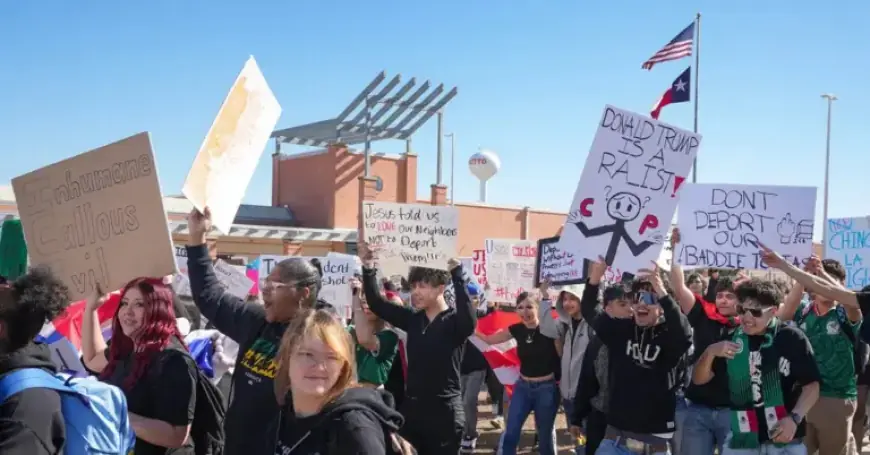
Students across Texas are rising against Immigration and Customs Enforcement (ICE) policies, defying threats from Governor Greg Abbott. This wave of protests aligns with a larger national movement where students in over three dozen states have engaged in demonstrations against deportations and immigration enforcement. Recent events in Texas have highlighted the tension between student activism and governmental backlash.
Texas Student Protests Against Immigration Enforcement
In Texas, school walkouts have gained momentum. On February 10, students in the Dallas area organized multiple demonstrations despite warnings of potential repercussions. Hundreds participated, motivated by a desire to voice their discontent with federal deportation tactics.
Governor Abbott’s Response
Governor Greg Abbott has taken a firm stance against these protests. He has threatened to impose severe penalties on school districts that facilitate walkouts, including loss of state funding. Abbott emphasized that students engaging in disorderly conduct during protests could face arrest.
“Schools and staff who allow this behavior should be treated as co-conspirators,” Abbott stated, referencing a recent demonstration in Kyle, Texas, near Austin. His remarks have sparked discussions about the limits of free speech for students.
Voices of the Students
Teenagers have voiced their determination to stand up for their beliefs. Cat Krankota, a 16-year-old from Booker T. Washington High School, expressed the importance of understanding their rights. “It is crucial that students realize they can speak up for what they believe in,” she said.
Similarly, Paola Ramirez, a 16-year-old participant, shared a personal connection to the issue. Her cousin was deported after an ICE appointment, highlighting the human impact of these policies. Fellow student Thomas Baughman noted that many peers joined the Dallas walkouts to express political sentiments, especially in a climate where they cannot vote.
Legal Rights and Backlash
Students in Texas have researched their legal rights, including protections established in the landmark Supreme Court case, Tinker v. Des Moines. This decision affirms students’ rights to free expression within the school setting. Despite this, Governor Abbott has suggested that students do not fully comprehend the limits of their constitutional rights.
The situation has also drawn attention from civil rights advocates. Adriana Piñon, ACLU of Texas’ legal director, argued that the state’s threats are excessive and could amount to unconstitutional retaliation against peaceful speech.
Mixed Reactions Among Parents and School Officials
Reactions among parents to the protests and potential disciplinary actions have varied. Some support the students’ right to protest, while others worry about the consequences on academic records. Parents like Jessica Zelaya voiced concerns for their children’s safety, emphasizing the need to balance advocacy with the preservation of educational opportunities.
Others, like Monette DeBaun Stransom, encouraged their children to participate in demonstrations, affirming their First Amendment rights while ensuring they understand how to protest safely.
Conclusion
The student protests in Texas represent a significant movement advocating for immigrant rights and opposing ICE actions. As students continue to face threats from state officials, the dialogue around free speech in schools remains critical. The ability of young activists to influence public policy while navigating potential repercussions highlights a pivotal moment in Texas history.