
























Ilia Malinin, the “Quad God,” Leads Men’s Short Program as Figure Skating’s 2026 Olympic Race Tightens

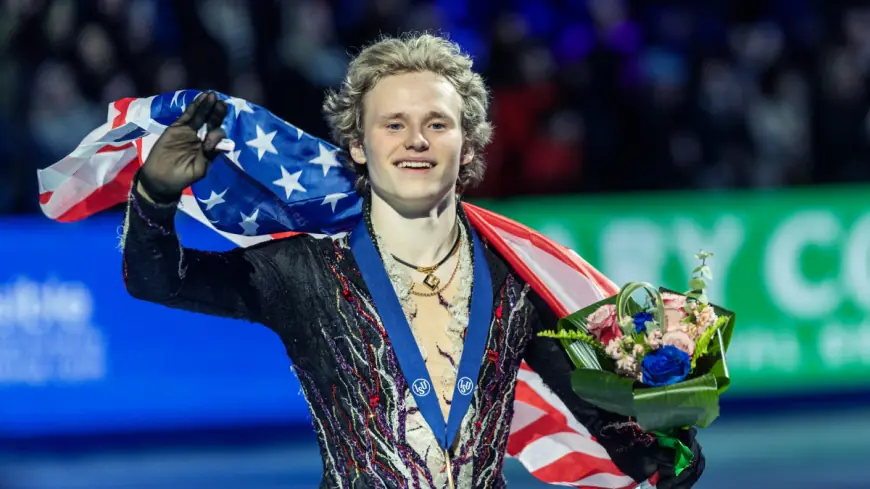
Ilia Malinin is exactly where he expected to be and where everyone else feared he would be: in front. The American star known as the “Quad God” sits atop the men’s short program standings at the 2026 Winter Olympics, giving the New York and nationwide figure skating audience a clear headline heading into the decisive free skate.
But the story is bigger than one clean short program. It is about how modern men’s figure skating has become an arms race of quads, how the Olympic team event has turned into a high-pressure audition for individual medals, and how a tightly packed field behind Malinin is still hunting for a path to overturn his technical advantage.
Men’s short program results: Malinin in front, Kagiyama and Siao Him Fa chasing
The men’s short program standings at Milano Cortina 2026 have a familiar shape: Malinin leads, and the rest are clustered close enough to fight for the podium, but not close enough to feel safe.
Top of the men’s short program results:
-
-
Ilia Malinin, United States, 108.16
-
-
-
Yuma Kagiyama, Japan, 103.07
-
-
-
Adam Siao Him Fa, France, 102.55
-
-
-
Daniel Grassl, Italy, 93.46
-
That five-point gap between Malinin and Kagiyama is meaningful, yet not insurmountable on its own. The real problem for the field is that Malinin can stack base value in the free skate in ways few can match, then survive minor errors that would crater others. Kagiyama and Siao Him Fa can win the artistic and skating-skills conversation, but they still need a near-perfect long program and some help.
Who is Ilia Malinin, and why his background matters
For anyone asking “how old is Ilia Malinin” or “where is Ilia Malinin from,” the basics are straightforward: he is 21, born in Fairfax, Virginia, and associated with Vienna, Virginia. If you are searching “Ilia Malinin height” or “how tall is Ilia Malinin,” he is listed around 5 feet 8 and a half inches.
The deeper context is his family. Malinin’s parents, Tatiana Malinina and Roman Skorniakov, were elite skaters themselves, which helps explain his technical comfort under pressure. That background does not guarantee Olympic success, but it changes the incentives: his camp has long been built around maximizing difficulty, not cautiously protecting placement.
Malinin also has a real-world life beyond the rink that fans keep asking about. He has been connected to George Mason University, a detail that matters because it reinforces how unusually young Olympians juggle training, travel, and education while carrying national expectations.
Figure skating schedule: when Malinin skates again and what’s left in 2026 Olympics
If you are asking “when does Ilia Malinin skate again,” the key date is the men’s free skate.
Remaining Olympic figure skating schedule highlights in Eastern Time:
-
Men’s free skate: Friday, February 13, 2026, 1:00 p.m. ET
-
Pairs short program: Sunday, February 15, 2026, 1:45 p.m. ET
-
Pairs free skate: Monday, February 16, 2026, 2:00 p.m. ET
-
Women’s short program: Tuesday, February 17, 2026, 12:45 p.m. ET
-
Women’s free skate: Thursday, February 19, 2026, 1:00 p.m. ET
-
Exhibition gala: Saturday, February 21, 2026, 2:00 p.m. ET
Team figure skating Olympics 2026: standings, leverage, and why it changes the individual events
The Olympic figure skating team event is no longer a novelty. It is a pressure cooker that reveals who can deliver when every point affects teammates. Team USA edged Japan in the final team standings, a razor-thin margin that turned the last segments into a live stress test for the biggest names.
Final team event standings:
-
United States 69
-
Japan 68
-
Italy 60
-
Georgia 56
-
Canada 54
That one-point finish matters for men’s figure skating because it gave both Malinin and Japan’s Shun Sato a head-to-head moment with real consequences. It also spotlighted the depth of the U.S. figure skating team, including pairs skaters Ellie Kam and Danny O’Shea, and ice dancers Madison Chock and Evan Bates.
Behind the headline: what’s driving the men’s race, and what we still don’t know
The incentive structure in men’s skating is brutal: quads are no longer a differentiator, they are table stakes. Malinin’s advantage is not that he can do quads, but that he can build a layout that forces rivals into high-risk decisions. Kagiyama and Siao Him Fa must choose between chasing base value or skating “their” event and hoping execution and components narrow the gap. Either choice carries downside.
What we still don’t know is how aggressive the top contenders will be in the free skate. A conservative layout can protect silver or bronze, but it rarely beats a clean Malinin. An aggressive layout can win, but it also opens the door to pops, under-rotations, and costly mistakes that drop skaters off the podium entirely.
The backflip conversation: Malinin, Surya Bonaly, and the line between showmanship and rules
Search traffic around “Ilia Malinin backflip” and “Surya Bonaly backflip” is not accidental. Bonaly’s famous Olympic backflip remains a symbol of defiance and athleticism, and Malinin’s acrobatic flair taps into that same fan impulse: the desire to see skating push boundaries. The sport’s rulebook, however, still draws a line between permitted difficulty and crowd-pleasing risk. That tension will keep resurfacing as athletes chase both medals and viral moments.
Why it matters: men’s figure skating, Team USA stakes, and the road to gold
This Olympic cycle has turned men’s figure skating into a referendum on how the sport wants to be judged: technical escalation versus a broader definition of excellence. Malinin’s lead in the men’s short program gives him the clearest route to gold, but it also puts him under the brightest light. If he wins, it validates the modern quad-heavy blueprint. If he stumbles, it reopens the door for Kagiyama, Siao Him Fa, and the next wave to argue that the sport still has room for a different kind of champion.
Either way, the next time Malinin steps on the ice, the free skate will not just decide medals. It will decide what men’s figure skating feels like for the next four years.