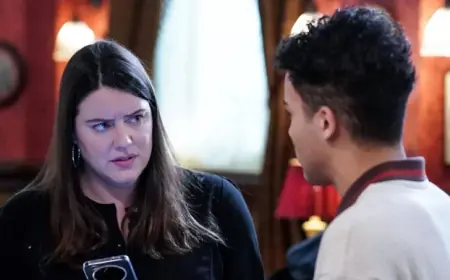

























Dawson’s Creek Reenters the Spotlight After James Van Der Beek’s Death at 48, Renewing Focus on the Series’ Legacy and What Comes Next

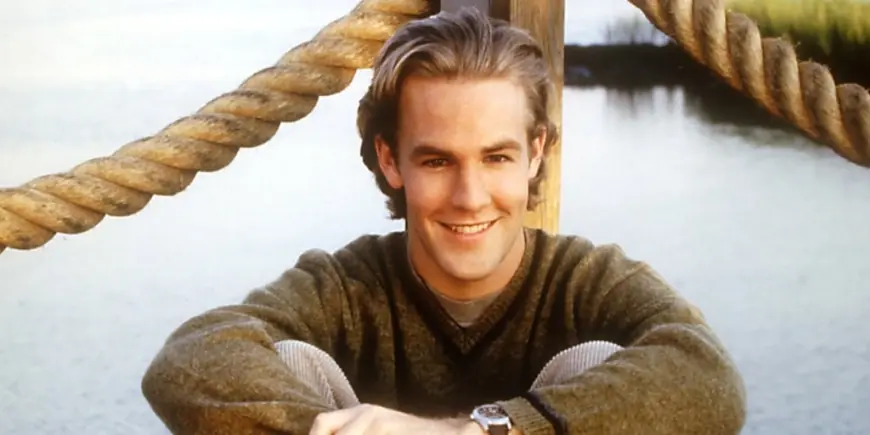
Dawson’s Creek has surged back into public conversation in the past day after the death of actor James Van Der Beek, who played Dawson Leery, at age 48. The news has prompted a wave of tributes from former castmates and a renewed look at how the coming of age drama shaped late 1990s television, while also raising practical questions about how the show will be presented, preserved, and reintroduced to new audiences in the months ahead.
Van Der Beek had previously shared that he was battling colorectal cancer. His death, confirmed on Wednesday, February 11, 2026, has turned what is often nostalgic talk about a beloved series into something more immediate and emotional: a reassessment of a career-defining role and the community that formed around it.
What happened and why it matters now
For many viewers, Dawson’s Creek was a formative series, remembered for its earnest tone, rapid-fire dialogue, and willingness to treat teenage feelings as serious stakes. Van Der Beek’s portrayal of Dawson anchored that tone, even as the ensemble evolved and storylines shifted over multiple seasons.
The immediate impact is cultural, but it is also logistical. When a defining star of a long-running series dies, the way the show is marketed, packaged, and celebrated often changes quickly. Tributes can lead to renewed viewership, special programming decisions, and fresh demand for cast interviews and retrospective content. That can reshape how the series is understood by audiences who did not watch it in its original run.
Behind the headline: incentives, stakeholders, and why the conversation shifts so fast
The incentives for the people and institutions connected to Dawson’s Creek are not all the same, even when everyone is grieving.
Cast and creators have an incentive to honor a colleague with sincerity while protecting their private relationships from becoming public spectacle. Fans have an incentive to reconnect with a story that shaped them, and to find a shared space for mourning that feels personal even if the relationship was parasocial. Rights holders, distributors, and catalog curators have an incentive to meet a sudden spike in demand, which can bring the series to more prominent placement and broader availability.
Stakeholders extend beyond entertainment. Van Der Beek’s death after a cancer battle also lands in a moment when public health advocates continue pushing for early screening and candid discussion, especially among people who feel too young to be at risk. Even without formal campaigns, celebrity stories can change behavior, nudging people to ask doctors questions they were postponing.
The Dawson’s Creek legacy, revisited in 2026
Dawson’s Creek holds an unusual spot in TV history. It helped normalize a more literate, self-aware teen drama style, where characters spoke with a heightened emotional vocabulary. It also launched or accelerated multiple careers, creating a cast whose later work ranged widely across film and television.
What makes the show durable is not only its plot but its tone: it treated adolescence as a time when friendship and romance could feel as consequential as adult decisions. That premise may look different through a modern lens, yet it remains legible to new viewers because the emotional problems are timeless, even when the fashion, tech, and cultural references date the episodes.
What we still don’t know
Several elements remain unclear and will shape the next chapter of this story.
We do not yet know what kind of coordinated memorial plans, if any, may emerge from those closest to Van Der Beek. It is also not confirmed whether additional cast gatherings will be organized in the near term, beyond informal expressions of grief. Another open question is how the show’s stewards will handle retrospective projects: whether there will be a new documentary-style lookback, a curated re-release, or a broader push to contextualize the series for modern audiences.
There is also an important boundary question: how much of Van Der Beek’s private medical journey will remain private, and how much will be discussed publicly in ways that could help awareness without crossing into intrusion.
What happens next: realistic scenarios and triggers to watch
Here are several plausible next steps and what would trigger each one.
Scenario one: a coordinated tribute event in the coming weeks.
Trigger: the cast and creative team aligning around a charity or memorial effort that reflects Van Der Beek’s values and family priorities.
Scenario two: renewed momentum for official retrospectives.
Trigger: sustained viewer interest, anniversary timing, or a decision by rights holders that a curated reintroduction is appropriate.
Scenario three: a surge in cast interviews and personal essays.
Trigger: fan demand paired with a respectful media environment that prioritizes remembrance over sensational details.
Scenario four: broader public conversation about screening and early detection.
Trigger: advocacy groups, medical voices, or the family choosing to highlight preventive messages linked to his experience.
Scenario five: a quiet period after the first wave of attention.
Trigger: the natural fade of news cycles, especially if the family requests privacy and the cast keeps memorial plans private.
Why it matters beyond nostalgia
Dawson’s Creek is not suddenly important because it is trending. It is important because it demonstrates how long a story can live, how deeply a performance can imprint on a generation, and how a television community can become a real one when loss arrives.
In the near term, the focus is remembrance. In the longer term, the question becomes how the series is carried forward: as comfort viewing, as a cultural artifact, or as a reminder that the people behind familiar characters have real lives, real illness, and real families beyond the screen.