

























Senators Launch Bipartisan Plan to Reduce Data Center Utility Costs

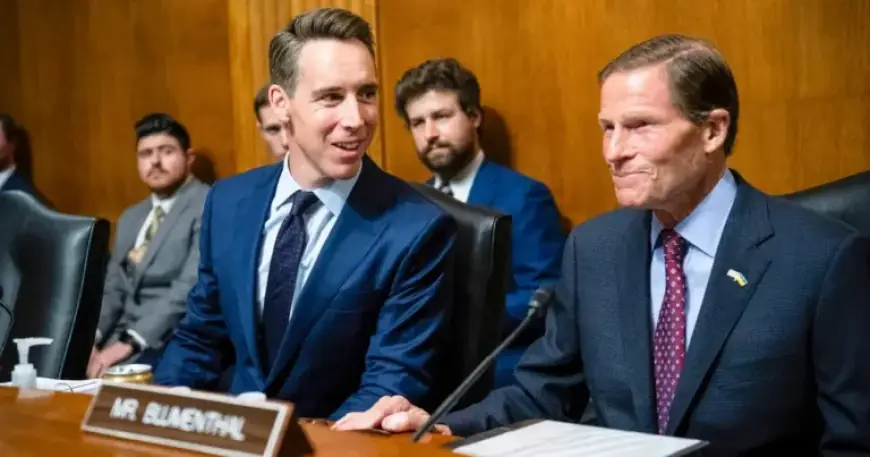
On Wednesday, Senators Josh Hawley and Richard Blumenthal introduced a bipartisan initiative targeting the escalating utility costs linked to data centers. The proposed legislation, known as the “Guaranteeing Rate Insulation” or “GRID” Act, aims to protect consumers from surging electricity bills caused by data center energy consumption.
Key Features of the GRID Act
The GRID Act encompasses several significant measures:
- Prevention of data center-related price increases on consumers’ utility bills.
- Priority grid access for residential electricity users over data center operators.
- Encouragement for new data centers to utilize off-grid power sources, with existing data centers offered a 10-year transition period.
- Mandatory public disclosure of current and future energy usage by data center operators.
Statements from the Senators
Senator Hawley, a Republican from Missouri, emphasized the need for this legislation, stating, “American families should not have to shoulder the burden of rising electricity costs due to data centers in Missouri and across the country.”
Senator Blumenthal, a Democrat from Connecticut, echoed this sentiment, asserting that the bill aims to curb the financial impact on families from “big tech companies’ AI-driven drain on pocketbooks.”
Context and Background
This bipartisan effort follows multiple Democratic proposals aimed at mitigating the financial strain imposed by data centers. Recent bills include:
- The “Power for the People” Act by Senator Chris Van Hollen (D-Md).
- The “SHIELD Act” by Representatives Mike Levin (D-Calif.) and Kathy Castor (D-Fla.).
- The “PRICE Act” introduced by Representative Rob Menendez (D-N.J.).
- The “Protecting Families from AI Data Center Energy Costs Act” by Representative Greg Landsman (D-Ohio).
Political Climate and Industry Response
The introduction of the GRID Act coincides with broader concerns over the impacts of AI and the development of necessary data infrastructure. Recently, former President Donald Trump voiced support for consumer protection against utility bill increases, emphasizing the importance of data centers in fostering AI advancements.
State officials are also addressing this issue. Pennsylvania Governor Josh Shapiro has put forth state guidelines for data centers, urging legislative action to enforce them.
Industry reactions vary significantly. Some companies, like Microsoft, are willing to invest in additional electricity costs and explore independent power sources. Conversely, others argue they already contribute adequately to electricity expenses.
Conclusion
The GRID Act represents a critical bipartisan response to rising utility costs associated with the burgeoning data center industry. As advancements in artificial intelligence continue, the urgency to address these economic implications only grows. Stakeholders from all sides will need to engage in open dialogue as legislative efforts progress.