

























House Approves SAVE America Act, Trump’s Election Bill Moves to Senate

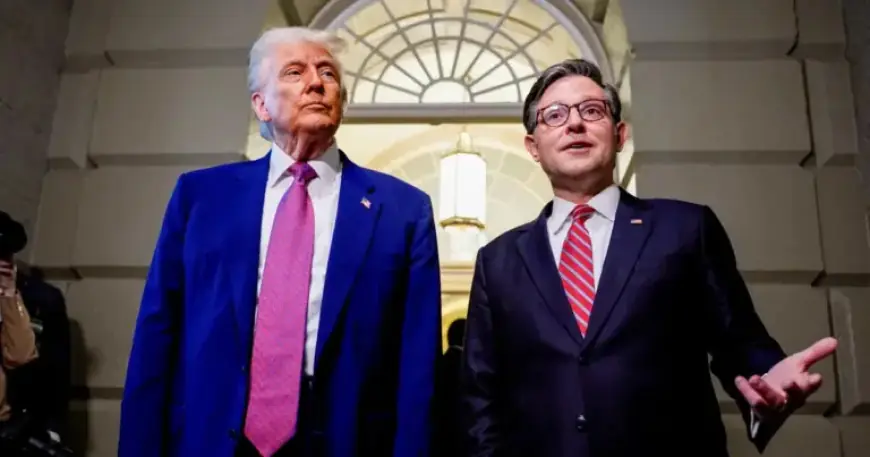
The House of Representatives has approved the SAVE America Act, an election reform bill heavily promoted by former President Donald Trump. On Wednesday, the legislation passed with a narrow margin of 218 to 213 votes, supported unanimously by Republicans while only one Democrat, Rep. Henry Cuellar from Texas, sided with the majority.
Key Provisions of the SAVE America Act
The 32-page bill introduces significant changes to voting procedures. Notable requirements include:
- States must obtain in-person documentary proof of citizenship, such as a passport or birth certificate, for voter registration.
- Voters are required to present photo identification to cast their ballots in person.
- New rules for mail-in ballots stipulate that voters must submit a copy of an eligible ID when requesting and casting absentee ballots.
Reactions to the Legislation
Proponents argue that these measures are common sense. House Speaker Mike Johnson stated, “Americans need an ID for various everyday activities, so why should voting be different?” However, Democrats voice strong opposition, claiming the bill is a guise for voter suppression. House Minority Leader Hakeem Jeffries described the SAVE America Act as lacking credibility, asserting that it does not focus on voter identification but rather aims to disenfranchise citizens.
Adding to the controversy, Democrats highlighted Trump’s intentions to enhance federal control over elections, countering constitutional principles that assign states authority over electoral processes. Concerns were also raised about recent FBI actions related to voting in Fulton County, Georgia, amid Trump’s persistent claims regarding the 2020 election results.
Public Opinion and Party Dynamics
Despite the criticisms, studies indicate that a majority of Americans support voter identification laws. A Pew Research Center poll from August revealed that 83% of U.S. adults agree on requiring government-issued photo ID for voting. This includes significant backing from Democratic and Black voter demographics, who some advocates argue may be adversely affected by such requirements.
Future of the Bill in the Senate
The SAVE America Act, co-sponsored by Rep. Chip Roy and Sen. Mike Lee, now advances to the Senate. The Republican majority in the Senate stands at 53 seats, yet some members express skepticism towards the legislation. Sen. Lisa Murkowski of Alaska publicly opposed it, recalling previous Republican resistance to federal election mandates.
Sen. Susan Collins of Maine also raised concerns, indicating that while she supports the principles of voter eligibility and ID requirements, the current version of the bill has broadened considerably beyond her original support. Others, like Senate Minority Leader Chuck Schumer, have vehemently criticized the act, characterizing it as a move toward regressive electoral laws.
While Senate Majority Leader John Thune indicates ongoing discussions among Republicans about the bill, the path ahead appears challenging. The SAVE America Act faces hurdles, particularly regarding the potential for a filibuster, with Democrats firmly opposed and no clear route to gather the necessary votes to overcome it.