

























AI Unravels Secrets of Ancient Board Game, Scientists Reveal

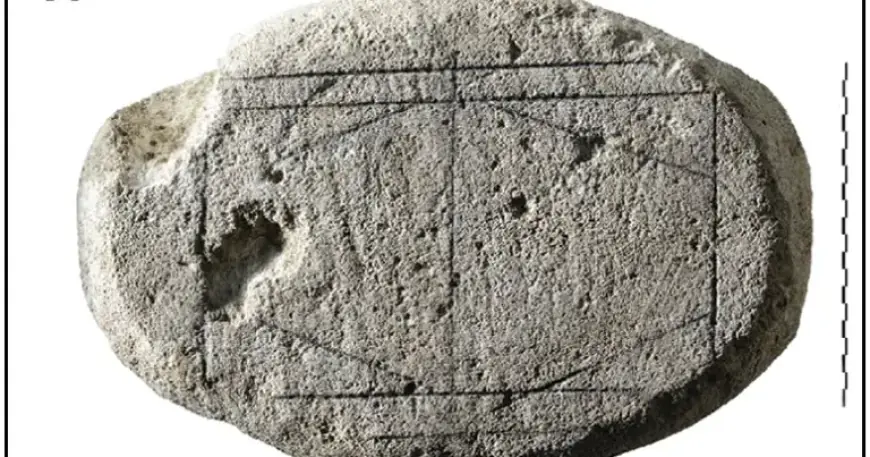
Researchers have made a groundbreaking discovery regarding a mysterious smooth, white stone dating back to the Roman era, found in the Netherlands. With the aid of artificial intelligence, they have identified it as an ancient board game and have even proposed potential rules for gameplay.
AI Unravels Secrets of Ancient Board Game
This circular piece of limestone features intricate diagonal and straight lines. Scientists utilized 3D imaging technology from the restoration studio Restaura to analyze the stone. The investigation revealed that certain lines were more deeply etched than others, indicating wear from moved game pieces. Archaeologist Walter Crist from Leiden University noted that the wear patterns aligned precisely with the way game pieces would slide across the stone.
The Role of Artificial Intelligence
At Maastricht University, researchers employed an AI program named Ludii, designed to deduce the rules of ancient games. This AI was trained on the rules of about 100 games from the same historical context as the Roman stone. As a result, Ludii generated numerous possible rule sets and even played various game variants against itself. Dennis Soemers from Maastricht University highlighted the importance of correlating these potential rules with the wear observed on the stone.
Caution in Interpretation
Despite the promising findings, Soemers cautioned that the AI could detect rules from any line pattern. Hence, it remains uncertain whether the Romans played the game in the exact manner inferred by the researchers. The game is believed to be a strategy-based endeavor, focusing on hunting and trapping the opponent’s pieces with minimal moves.
Materials and Findings
Researchers speculate that game pieces were likely made from materials such as glass, bone, or earthenware. The detailed findings, including the proposed game rules, were documented in the journal Antiquity. Accompanying the publication was a video that provided further insights into the ancient game.
Historical Context
- Discovery Location: Netherlands
- Date of Artifact: Roman era
- Publication: Antiquity journal
- AI Name: Ludii
Significantly, this discovery pushes back the timeline for known board games and their complexity in Europe. Similar discoveries have been made, such as board game pieces uncovered in 2015 in a Roman settlement near the Rhine River in Germany, indicating a rich tradition of strategic gameplay in ancient civilizations.
By utilizing modern technology, researchers have begun to unveil the secrets of the past, shedding light on ancient pastimes that once engaged the minds of Romans. Further studies may continue to explore the depths of this intriguing game and its place in history.