

























BYD Develops Sodium Batteries Boasting 10,000 Cycle Lifespan

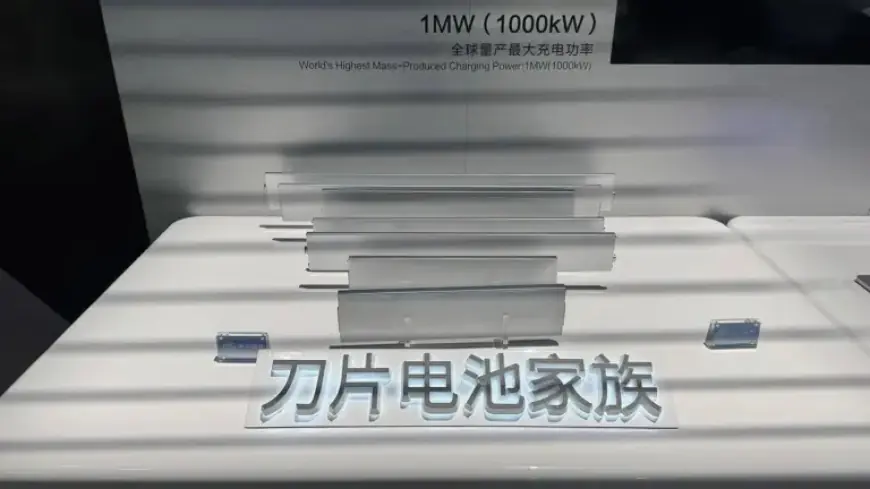
BYD has announced significant advancements in sodium-ion battery technology, boasting a remarkable cycle life of up to 10,000 cycles. The Chinese new energy vehicle and battery manufacturer revealed these details during an investor briefing, highlighting its commitment to innovation.
Mass Production Timeline of Sodium Batteries
The timeline for mass-producing these sodium-ion batteries will depend on market conditions and customer demand. Currently, mainstream lithium iron phosphate (LFP) batteries offer a cycle life of approximately 2,000 to 3,000 cycles. In contrast, energy storage solutions can achieve up to 10,000 cycles, showing a promising development in battery technology.
Technological Advancements
BYD disclosed that its sodium-ion battery research and development has reached the third-generation product technology stage. The company has effectively tackled issues related to sodium precipitation and high-temperature resistance. This progress is attributed to innovative material designs that utilize stable poly-anion systems alongside advancements in electrochemical systems.
BYD’s Position in the Global Battery Market
- BYD is recognized as the second-largest power battery manufacturer globally.
- It trails behind CATL, which holds the top position in the industry.
- BYD primarily specializes in lithium iron phosphate (LFP) batteries.
Comparison with Competitors
CATL, BYD’s main competitor, launched its first-generation sodium-ion battery on July 29, 2021. This move attracted significant attention towards sodium battery technology. Recently, CATL partnered with Changan to unveil a passenger vehicle equipped with sodium-ion batteries, scheduled for market introduction in mid-2026.
The Future: Solid-State Battery Exploration
In addition to sodium-ion batteries, BYD is exploring solid-state battery technology. The company expressed optimism that sulfide solid-state batteries could lead to breakthroughs in battery lifespan and fast-charging capabilities. It anticipates small-scale production of these advanced batteries by 2027, aligning with earlier projections.
Technical Routes in Solid-State Battery Development
| Type | Description |
|---|---|
| Oxide | Utilizes metal oxides for electrolyte. |
| Polymer | Employs polymer-based electrolytes. |
| Sulfide | Utilizes sulfide-based electrolytes for enhanced performance. |
BYD’s commitment to pushing the boundaries of battery technology positions it as a leader in the electric vehicle market. With sodium-ion and solid-state batteries on the horizon, the future looks promising for sustainable energy solutions.