






















Payne Haas to Rabbitohs: NRL Transfer Bombshell Reshapes South Sydney, Broncos, and the Adam Reynolds Retirement Timeline

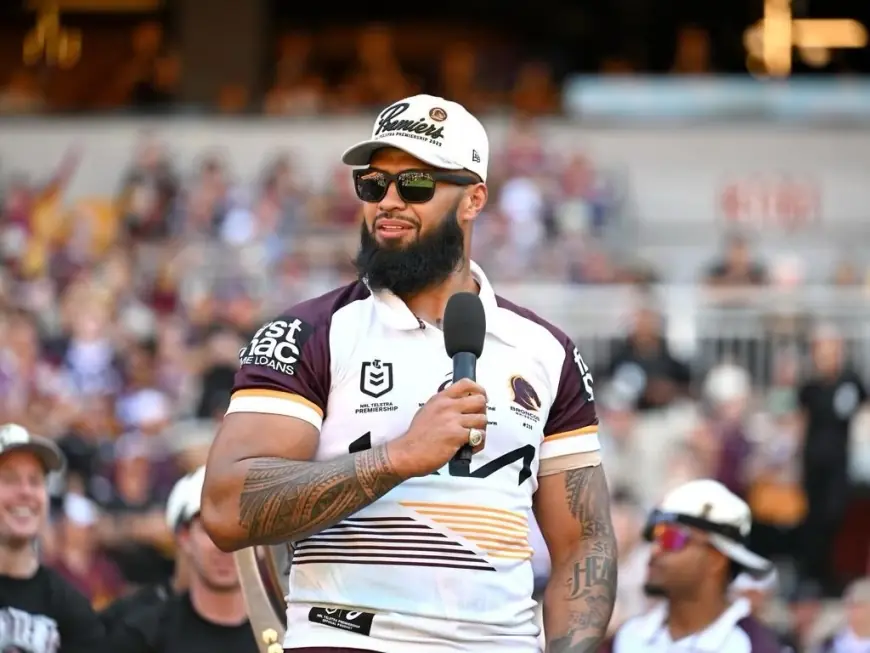
The NRL’s biggest roster story of the week is now set: Payne Haas will leave the Brisbane Broncos and link up with the South Sydney Rabbitohs on a three-year deal starting in the 2027 season, triggering immediate fallout across both clubs and a broader shake-up of the competition’s player market. The move was confirmed in recent days, and it arrives alongside another headline in Brisbane: captain Adam Reynolds has announced the 2026 season will be the final year of his playing career.
Together, the Haas decision and the Reynolds retirement plan turn 2026 into a transition season for the Broncos and a strategic runway year for the Rabbitohs, who are building toward a high-impact forward pack in 2027.
Payne Haas news: What happened in the Broncos to Rabbitohs switch
Haas’ decision lands as a rare “franchise player” change in modern NRL terms: a dominant middle forward, still in his prime, choosing to exit a marquee club for a direct rival. The key detail is timing. Haas is not switching clubs immediately; he is expected to remain with Brisbane through the 2026 season and then join South Sydney for 2027–2029.
The structure matters because it creates two parallel competitions:
-
On-field in 2026: Haas still in Broncos colors, with expectations unchanged week to week.
-
Off-field in 2026: both clubs planning around a future where Brisbane must replace elite go-forward, and South Sydney must design a roster that maximizes Haas’ impact.
Payne Haas Rabbitohs: Why South Sydney moved now
South Sydney’s incentive is simple: elite middle forwards are the hardest currency in the sport. They stabilize defensive sets, generate ruck speed, and make everyone else’s job easier. When one becomes available, clubs often treat it as a once-in-a-cycle opportunity.
For the Rabbitohs, Haas is also a statement of intent. It signals to the locker room, the fan base, and prospective recruits that the club is building a window, not just surviving a season. It also changes how opponents will plan for them in 2027: if you can’t win the middle, you’re playing from behind.
Broncos: the immediate cap, culture, and succession questions
Brisbane now face two big tasks at once:
-
Replace Haas’ minutes and influence from 2027 onward.
-
Prepare for life after Reynolds, who has set an end point at the end of 2026.
Even with a year of runway, elite replacements don’t arrive on demand. Teams can chase a like-for-like prop, but the more realistic play is a portfolio solution: recruit one high-end forward, develop a younger middle, and re-balance the rotation so the team’s identity doesn’t collapse when a star exits.
Culturally, the Broncos also have to manage a delicate 2026: keeping a departing superstar fully engaged while preventing the season from becoming a long farewell tour. Clubs that handle this well do two things consistently: communicate clearly to the playing group, and refuse to let contract narratives overshadow weekly standards.
Adam Reynolds retirement: why the timing matters
Reynolds’ decision to retire at the end of 2026 doesn’t just remove a veteran halfback; it sets a deadline for Brisbane’s next spine era. That accelerates planning across:
-
leadership succession
-
game management and kicking strategy
-
the development timeline for younger halves
The second-order effect is pressure. Once the room knows a captain is on the final lap, every close loss and every tactical wobble gets interpreted through the lens of “wasting the last ride.” That can sharpen performance, or it can tighten the group if results go south early.
Behind the headline: stakeholders, incentives, and what we still don’t know
This saga involves more than two clubs.
Stakeholders
-
Rabbitohs leadership: must convert a marquee signing into a coherent 2027 roster, not just a headline.
-
Broncos leadership: must protect 2026 performance while managing two major departures.
-
Agents and rival clubs: will use the shock value of this move to reset market expectations for top-tier middles.
-
Players already on both rosters: will feel the downstream squeeze in roles, minutes, and contract priorities.
Missing pieces
-
How South Sydney solve the “stacking” problem: when a superstar arrives, someone else often loses minutes or money.
-
Brisbane’s recruitment direction: do they chase one huge replacement, or spread resources across multiple positions?
-
How Haas’ 2026 season is managed emotionally: whether it becomes a distraction or a focused final campaign.
What happens next: 5 realistic scenarios with triggers
-
Rabbitohs begin shaping 2027 combinations early
Trigger: positional reshuffles, contract decisions, and a clearer rotation blueprint announced or implied through selections. -
Broncos move quickly into the market for a marquee middle or a spine successor
Trigger: early extensions for key forwards or aggressive pursuit of an off-contract target. -
Haas plays lights-out in 2026 to close his Brisbane chapter strongly
Trigger: Brisbane start fast and the narrative shifts from departure drama to premiership push. -
The story drives a wider NRL transfer chain reaction
Trigger: rival clubs respond by locking in their own front-row leaders, inflating prices league-wide. -
A leadership handover becomes the Broncos’ central 2026 theme
Trigger: Reynolds’ final season turns into a structured mentorship year for the next on-field organizer.
Why it matters
Payne Haas to the Rabbitohs is the kind of move that can re-order premiership odds before a ball is kicked in 2027, while the Reynolds retirement timeline forces Brisbane to think in hard deadlines rather than vague transitions. The on-field effects won’t fully arrive until next season, but the strategic battle is already underway in 2026: roster architecture, cap discipline, and culture management will decide who wins the long game.