






















Casey Wasserman faces widening fallout as Wasserman agency clients and critics react

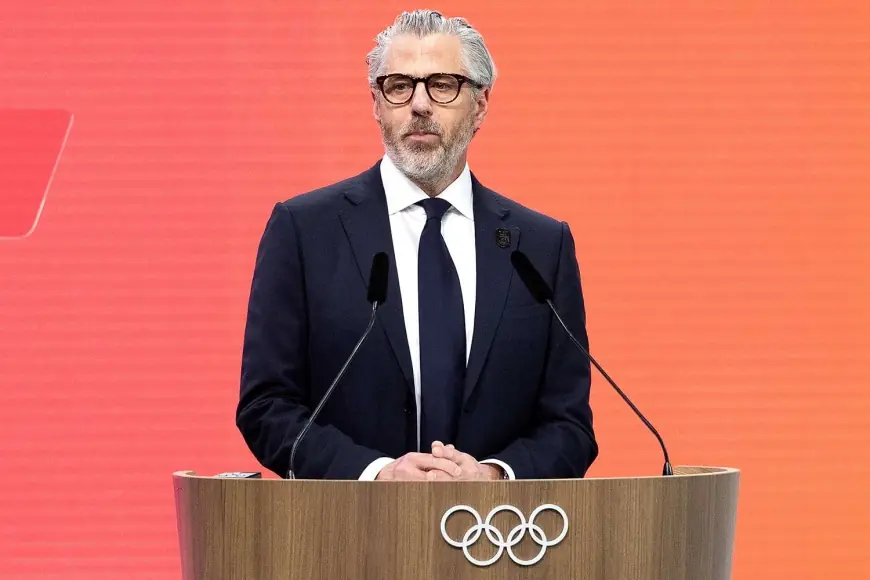
Casey Wasserman, the longtime power broker behind the Wasserman agency and chair of the Los Angeles 2028 Olympic organizing committee, is confronting intensifying scrutiny after newly released federal documents surfaced old email exchanges with Ghislaine Maxwell. The episode has triggered client departures, internal pressure in the representation business, and renewed questions about whether the LA28 leadership can stay focused as planning accelerates.
The controversy is unfolding in real time during a high-visibility Olympic moment, with Wasserman appearing publicly in Milan in recent days while the next Summer Games cycle moves into a critical operational phase.
Casey Wasserman under pressure
The latest flare-up centers on email messages from 2003 between Wasserman and Maxwell that appeared in a tranche of Justice Department materials released on January 30, 2026 (ET). Maxwell is serving a prison sentence for sex trafficking crimes connected to Jeffrey Epstein.
Wasserman has said the communications occurred years before Maxwell’s criminal conduct became widely known and that he did not have a personal or business relationship with Epstein. Still, the optics have proved damaging, particularly because Wasserman holds prominent roles in both sports and entertainment—and because LA28 is under intense public scrutiny over budgets, security, and governance as 2028 draws closer.
In Los Angeles, several local officials have publicly argued that the controversy is a distraction and have called for a leadership change. Separately, entertainment-industry figures have pushed for accountability inside the agency business, where reputation and trust are foundational.
Wasserman agency client exits and internal strain
The most visible immediate business impact has been client movement away from Wasserman’s representation operation, including the departure of pop artist Chappell Roan, announced in a social media post on February 10, 2026 (ET). Her statement framed the decision around values, safety, and dignity, without detailing a broader plan for where her representation will land next.
Other artists and industry figures have voiced similar discomfort, and there are signs of internal strain as agents weigh whether remaining under the same leadership creates reputational risk. The speed of the reaction matters: talent representation depends on confidence that an agency can protect clients’ interests without becoming the story itself.
This also comes at a time when the broader talent business is fiercely competitive. If even a small cluster of marquee clients and rainmaking agents move, the effect can compound quickly, reshaping rosters and leverage across the music and sports marketplace.
LA28 implications as planning hits a critical stretch
For LA28, the concern is less about day-to-day ceremonies and more about governance and execution. The next two years are where decisions on venue overlays, transportation, security coordination, and sponsorship activation become operational commitments rather than proposals.
Any sustained leadership crisis risks slowing decision-making or complicating relationships with key stakeholders—local government, venue operators, sponsors, and international partners. Even if planning continues smoothly behind the scenes, public doubts can affect fundraising momentum and political support.
There has also been chatter in political circles about possible alternative leaders, but no transition has been publicly confirmed. For now, LA28’s posture appears to be continuity, with supporters emphasizing operational progress while critics argue the situation undermines public trust.
What Wasserman has said publicly
Wasserman’s response has centered on three points: the timing of the emails, the lack of a relationship with Epstein, and the claim that the correspondence does not reflect any involvement in wrongdoing. He has also expressed regret about the communications being part of the public record.
The core challenge for him is that reputational damage can persist even when allegations of criminal conduct are not present. In industries built on relationships—sports, entertainment, sponsorship, and civic mega-events—the question becomes whether stakeholders view the ongoing attention as manageable or corrosive.
Key dates shaping the story
| Date (ET) | Event | Why it matters |
|---|---|---|
| Jan. 30, 2026 | Federal document release includes 2003 Maxwell emails | Triggers renewed scrutiny and calls for accountability |
| Feb. 10, 2026 | High-profile client announces exit from Wasserman | Signals potential broader client and agent movement |
| Early Feb. 2026 | Public LA28 appearances during Winter Games period | Raises pressure on LA28 to show stability and focus |
What to watch next
The next signals will be concrete, not rhetorical: whether additional major clients leave, whether senior agents publicly break ranks, and whether LA28 stakeholders escalate demands into formal action. On the Olympic side, any governance response—board moves, role adjustments, or public reaffirmations—will shape whether the controversy remains a headline or becomes a lasting complication.
On the agency side, the key question is whether this stays confined to a subset of music clients or spills into sports, brand consulting, and sponsorship work. A contained reputational issue is survivable; a broad confidence shock is harder to reverse.
Sources consulted: Reuters; Associated Press; Los Angeles Times; Deadline