

























Climate Change Challenges Winter Olympics Hosting

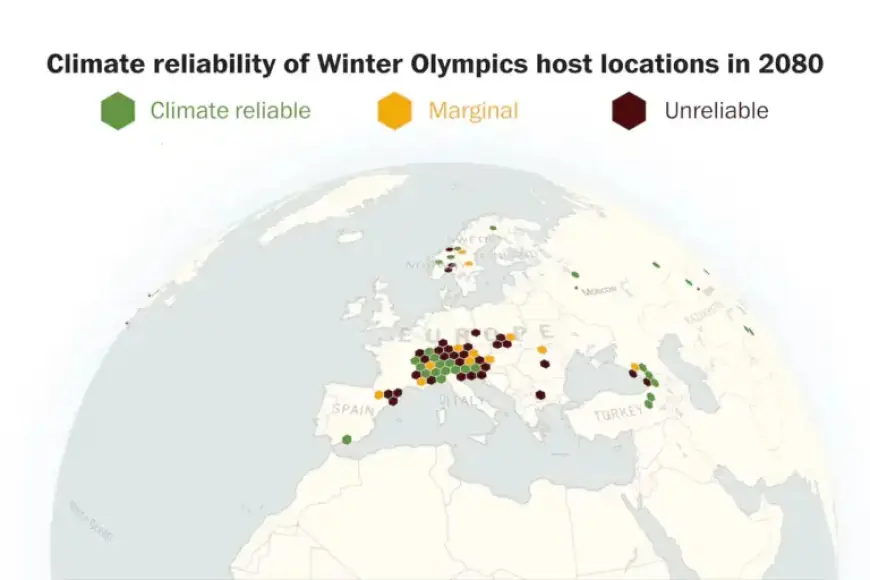
As the Milan-Cortina Winter Olympics approach, concerns about climate change are affecting winter sports. Unseasonably warm weather has prompted ski officials to create artificial snow for competitions. This is a stark reminder of how fragile winter sports are amid rising global temperatures.
Climate Change Impact on Winter Olympics Hosting
The Rocky Mountains in the United States, which will host events for the 2034 Winter Olympic Games, have also recorded their warmest winter on record. In Park City, Utah, snowfall during the early season has been significantly lower than expected.
Projected Temperature Increases
Studies show that winter temperatures across traditional Olympic locations will rise. Under various emissions scenarios, host cities could warm by about 4°C (7.2°F) by 2080. This projection is based on data collected from 1981 to 2010.
- 93 possible winter Olympic host locations were identified in a 2024 study.
- By mid-century, fewer than 20 countries may be able to host the Winter Games under current warming trends.
- The number of climate-reliable locations could drop to just 52 by the 2050s and 46 by the 2080s.
To be considered climate-reliable, a location must deliver an adequate snowpack 90% of the time during winter months. Conditions must also reach freezing temperatures to facilitate the production of artificial snow.
Declining Host Locations in Europe
Europe has witnessed the most significant loss of potential host locations. Declining snowpack and warmer temperatures threaten low-elevation areas. According to Daniel Scott, a professor at the University of Waterloo, many regions traditionally used for winter sports are increasingly vulnerable.
Challenges for Paralympic Games
The effects of climate change extend to the Paralympic Games. Host cities must accommodate both events, which are scheduled closely together. The “one bid, one city” agreement means that locations must be sustainable for both the Olympics and Paralympics.
Only 22 out of the 93 identified host cities remain climate-reliable for the Paralympics in March. This raises concerns about the viability of winter sports in warmer months, particularly impacting both athletes and organizers.
Artificial Snow Production Concerns
According to reports, between 2022 and 2024, 33 World Cup competitions in skiing and snowboarding faced cancellations due to insufficient snow. Athletes express concerns regarding the reliability of snow levels, which directly affect their training and competition.
The Milan-Cortina Games are expected to depend heavily on machine-made snow. Organizers plan to store millions of gallons of water to facilitate snow production across the six Alpine venues, admitting that climate factors may require nearly complete artificial snow coverage.
Future Solutions and Emission Reductions
Experts suggest adjusting the scheduling of the Olympic and Paralympic Games to enhance climate reliability. Hosting both events in January could double the number of viable locations by avoiding warmer March temperatures.
Addressing climate change is crucial for the future of winter sports. Organizations like Protect Our Winters advocate for immediate reductions in global emissions to keep future hosting options available. Meeting the Paris Climate Agreement’s goals could yield eight more potential host locations by the 2080s.
The situation is a wake-up call for the future of winter sports overall. More sustainable practices and policies are necessary for the viability of the Winter Olympics.