
























Eileen Gu Returns to the Olympic Spotlight as Injuries, Expectations, and Identity Debates Shadow Her 2026 Run

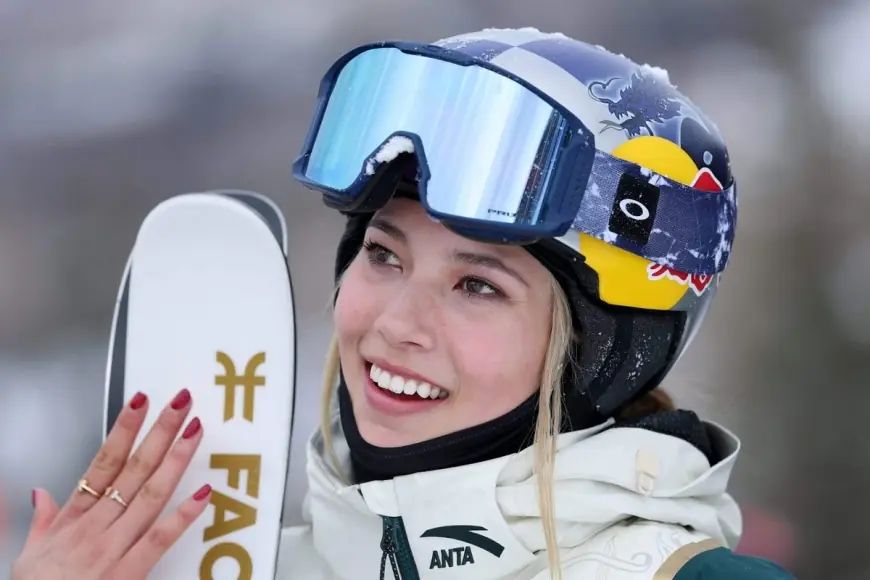
Eileen Gu is back at the center of the Winter Games conversation as freestyle skiing begins in Livigno, Italy, with women’s events set to open February 7, 2026 ET. The 22-year-old double Olympic champion is entering her second Olympics with a noticeably different message than four years ago: less about proving dominance, more about rediscovering joy after a year defined by injuries, limited training blocks, and the mental load of balancing elite sport with university life.
That reset matters because Gu is not just a medal favorite. She is also one of the most commercially valuable athletes in winter sports, and a uniquely polarizing figure because she competes internationally for China despite being raised in the United States. The result is a high-stakes mix of performance pressure, brand incentives, and geopolitical attention that few athletes face.
What happened: Gu signals a fresh mindset heading into Milano Cortina 2026
In the days leading up to competition, Gu has described feeling “unstuck” compared with the grind of recent seasons, when she moved from contest to contest with little time to rebuild physically or emotionally. That framing is significant because her recent year included injury disruptions and reduced practice time, creating uncertainty about how close she is to peak form as the sport’s difficulty continues to accelerate.
On paper, the challenge is steep. Freestyle skiing is pushing toward ever-higher spin counts and tighter margins for landing consistency. In that environment, even a small dip in training volume can show up as a bigger gap on competition day.
Behind the headline: why this Olympics is different for Eileen Gu
The context has shifted in three ways.
First, the sport itself is evolving fast. The technical ceiling is rising, and courses are being built to reward creativity as much as raw rotation. That increases variance. It is harder to “manage” a competition when the field is throwing new combinations and the judging emphasis can lean toward style, amplitude, and risk.
Second, Gu’s incentives are broader now. She is a medal contender, but she is also a global marketing engine. When an athlete’s earning power is heavily tied to endorsements, every appearance becomes a brand moment, and every stumble becomes a headline. That can be motivating, but it can also compress the margin for error in a way most athletes never experience.
Third, the identity debate has not gone away. Questions about representation, nationality, and eligibility rules can re-surface anytime attention spikes. Even if the competition is clean and the messaging stays disciplined, the spotlight can still split into two parallel stories: the athletic one and the cultural one.
Stakeholders: who is invested in her results
Gu’s performance will matter to more than just medal tables.
Team decision-makers want points, podiums, and confidence that she can contend across multiple disciplines.
Sponsors want high-visibility moments that reinforce premium positioning, especially in an Olympic window where attention concentrates.
Event organizers and the sport’s governing ecosystem benefit when marquee stars drive viewership, which can translate into long-term investment and better venues.
Fans and critics project larger narratives onto her choices, making her results feel like symbolic validation or rejection depending on the audience.
What we still don’t know
Several key pieces remain unclear heading into opening runs.
How durable is she right now, and how has her injury history changed what she is willing to attempt?
What is her true competitive ceiling this week: aiming for gold-level difficulty immediately, or building through the event?
How will judging trends play in Livigno, particularly around risk versus execution? In modern freeskiing, a slightly safer run that is perfectly stomped can beat a riskier run with a small landing check.
And perhaps most importantly, can she keep the mental reset intact once the pressure of qualifying and finals begins?
What happens next: five realistic scenarios with triggers
-
Gold-contending form arrives quickly
Trigger: clean early runs and confidence to raise difficulty in finals. -
Podium fight but not runaway dominance
Trigger: strong execution, but the field matches or exceeds her difficulty. -
Conservative strategy to manage health
Trigger: lingering discomfort or cautious coaching decisions, prioritizing completion over maximum risk. -
One-event focus rather than multi-event sweep
Trigger: schedule and recovery demands force a narrower target to protect peak performance. -
A costly mistake reshapes the narrative
Trigger: a single fall in a high-visibility final, especially if it interrupts momentum across events.
Why it matters
Eileen Gu’s 2026 campaign is a real-time case study in modern sport: elite performance under unprecedented visibility, commercial pressure, and identity politics, all while the athletic bar keeps rising. If she medals, the story becomes one of resilience and recalibration. If she struggles, the story becomes a reminder that injury time and limited training are unforgiving in a sport that is sprinting forward.
Either way, the next week will clarify what kind of Olympics this will be for Gu: a return to dominance, a measured rebuild, or a volatile battle where the smallest margins decide everything.