

























Gold Price Today Falls Sharply as Investors Raise Cash: Spot Gold Slides Near $4,851 and U.S. Gold Futures Drop Below $4,875

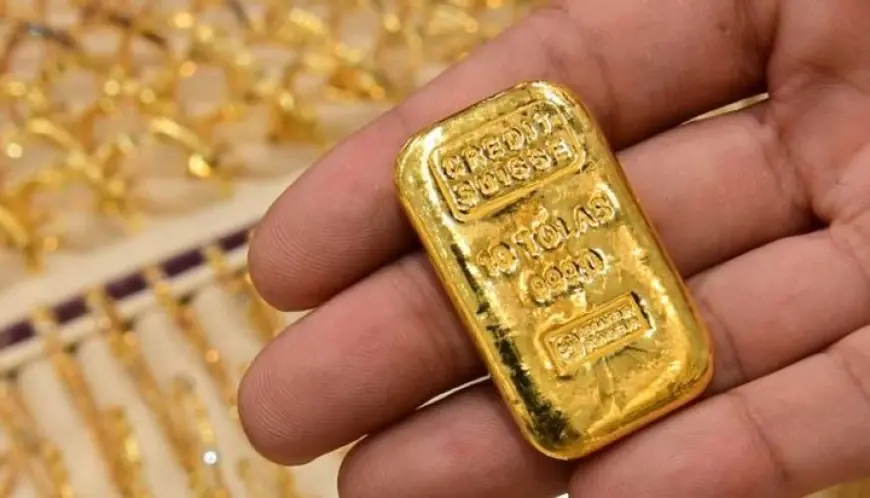
Gold prices fell hard today as a broad wave of selling hit multiple markets at once, pulling the traditional “safe haven” into the downdraft rather than lifting it. By February 5, 2026 ET, spot gold was down about 2% and hovering near $4,851 per ounce, while the most-active U.S. gold futures contract traded around the high-$4,800s per ounce after a similarly steep decline.
The headline is counterintuitive for many investors: in a tense, volatile tape, gold can drop not because its long-term story is broken, but because short-term mechanics force people to sell what they can, not what they want.
What happened to gold price and gold futures today
Today’s move looks like a classic “liquidity event.” When equities, high-volatility assets, or other leveraged positions are under pressure, traders and funds often sell liquid winners to meet margin calls or reduce overall risk quickly. Gold is one of the deepest, easiest markets to sell at size, so it frequently becomes a source of cash during sharp, cross-asset selloffs.
That dynamic can hit both spot gold and gold futures at the same time. Futures can amplify the move because they are inherently leveraged instruments: price declines can trigger forced position reductions, which adds selling into a falling market.
Behind the headline: why gold is dropping even when uncertainty is high
A few forces tend to stack together on days like this:
Forced selling and margin pressure
When volatility spikes, brokers and clearing systems can require more collateral. That makes highly leveraged portfolios scramble for cash. Gold, being liquid and widely held, becomes an obvious funding source.
A firmer U.S. dollar
Gold is priced in U.S. dollars. When the dollar strengthens, gold often faces headwinds because it becomes more expensive for non-dollar buyers and because global investors may shift toward cash-like instruments during stress.
Profit-taking after extreme highs
Gold’s path to recent record levels left a lot of profits sitting in the market. In fast drawdowns, those gains can get harvested aggressively, especially by short-term traders who don’t want to ride out a violent correction.
Positioning matters more than narrative in the short run
Gold’s medium-term drivers can remain intact while prices still fall sharply over a day or two. In the short term, flows, hedging, and leverage can overpower fundamentals.
Stakeholders: who gains and who feels pain
Leveraged traders
Gold futures traders with tight risk limits feel the most immediate impact. Rapid price drops can trigger automatic de-risking.
Long-term holders
Some longer-horizon investors see selloffs like this as an entry opportunity, but only if the market stabilizes and volatility cools.
Central banks and institutional allocators
Large, steady buyers often care less about today’s print and more about trend, liquidity, and currency diversification. But big drawdowns can still change timing and pacing.
Jewelry and industrial demand
Higher gold prices have already strained some forms of demand; a drop can relieve pressure at the margin, though it usually takes time to filter through.
What we still don’t know
The key unknown is whether today’s decline is primarily a one-off cash-raise episode or the start of a broader corrective phase.
Watch for:
-
Whether volatility remains elevated over multiple sessions
-
Whether the dollar keeps strengthening
-
Whether liquidation pressure appears to be fading (smaller intraday swings, less “waterfall” price action)
-
Whether gold begins to decouple from risk assets again, acting more like a hedge than a funding source
What happens next: 5 realistic scenarios for gold and gold futures
-
Stabilization and sideways trade
Trigger: margin-driven selling exhausts itself and price holds a stable band for several sessions. -
Relief bounce, then a retest
Trigger: short covering pushes prices higher, but the market revisits today’s lows to confirm whether real buying is present. -
Deeper correction
Trigger: continued risk-off selling and tighter financial conditions keep pressure on all liquid assets, including gold. -
Volatile range with sharp reversals
Trigger: macro uncertainty stays high, leading to large daily swings as investors rotate between fear, hedging, and cash. -
Reassertion of safe-haven behavior
Trigger: if market stress shifts from “sell everything to raise cash” toward “seek protection,” gold can recover and start moving opposite equities again.
Why it matters
Gold’s drop today is a reminder that “safe haven” does not mean “up every day uncertainty rises.” In fast, leverage-driven selloffs, gold can temporarily trade like a source of liquidity. The next few sessions matter most: if forced selling fades and gold steadies, the market may treat this as a violent reset. If volatility and dollar strength persist, the correction can extend, and gold futures may remain especially sensitive to further de-risking.