




















Jose Alvarado to the Knicks: deadline deal adds pest defense as New York climbs standings

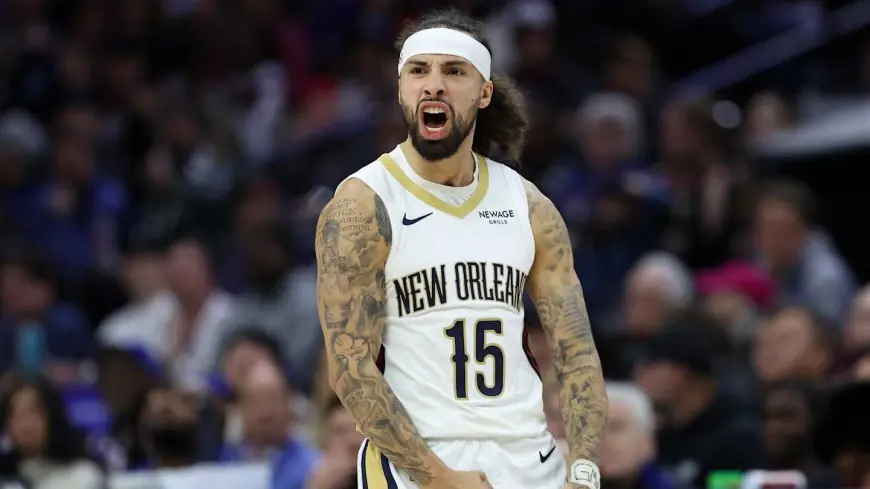
The New York Knicks moved to shore up their backcourt at the trade deadline, acquiring guard Jose Alvarado from the New Orleans Pelicans in a deal that sends Dalen Terry, two second-round picks, and cash the other way. The move lands as New York is playing some of its best basketball of the season and wants more reliable guard depth for the stretch run and the playoffs.
Alvarado, a Brooklyn native known for relentless ball pressure, gives the Knicks a change-of-pace defender who can juice the tempo without needing high usage.
Knicks trade terms: what changed hands
The framework is straightforward: New York adds a rotation guard; New Orleans adds picks and a young wing while clearing a roster slot for other deadline maneuvering.
| Item | Knicks receive | Pelicans receive |
|---|---|---|
| Players | Jose Alvarado | Dalen Terry |
| Draft assets | — | 2026 second-round pick, 2027 second-round pick |
| Other | — | Cash considerations |
The deal also connects to New York’s broader deadline approach: preserve top-end talent while using mid-tier assets (seconds and marginal rotation pieces) to fill specific needs.
Why Alvarado fits in New York
Alvarado’s calling card is disruptive defense. He picks up full court, fights over screens, and turns loose ball pressure into rushed decisions—exactly the kind of “extra possession” style that can swing bench minutes in tight games. Offensively, he’s more of a connector than a primary creator, but he can run basic pick-and-roll, push in transition, and hit open shots when the ball finds him.
This season, he has averaged 7.9 points, 3.1 assists, and 2.8 rebounds in 21.9 minutes per game, with a solid shooting line that includes mid-30s accuracy from three. For New York, that production projects as a stabilizer behind the starters—someone who can survive defensively in playoff matchups and keep the ball moving when the offense slows.
Contract: a low-cost rotation bet
Alvarado’s contract is part of the appeal. He’s on a $4.5 million salary this season and has a $4.5 million player option for 2026–27. That price point matters in a league where deeper playoff teams increasingly struggle to pay for competent bench guard play without running into hard payroll restrictions.
For the Knicks, the best-case scenarios are clean: either he opts in and remains a bargain rotation piece next year, or he opts out and the team can evaluate whether it wants to keep him longer-term based on fit and postseason performance.
Knicks standings: why the timing matters
New York’s decision to buy at the deadline reflects its current position near the top of the Eastern Conference, where small upgrades can be the difference between home-court advantage and a tougher first-round path.
Here’s a snapshot of where the East sits as of Thursday morning, Feb. 5, 2026 (ET):
| Eastern Conference (top group) | Record |
|---|---|
| 1. (leader) | 36–15 |
| 2. New York Knicks | 33–18 |
| 3. Boston Celtics | 33–18 |
| 4. Cleveland Cavaliers | 31–21 |
| 5. Philadelphia 76ers | 29–21 |
New York’s recent surge has made the “margins” matter more. Adding a guard who can pressure the ball and withstand physical playoff possessions is a classic contender move: it’s less about headline star power and more about surviving the ugly minutes that decide postseason series.
What it means for the Pelicans
For New Orleans, the trade is consistent with a deadline posture focused on value extraction. Alvarado is useful, but he’s also the type of player that can be converted into picks without touching the team’s core. The Pelicans pick up two second-rounders and a young player in Terry, who offers size on the wing and a developmental runway.
It also keeps New Orleans flexible. Second-round picks are increasingly practical trade chips—easy to move, often enough to sweeten deals, and sometimes the simplest way to get another team to take on salary later.
What to watch next
For the Knicks, the first questions are tactical and immediate: how quickly Alvarado learns the defensive scheme, how the coaching staff staggers his minutes with the primary scorers, and whether he can keep his shot profile efficient when defenses dare him to fire.
For the Pelicans, the next steps hinge on whether additional veteran pieces are moved and how they choose to deploy the picks—either as selections, as future trade currency, or as part of a broader roster reshaping in the offseason.
Sources consulted: NBA.com, Basketball-Reference, Reuters, The Associated Press