Nicki Minaj, Trump, and the “Gold Card” Buzz: Citizenship Questions, Kenneth Petty Scrutiny, and the Politics of Celebrity Access

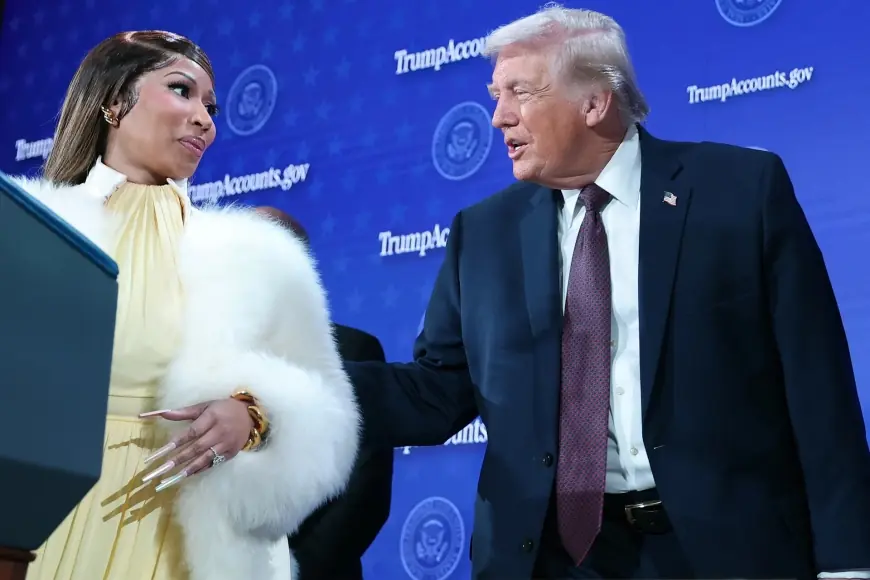
Nicki Minaj is back at the center of a political-news cycle after fresh chatter linking her to President Donald Trump reignited questions that usually sit outside pop culture: Is Nicki Minaj a U.S. citizen, what exactly is the “Trump Gold Card,” and why does public scrutiny repeatedly swing back to her husband, Kenneth Petty?
The spark this time is a cluster of claims and visuals circulating in recent days, including Minaj signaling support for Trump and hinting that her citizenship paperwork is in its final stage. Even without a single definitive document made public, the combination has been enough to push the story into a broader argument about who gets access, who gets the benefit of the doubt, and how immigration and celebrity branding collide in modern politics.
Nicki Minaj Trump moment: why this flare-up got so big so fast
Celebrity political alignments aren’t new. What’s changed is the speed and intensity of the feedback loop. When a star as culturally polarizing and digitally influential as Nicki Minaj is linked to Trump, it stops being a simple endorsement story and becomes a proxy fight over identity, legitimacy, and power.
Three forces are amplifying it:
-
A celebrity’s proximity to a sitting president carries implied influence, whether or not any policy outcome follows.
-
Immigration-related language like “citizenship,” “card,” and “gold” triggers immediate assumptions about special treatment.
-
Minaj’s fan ecosystem can turn a single post into a multi-day news cycle, especially when political opponents interpret it as propaganda and supporters treat it as proof of insider status.
Is Nicki Minaj a U.S. citizen?
Nicki Minaj was born in Trinidad and Tobago and moved to the United States as a child. The core question now is not where she is from, but what her current legal status is.
What can be said carefully based on her own public framing:
-
She has implied she is not yet fully naturalized, while also suggesting she is close to completing citizenship steps.
-
There is a meaningful difference between being a legal permanent resident, being eligible to naturalize, filing paperwork, and actually becoming a citizen after taking the oath.
-
Without official confirmation or direct documentation, the safest characterization is that she has signaled an ongoing process rather than a completed one.
Why it matters: in political storytelling, “finalizing” can be interpreted as “done,” and that gap is where misinformation thrives. Supporters may see it as a success narrative; critics may treat it as evidence of preferential treatment. Neither is proven just by a statement.
Trump Gold Card: what it is, and why the optics are explosive
The “Trump Gold Card” has become a headline magnet largely because it compresses multiple controversial ideas into one phrase: wealth, access, immigration, and executive power. Public conversation frames it as an immigration fast-track concept. But the practical details, eligibility, and legal mechanics are often unclear in the way it’s discussed online.
That ambiguity is exactly why it draws heat:
-
If a “gold card” is interpreted as a shortcut to residency or citizenship, it raises immediate fairness concerns.
-
If it is symbolic or promotional, it risks misleading audiences into believing it carries legal authority.
-
If it is tied to money or status, it intensifies arguments that immigration is being stratified into tiers for the well-connected.
Minaj’s involvement, even at the level of imagery or casual mention, adds rocket fuel because it suggests the idea is not just political rhetoric but a status marker someone can flaunt.
Nicki Minaj husband: why Kenneth Petty stays in the frame
Whenever Nicki Minaj becomes a political story, her husband Kenneth Petty re-enters the conversation, often because critics argue that “law-and-order” branding clashes with his legal history. Petty has long faced public scrutiny over past convictions and sex-offender registration requirements, and that background regularly becomes part of the public’s interpretation of Minaj’s choices and alliances.
This dynamic produces two parallel narratives:
-
One side frames the ongoing attention as harassment by association, arguing that a spouse’s past is being used to delegitimize Minaj.
-
The other side argues the public has a right to question how power, fame, and political proximity intersect with accountability.
Either way, the presence of Kenneth Petty in the discourse changes the incentives for everyone involved: political actors see an opening to attack, supporters feel pressure to defend, and neutral observers often end up sorting the story through moral framing rather than verified facts.
Behind the headline: incentives, stakeholders, and what’s missing
Context: Celebrity politics has shifted from endorsement to ecosystem. A single celebrity can mobilize fundraising, energize youth audiences, and dominate attention without running a single ad.
Incentives:
-
Trump benefits from cultural validation and the spectacle of crossover support.
-
Minaj benefits from access, relevance, and the power to set an agenda simply by engaging.
-
Critics benefit from a high-visibility target that can be tied to broader critiques about immigration and privilege.
Stakeholders:
-
Immigrant communities watching how immigration rhetoric is being gamified.
-
Fans who may treat political messaging as part of a parasocial bond.
-
Political campaigns that convert celebrity moments into fundraising and turnout energy.
-
Brands and business partners weighing backlash risk.
Missing pieces to watch:
-
Any official, verifiable clarification about Minaj’s citizenship status.
-
Clear definitions of what “Gold Card” means in practice, if anything, beyond symbolism.
-
Whether political figures attempt to formalize the concept, or whether it remains a viral talking point.
Second-order effects:
-
A rise in copycat influencer-politics moments as campaigns chase attention over persuasion.
-
More misinformation around immigration pathways, fueled by celebrity shorthand.
-
Increased polarization among fans, with politics becoming a permanent part of artist identity.
What happens next: realistic scenarios and triggers
-
Clarification ends the citizenship speculation: If Minaj provides a straightforward, verifiable explanation of her status, the story shifts to pure politics and branding.
-
The Gold Card hardens into policy talk: If officials define eligibility and legal grounding, expect immediate legal, ethical, and economic debate.
-
The issue fades into culture-war afterglow: If there is no follow-through, the cycle likely cools until the next viral post reignites it.
-
Kenneth Petty remains a recurring angle: Any new legal development, travel request, or restriction would quickly become part of the narrative again.
Why it matters: This isn’t only about Nicki Minaj or Trump. It’s about how power is performed in public now, and how quickly a celebrity can turn legal nuance into political symbolism that millions of people treat as reality.