























UFC 325 fight card: Alexander Volkanovski defends featherweight title vs Diego Lopes in Sydney rematch

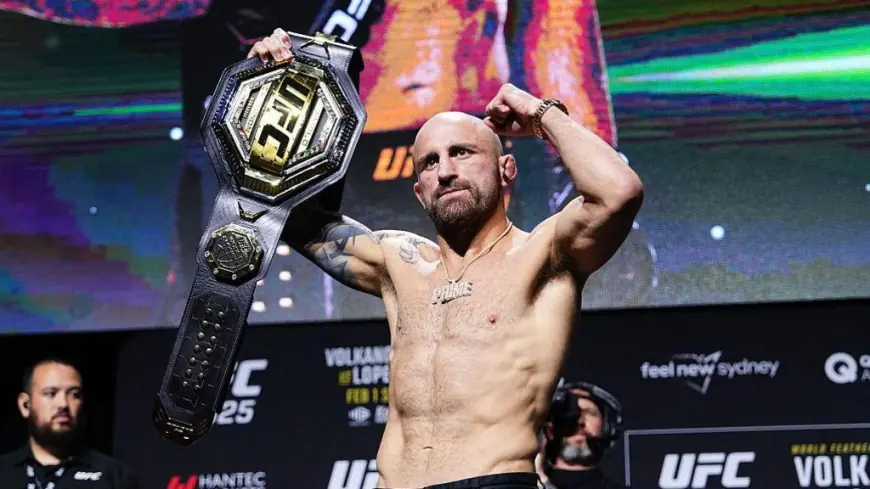
UFC 325 is set for Saturday, January 31, 2026 ET, headlined by a featherweight championship rematch between Alexander Volkanovski and Diego Lopes. The pairing is drawing unusual heat for a title fight that comes back so quickly: the two met less than a year ago, and Volkanovski already has the belt again, while Lopes has spent the gap forcing the UFC’s hand with a statement win.
The event also lands as a major Sydney return, with multiple local and regional storylines threaded through the undercard. It is a card built to satisfy two priorities at once: a marquee championship in a prime market, and a lineup designed to keep momentum moving through several divisions.
UFC 325 date and start time in Eastern Time
UFC 325 takes place Saturday night, January 31, 2026 ET.
The current run-of-show expectation in ET is:
-
Early card begins at 5:00 p.m. ET
-
Prelims begin at 7:00 p.m. ET
-
Main card begins at 9:00 p.m. ET
Main-event walkouts are typically late in the main card window and can shift depending on fight length.
UFC 325 fight card: full lineup
Main card
-
Alexander Volkanovski vs Diego Lopes 2, featherweight title
-
Dan Hooker vs Benoît Saint Denis, lightweight
-
Rafael Fiziev vs Mauricio Ruffy, lightweight
-
Tai Tuivasa vs Tallison Teixeira, heavyweight
-
Quillan Salkilld vs Jamie Mullarkey, lightweight
Preliminary card
-
Junior Tafa vs Billy Elekana, light heavyweight
-
Cameron Rowston vs Cody Brundage, middleweight
-
Jacob Malkoun vs Torrez Finney, middleweight
-
Jonathan Micallef vs Oban Elliott, welterweight
Early prelims
-
Kaan Ofli vs Yi Zha, featherweight
-
Kim Sang-wook vs Dom Mar Fan, lightweight
-
Keiichiro Nakamura vs Sebastian Szalay, featherweight
-
Sulang Rangbo vs Lawrence Lui, bantamweight
-
Aaron Tau vs Namsrai Batbayar, flyweight
Volkanovski vs Lopes 2: why this rematch is happening now
The rematch is a rare case of a title fight that is both a business decision and a competitive argument.
Volkanovski beat Lopes by decision at UFC 314 to claim a vacant featherweight title, reestablishing himself as a champion after a turbulent run around the top of the division. Lopes, rather than being parked behind a long contender queue, rebounded with a knockout win that kept him in the spotlight and made the case that the first meeting did not settle the rivalry.
Stylistically, it remains a matchup where small choices decide big moments. Volkanovski’s edge is typically built on pace, layering, and problem-solving over five rounds. Lopes’s path is usually sharper: force exchanges, make scrambles dangerous, and turn one clean opening into a momentum swing. In a rematch, both men know the first fight’s tells, which tends to compress the margin for error.
Behind the headline: what the UFC is optimizing for
Context matters here. A Sydney pay-per-view anchored by the most famous Australian male champion is a reliable tentpole, and pairing him with a challenger who fans already recognize lowers the “education cost” of selling the main event. The co-main and supporting bouts add a second layer: action-friendly matchups that keep the crowd engaged and the broadcast moving.
Incentives are aligned but not identical:
-
Volkanovski benefits from defending at home and quieting any questions about how long he plans to stay at the top.
-
Lopes benefits from a fast second chance while his momentum is hot and the narrative is fresh.
-
The promotion benefits from a clear title story that does not require weeks of explanation, plus a card that can deliver highlights.
Stakeholders extend beyond the cage. Coaches and managers are watching the featherweight picture because the winner immediately changes who gets the next call. Fighters in adjacent divisions are watching too, because one standout performance can open doors for short-notice opportunities later in the year.
What we still do not know
Even with the card set, a few variables will shape how UFC 325 is remembered:
-
Whether Volkanovski can impose championship pace again, or whether Lopes can force higher-risk exchanges earlier than last time
-
How the lightweight pairings shake out in terms of wrestling versus striking dynamics, especially if either fight turns into a cardio test
-
Whether any late medical or travel issues alter the undercard timing, which can ripple into main-event walkout windows
What happens next: scenarios and triggers
Scenario one: Volkanovski retains cleanly and calls for a fresh challenger.
Trigger is a clear win that looks repeatable, not a narrow escape.
Scenario two: Lopes wins and the division resets overnight.
Trigger is a finish or a decisive decision that makes the first fight feel like the prologue.
Scenario three: A lightweight winner steals the show and jumps the matchmaking line.
Trigger is a stoppage or a dominant performance that creates immediate demand for a higher-ranked opponent.
Scenario four: The Sydney return becomes the real headline.
Trigger is an electric crowd, multiple finishes, and a card that persuades the UFC to accelerate future Australia plans.
UFC 325 is not just Volkanovski vs Lopes 2. It is a pressure test for the featherweight hierarchy and a statement event for a market the UFC treats as premium. By late Saturday night ET, the result will either validate the quick rematch or turn it into the moment a new champion truly arrived.