

























Bitcoin Plummets to $85,200 Amid Stock and Precious Metal Selloffs

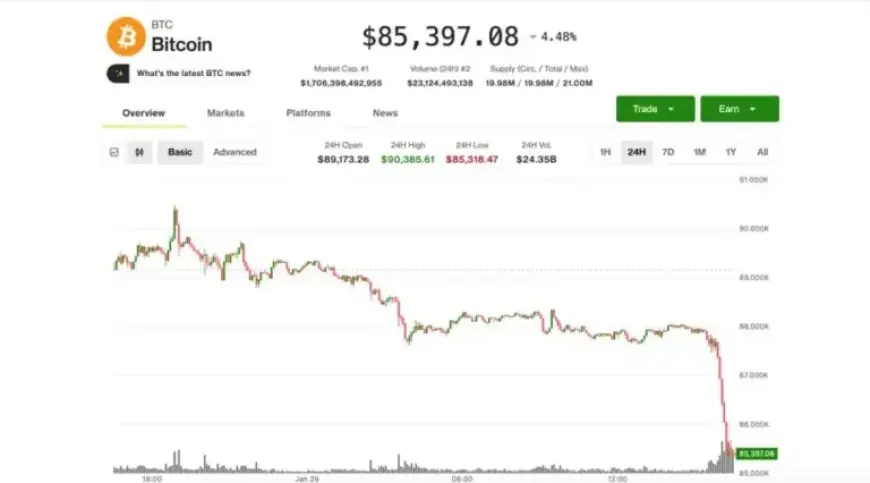
Bitcoin’s value has fallen dramatically, hitting $85,200, its lowest mark since mid-December. This drop is part of a broader market selloff impacting stocks and precious metals alike.
Market Impact on Bitcoin and Precious Metals
On Thursday, Bitcoin lost nearly $3,000 in value within hours. It started the day trading above $88,000 but quickly declined. This downturn coincided with a significant shift in gold prices.
Gold Prices Fall
Gold experienced a massive spike, initially soaring above $5,600 per ounce. However, the price crashed by nearly 10% during U.S. morning trading, falling back to under $5,200.
Silver and Other Precious Metals
Silver saw a similar decline. Its price slid from $121 per ounce down to $108. This volatility in precious metals contributed to the overall market instability.
Tech Sector Weakness
A significant factor in this selloff was the poor performance of major tech stocks, particularly Microsoft. The company saw its shares plunge over 11% after reporting weak growth in its cloud division, marking one of its worst trading days since March 2020.
Impact on Indexes
This downturn negatively affected the Nasdaq, which fell by about 1.5%. Following the tech sector’s struggles, the cryptocurrency market mirrored this bearish trend.
Performance of Altcoins
- Ethereum (ETH): Down 5% to $2,809.30
- Solana (SOL): Down 6% to $117.77
- Doge (DOGE): Down to $0.1160
- Cardano (ADA): Down to $0.3334
Altcoins have been hit even harder during this market correction, resulting in substantial losses across the board.
Corporate Bitcoin Holdings and Stock Performance
The largest corporate holder of Bitcoin, MicroStrategy (MSTR), fell by 8%. This marked its worst performance since December 12, with shares touching 52-week lows and approaching levels not seen since September 2024.
- Other notable companies affected include:
- Bullish (BLSH): down 4%
- Twenty One Capital (XXI): down 8%
- Circle (CRCL): down 6%
- Coinbase (COIN): down 4%
Market Volatility Indicators
The S&P 500 Volatility Index surged more than 16%, reaching 19. This is its second-highest level since late November. Additionally, the DXY index increased to 96.6 after dipping to 95.5 the previous day, exerting more pressure on risk assets.
In summary, Bitcoin has suffered significantly alongside gold and silver, driven by pressures in the tech sector and broader market selloffs. As investors navigate this volatile landscape, the implications for cryptocurrencies and traditional markets continue to unfold.