

























Essential Facts About the Upcoming Winter Storm

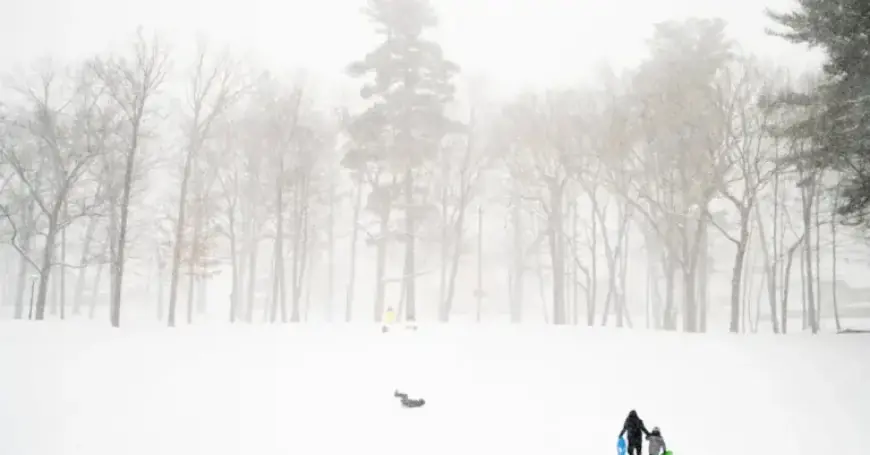
As the Eastern United States recovers from last weekend’s winter storm, another significant winter storm is projected to hit the region this Saturday and Sunday. Meteorologists at the National Weather Service provide key updates as they assess the storm’s path and potential impact.
Storm Forecasts for the Southeast and East Coast
This upcoming storm is anticipated to form off the Carolina coast on Saturday, subsequently moving towards the Mid-Atlantic and New England by Sunday. Early predictions indicate a moderate chance of snowfall stretching from eastern South Carolina to as far north as New England.
Potential Paths of the Storm
The storm’s trajectory is uncertain and could yield two distinct outcomes:
- Eastern Shift: If the storm veers east, most snowfall may remain offshore.
- Western Shift: A more westerly movement could result in significant snow accumulation in major cities along the East Coast.
Forecasters have highlighted a “prime spot” for the storm’s formation, which may result in heavy snowfall across the affected areas.
Extreme Cold Temperatures Expected
Accompanying the storm is an arctic cold front plunging into the Eastern United States. This cold air has already contributed to frigid temperatures and may worsen in the days ahead.
Temperature Projections
Forecasts indicate that regions in the Ohio Valley and Mid-Atlantic could experience record low temperatures by Friday. Notably:
- Parts of the Southeast, including Tampa, Florida, may endure their coldest temperatures in fifteen years.
- New York City might experience over nine consecutive days of temperatures below freezing.
The recent storm already resulted in at least ten fatalities in New York, with indications of cold exposure among the victims.
Challenges in the South
As temperatures drop, emergency responders are striving to restore power to those affected by power outages during last weekend’s storm. By late Wednesday, hundreds of thousands, particularly in Tennessee and Mississippi, remained without electricity.
Sarah Hoffman from the Food Bank of Northeast Louisiana emphasized the situation’s devastation for local communities, noting, “I’ve never seen anything like this.”
Risk of a Bomb Cyclone
Meteorologists are also considering the possibility of the storm developing into a bomb cyclone, characterized by rapid intensification. This phenomenon could lead to:
- Stronger winds that may cause power line disruptions.
- Increased risks of coastal erosion, especially along the Atlantic shoreline in the Carolinas.
This weather event highlights the need for awareness and preparedness as the region braces for the upcoming winter storm.