






















Tesla’s 2025 Revenue and Profit Decline Mark a Challenging Year

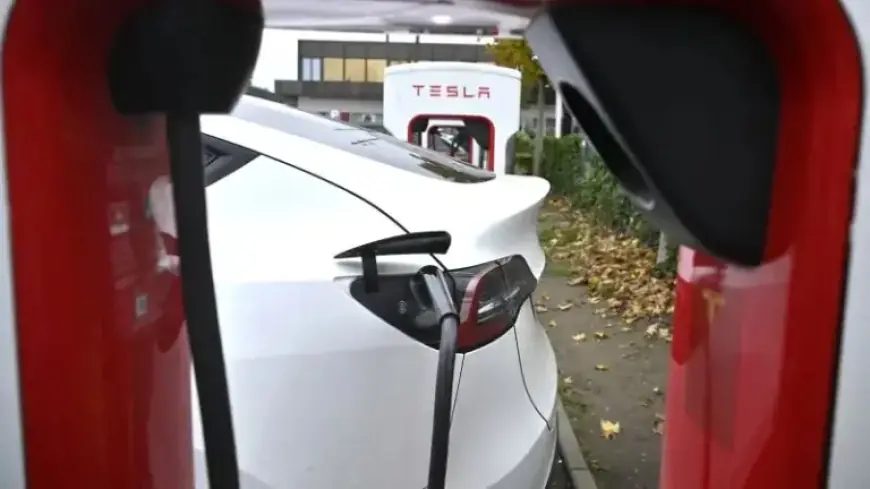
Tesla experienced a significant decline in revenue and profits in 2025, marking a challenging year for the electric vehicle manufacturer. This downturn culminated in a notable decrease in adjusted income and net income during the fourth quarter.
Tesla’s Fourth Quarter Financial Results
During the last three months of 2025, Tesla reported a 16% drop in its adjusted income. The net income for the quarter plummeted by 61%. Overall, Tesla’s annual profit declined by 46%, equating to a loss of $3.3 billion. The reductions in earnings reflect the most difficult year for Tesla since it became profitable six years ago.
Sales Volume and Market Challenges
The fourth quarter of 2025 marked the largest year-over-year sales volume drop in Tesla’s history. This downward trend has been evident, with earnings falling in nine of the past ten quarters.
- Annual income for 2025 was only 30% of the $12.6 billion earned in 2022.
- Tesla lost its status as the world’s largest electric vehicle maker to Chinese company BYD.
Competition and Market Dynamics
Tesla’s global electric vehicle sales fell in a year when the market was generally growing. The company faced increased competition, particularly in China, its second-largest market. Additionally, changes in US tax credit policies for electric vehicles negatively impacted sales. This resulted in a backlash among some American and European consumers due to CEO Elon Musk’s political involvement.
Shifts in Production Strategy
As part of its restructuring, Tesla announced plans to discontinue production of its high-end models, the Model S and Model X. Musk stated that the manufacturing space used for these models will transition to producing robots. Together, the Model S and Model X represented only 3% of Tesla’s global sales last year, according to recent reports.
Future Plans and Expectations
Musk has redirected attention toward ambitious projects, including the development of robotaxis and humanoid robots. He aims for the robotaxi service to expand to seven markets in the first half of 2026, in addition to the two markets already served with Tesla employees as safety monitors. The goal is to cover half of the US population with fully autonomous vehicles by the end of 2025, pending regulatory approval.
Despite these ongoing challenges, Tesla’s stock saw a brief increase of about 3% in after-hours trading following the earnings announcement. Investors remain hopeful that the focus on new technologies will reinvigorate the company despite the recent revenue and profit decline.