
























Free Bert turns Bert Kreischer’s shirtless persona into a Beverly Hills family sitcom

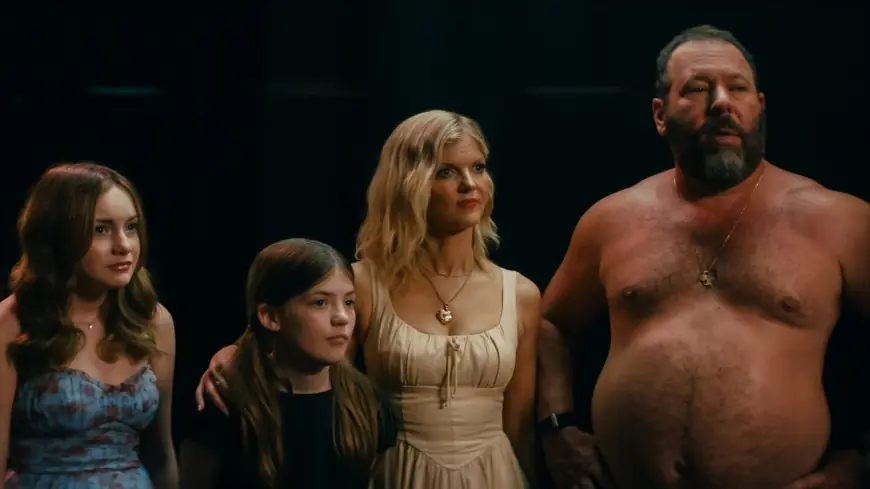
Free Bert is the latest step in Bert Kreischer’s long-running act of turning real life into comedy, only this time the chaos is scripted, suburban, and aimed straight at the private-school pressure cooker. The six-episode first season dropped on January 22, 2026 ET, built around a simple premise: the famously unfiltered stand-up star uproots his household for a glossier zip code, then learns that money can buy a new address but not a new personality.
A fish-out-of-water setup that weaponizes “the brand”
At the center of the show is the version of Bert Kreischer audiences already recognize: loud, impulsive, and allergic to self-editing. In Free Bert, that persona collides with elite-school rules and Beverly Hills status games after his daughters are accepted into an exclusive private school. The family’s attempt to “fit in” doesn’t fail quietly. It fails in public, with Bert’s inability to filter his thoughts turning the Kreischers into social pariahs in their new neighborhood.
The comedy leans into the tension between aspiration and embarrassment. Bert wants to be the dad who provides the dream, but his habits keep dragging the family into messes they didn’t sign up for. One of the early drivers involves an unfortunate appearance on a live stream connected to T-Pain that puts a target on his daughter at school, pushing the storyline from awkward to openly adversarial in the hallways and parent circles.
Some specifics have not been publicly clarified about how closely individual story beats mirror real events from Kreischer’s life, versus being invented as heightened sitcom situations.
Free Bert cast: who plays the Kreischers and the people judging them
The Free Bert cast is designed to make the “new world” feel crowded, judgmental, and impossible to navigate without a guide. Kreischer plays himself, while Arden Myrin plays his wife, LeeAnn, the more grounded counterweight who wants the family to make a good impression, especially with the PTA. The daughters are portrayed by Ava Ryan as Georgia and Lilou Lang as Ila, with the show emphasizing how each child processes the move differently.
Outside the immediate family, the cast is built around the school ecosystem and the parent social scene. Chris Witaske appears as Landon Vanderthal and Mandell Maughan as Chanel Vanderthal, a couple positioned as part of the affluent orbit the Kreischers keep crashing into. Christine Horn plays Headmaster Rossmyre, a figure who represents how institutions enforce “belonging” with policies, tone, and quiet social pressure. Additional supporting roles include Sophia Reid-Gantzert as Kiersten Vanderthal, Braxton Alexander as Zac Hotchkiss, and Matthew Del Negro as Randy Hotchkiss.
The series also sprinkles in recognizable cameos, including Rob Lowe, T-Pain, and Pacman Jones, using familiar faces as accelerants for embarrassment, status anxiety, and public spectacle.
Key terms have not been disclosed publicly about whether any additional episodes are planned beyond the initial six.
Bert Kreischer family context: the real-life baseline behind the jokes
Even with scripted chaos, Free Bert is fueled by something audiences already know about Kreischer: he treats family life as core material, not a protected off-limits zone. In real life, he and his wife, LeeAnn Kreischer, married in December 2003 and have two daughters, Georgia and Ila, with Georgia born in June 2004 and Ila born in July 2006. That timeline matters because it frames why a “dad trying to grow up” theme still lands. His kids aren’t toddlers anymore, and the stakes shift from diapers and daycare to identity, reputation, and the social consequences of a parent’s mistakes.
The show’s family dynamic also reflects a modern reality for households linked to entertainment careers: constant travel, constant attention, and kids who can’t fully opt out of public curiosity. In Free Bert, the girls aren’t props for punchlines. They’re the people who pay the price when Dad becomes the headline.
Here’s how this kind of semi-autobiographical sitcom typically works. A comedian’s public persona becomes the engine, writers build a fictional framework that can produce conflict every episode, and real details are used as texture rather than a literal documentary blueprint. That structure gives creators freedom to sharpen jokes while still feeling “true” to the star’s voice, especially when the central theme is a recognizable emotional truth: trying to do right by your family while being yourself too loudly.
Who the show is for, and the next milestone that will decide its future
Two groups are likely to feel this series most directly: longtime fans who want the Kreischer energy in a new format, and parents who recognize the quieter dread behind the jokes, the fear that one embarrassing moment can follow your kid into school the next morning. The show also speaks to a third audience: anyone fascinated by how wealth, institutions, and social climbing turn ordinary parenting decisions into status competitions.
What comes next is straightforward and verifiable. The next milestone will be whether the series gets renewed for a second season, a decision typically tied to early viewership, completion rates, and subscriber retention signals in the weeks after launch. If it returns, Free Bert has a clear runway: more school politics, more neighborhood rivalries, and one big question that keeps the premise alive, whether Bert can ever truly “blend in” without losing the thing that made him worth watching in the first place.