






















Alex Honnold and Taipei 101: What We Know, What’s Still Unconfirmed, and Why “Skyscraper Live” Has People Watching the Clock

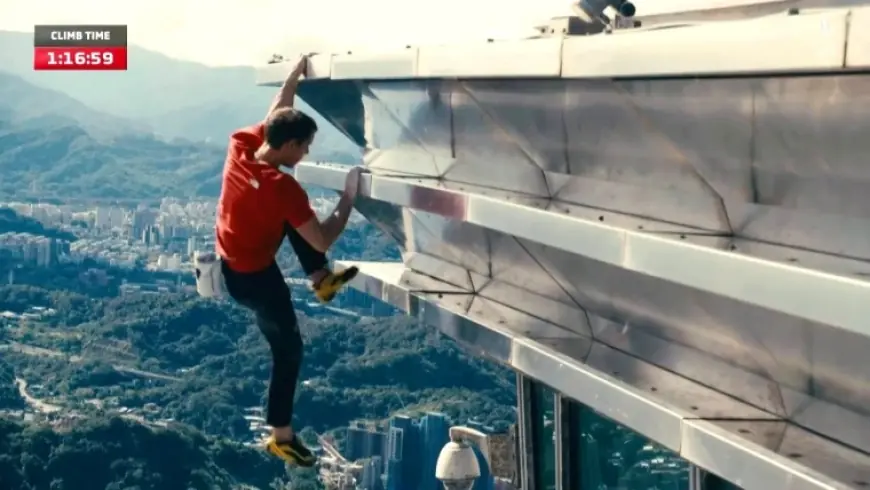
As of Thursday, January 29, 2026 Eastern Time, online chatter is surging around a single, cinematic idea: Alex Honnold attempting a high-profile climb of Taipei 101 as part of a purported live special titled Skyscraper Live. The keywords driving the spike are familiar to anyone who followed his ropeless ascent of El Capitan and the documentary Free Solo: extreme exposure, real consequences, and the uneasy line between athletic achievement and spectacle.
Here’s the problem for fans trying to plan their viewing and separate hype from reality: key details around Skyscraper Live remain murky in public discussion. That uncertainty is exactly what’s fueling the frantic searches for tour-like logistics: “when is he climbing,” “is it actually live,” “how long will it take,” and “did he make it.”
Taipei 101 height: how big is the challenge, really
Taipei 101 stands about 508 meters, roughly 1,667 feet. Even ignoring difficulty, that vertical distance is a grind: sustained forearm load, repeated transitions, and constant wind exposure with almost no room for mistakes if the attempt is truly a rope-free free solo.
Taipei 101 is not the tallest building in the world today. Burj Khalifa in Dubai remains the tallest at 828 meters, about 2,717 feet. But Taipei 101 is still a globally iconic tower, and its distinct stacked design is part of why it gets picked for stunts: it’s instantly recognizable on camera, and the “steps” can create natural visual segments for a broadcast.
Free solo vs El Capitan vs a skyscraper: why this is a different kind of risk
Honnold’s El Capitan free solo in 2017 is a benchmark because it was natural rock: textured holds, cracks, and a route that climbers can study for decades. A skyscraper is the opposite. It is engineered, uniform, and often slick in ways that are hard to read from the ground.
A tower attempt also adds hazards that a cliff usually does not:
-
Stronger, more chaotic wind at height
-
Surface wetness from rain, fog, or condensation
-
Long stretches with limited “rest” features
-
Security and access constraints that shape where a climber can transition on or off the exterior
This is why “Taipei weather” keeps showing up alongside his name. Winter conditions in Taipei can be damp, windy, and change quickly. In a stunt framed as a live event, weather becomes a production issue and a safety issue at the same time.
Is Skyscraper Live actually live: why viewers keep doubting it
The “actually live” question usually comes down to one thing: delay. Many live broadcasts of risky events run on a short delay to avoid airing graphic content if something goes wrong. That does not mean the event is fake. It means the broadcast is designed to protect viewers and the platform from broadcasting a tragedy in real time.
If Skyscraper Live exists as described, the most realistic expectation is “near-live” with built-in safeguards, plus pre-produced segments cut in between climbing phases to manage pacing and uncertainty.
How long will it take Alex Honnold to climb Taipei 101
No public, verifiable time estimate is universally agreed upon, and the honest answer is that it depends on the “route” and the rules. A clean, continuous exterior line is very different from a climb that includes planned transitions, pauses, or controlled traverses around obstacles.
That said, the search interest tells you what audiences are really asking: will it be a fast athletic effort or a long, suspense-driven endurance broadcast. A true free solo effort on a structure of this scale could plausibly run from well under two hours to several hours, depending on complexity and conditions.
How did Alex Honnold get down: the part broadcasts rarely emphasize
If a climber reaches a high point on a tower, the descent does not need to mirror the ascent. The practical plan is typically to transition into an interior access point near the top, then use stairs or an elevator to return to the ground. Even when the ascent is rope-free, the “get down” phase is almost always engineered for safety and logistics, not drama.
Alex Honnold wife, kids, and the human stakes behind the stunt
Honnold is married to Sanni McCandless, and they have children together. That family context is why public reaction to skyscraper stunts is so split. Some people see an elite athlete testing limits. Others see a parent accepting a risk profile that feels harder to justify once the stakes include more than personal choice.
Alex Honnold net worth and “how much is he getting paid” questions
Exact pay for a specific event and exact net worth are rarely confirmed publicly. Estimates float, but they are often guesswork built from sponsorship assumptions and incomplete data.
A more grounded way to think about the money:
-
His income likely comes from a mix of sponsorships, appearance and production deals, speaking, and long-tail value from films and media projects.
-
If a live special is involved, the payment could include a flat fee, performance incentives, or backend terms tied to viewership, but none of that is reliably confirmed in public chatter.
The key point is less the number and more the incentive structure: big money can push events toward bigger spectacle, while the athlete’s brand depends on credibility and restraint. Those forces do not always align.
Alain Robert, copycats, and what happens next
Any highly publicized tower climb invites comparisons to Alain Robert, the veteran skyscraper climber known for unauthorized ascents. It also raises a predictable second-order risk: copycats. That’s why organizers and city authorities often clamp down on access details, and why broadcasts tend to avoid sharing specific route information.
If Skyscraper Live is real and proceeds as rumored, the next headlines will likely focus on three things: whether it was truly live, what safety controls were in place off camera, and whether the event sparks tighter enforcement or new restrictions around landmark buildings.
In the meantime, the safest conclusion is also the most unsatisfying: Taipei 101 is an enormous, unforgiving objective, and until there is clear, official confirmation of date, time, and format, treat specific scheduling claims with caution. The story here isn’t just a climb. It’s the collision of risk, broadcasting, and the modern appetite to watch something irreversible happen “right now.”